 Tüylüm
Siberian Husky
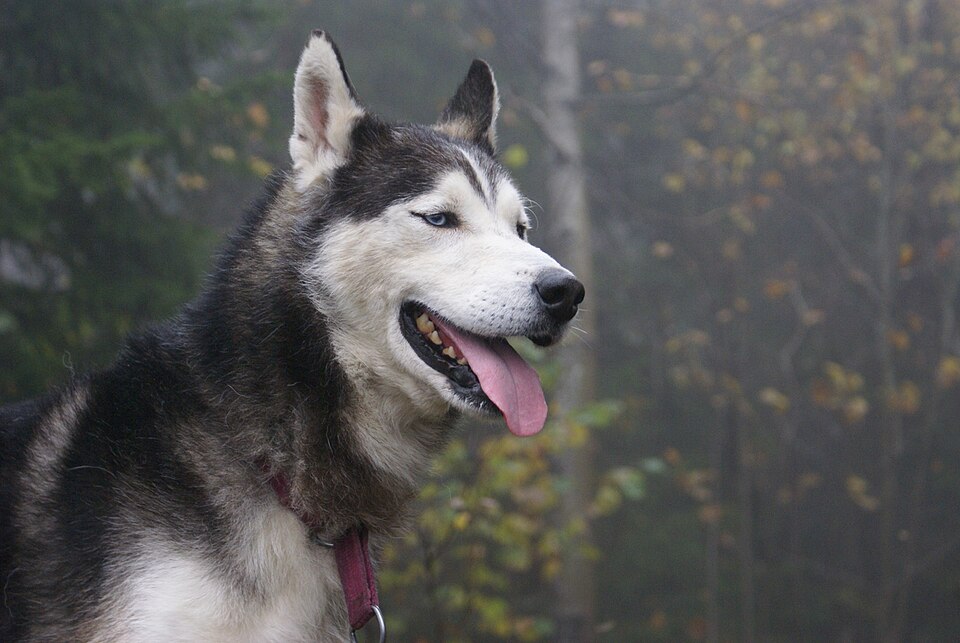
A sled dog known for its blue or brown eyes, wolf-like face and remarkable endurance. Friendly and cheerful, but its very high exercise needs, urge to run off and sensitivity to heat mean it isn't right for every home. Weigh those honestly before you decide.

 Lifespan≈ 11.9 yearsmedian, UK 2024 data; AKC says 12–14 years
 Weight34–62 lb (15.5–28 kg)FCI; males 45–62 lb (20.5–28 kg)
 Height20–23.5 in (51–60 cm)at the shoulder; females are shorter
 OriginNortheastern Siberiasled dog of the Chukchi people
 SheddingHeavythe undercoat blows out twice a year
 Exercise2+ hours a dayloves to run and pull
 With kidsVery goodalways with supervision
 TrainingModeratesmart but independent; can't be trusted off leash
The Siberian Husky is a medium-sized sled dog bred to pull light loads over enormous distances across the frozen lands of northeastern Asia. Despite the wolf-like look, it is a fully domestic breed and usually very friendly. Behind that happy face, though, are a powerful urge to run, a strong prey drive and a thick coat that needs care in hot weather. We've put this page together from breed registry standards, the national breed club, animal welfare resources and scientific studies.
- Temperament: Friendly, cheerful and happiest as part of a pack; not a guard dog.
- Exercise: The Royal Kennel Club recommends more than 2 hours a day; expecting a happy husky without that is unrealistic.
- Escaping: The urge to run is intense; the AKC and the breed club say to keep it leashed and to secure the yard with a solid fence.
- Heat: Bred for the cold; in hot summers, move walks to the cooler hours and never let shade and water run out.
- Coat: The double coat sheds very heavily once or twice a year; regular brushing is a must.
- Lifespan: A large 2024 UK study found a median lifespan of 11.9 years.
What to know
 What is the Siberian Husky like?
According to the FCI standard, the Siberian Husky is friendly, gentle, alert and outgoing. It doesn't show the possessive instincts of a guard dog, and it shouldn't be overly suspicious of strangers or aggressive with other dogs. The AKC calls the breed an "indifferent watchdog" because of that innate friendliness, and the Siberian Husky Club of America (SHCA) states plainly that it is not a watchdog.
Bred to work in a pack, it doesn't like being alone. The SHCA writes that Siberians want the company of people or other dogs at all times and are not a good fit for someone who works all day; the AKC gives the same warning.
- Voice: In the AKC's breed trait chart, vocalizing (barking or howling) is rated at the top of the scale; think about your neighbors if you live in an apartment.
- Prey drive: The AKC notes that Siberians can't resist chasing small animals. Sharing a home or yard with cats, rabbits or poultry takes real care.
- Digging: The SHCA points out that Siberians have a natural tendency to dig holes in backyards.
Every dog is an individual. Breed traits describe general tendencies; how well a puppy was socialized, its training, its daily life and its health shape its personality as much as its breed.
 Who is it a good fit for?
The Siberian Husky suits active, outdoorsy households that walk or run with their dog for long stretches every day and usually have someone at home.
| Situation | Good fit? |
|---|---|
| Apartment | Hard; the Royal Kennel Club recommends a large house and yard, and city life only works with long daily exercise |
| Family with kids | Good; the AKC rates it highly with children, but supervision is still a must |
| Other dogs | Usually gets along very well; it's a pack dog |
| Cats and small pets | Risky; strong prey drive |
| Long hours alone | Not a good fit; it needs company |
| First-time dog owners | Can be challenging; research exercise, escaping and shedding carefully first |
| Hot climates | Needs care; the daily routine has to change in summer |
A yard is no substitute for exercise. The fence should be solid, reinforced against digging at the bottom, and gates should always stay closed.
Where does it come from?
According to the AKC, the Siberian Husky's ancestors were bred in northeastern Asia by the Chukchi people. They were family companions as well as hardy sled dogs. The Chukchi developed a dog that could haul light loads across vast frozen terrain in sub-zero temperatures while using as little energy as possible. The Royal Kennel Club also notes that the breed was once known as the Chukchi sled dog and that dogs were carefully selected for working ability and temperament.
These dogs rose to fame in sled racing in the early 1900s. Their big moment came in 1925: when a diphtheria outbreak hit Nome, Alaska, relay teams of huskies carried the serum about 658 miles (1,060 km) in five and a half days. The Royal Kennel Club points out that a statue honoring the run stands in New York's Central Park.
Today the United States holds the breed standard for the FCI, which places the Siberian Husky in Group 5 among the Nordic sled dogs. The breed's national club in the US, the SHCA, was founded in 1938.
Appearance and colors
According to the FCI standard, the Siberian Husky is a medium-sized dog that is quick and light on its feet: the body is slightly longer than the dog is tall, the triangular ears stand erect and are set high, and the well-furred, fox-brush tail curves over the back like a sickle when the dog is alert.
- Size: Per the FCI, males stand 21–23.5 in (53.5–60 cm) and weigh 45–62 lb (20.5–28 kg); females stand 20–22 in (50.5–56 cm) and weigh 34–51 lb (15.5–23 kg). The AKC lists males at 45–60 lb and females at 35–50 lb.
- Eyes: Almond-shaped; brown or blue. One of each, or two colors in one eye, are accepted in the standard.
- Coat: Double: a soft, dense undercoat under straight, smooth-lying guard hairs. The FCI notes that it's normal for the undercoat to be completely missing during shedding season.
- Colors: Everything from black to pure white, including gray, agouti (wolf tones), sable and red; white markings and piebald patterns are common. The FCI standard updated in 2022 does not accept merle or brindle patterns.
 Daily care
The AKC calls the Siberian a "natural" breed: it keeps itself clean, has little doggy odor and often needs only a few baths a year. Weekly brushing keeps the coat and skin healthy. The undercoat sheds heavily twice a year, and during those periods the dead hair needs to be raked out regularly with a pin brush and metal comb. As the SHCA puts it, if you value a fur-free home, this isn't the breed for you.
- Nails: The AKC recommends keeping an eye on nail length to prevent foot problems.
- Ears and paws: Check weekly; show your vet any redness, odor or sores.
- Environment: Provide a cool, shady resting spot during the day and fresh water at all times.
Huskies in hot summers
A 2020 UK study by Hall and colleagues notes that thick-coated breeds may have a harder time regulating body temperature. According to PDSA, thick-coated dogs are among the groups most at risk of heatstroke, and nearly three quarters of cases develop during play or exercise. So:
- Walk early in the morning and in the evening; skip running in the midday heat.
- Test the ground with your hand: PDSA says that if you can't comfortably keep your palm on tarmac, sand or artificial grass for 7 seconds, it's too hot for paws.
- Never leave your dog in a car, not even briefly or with the windows open.
- Provide a cool room, shade and plenty of water.
For more, see our articles on dogs in hot weather and dog grooming.
Training and exercise
The Royal Kennel Club recommends more than 2 hours of exercise a day for this breed. According to the AKC, the Siberian is a working breed that's happiest with a job to do; it was bred to run and will do so at every opportunity. Pulling in a harness, rally, agility and obedience are among the activities the AKC suggests.
Siberians are smart but independent thinkers, and the AKC rates their trainability as moderate. The AKC recommends keeping training fun for both dog and handler: short, playful, reward-based sessions. Early socialization and basic manners are a must too.
The AKC and the SHCA say the same thing: a Siberian's urge to run is overwhelming, and outside a securely fenced area it should always be on a leash. The SHCA warns that a puppy's first dash across a road could be its last. Recall training is still worthwhile, but don't rely on it and take the leash off.
- Mental work is tiring too: sniffing games are a great addition to the daily routine.
- For a dog that loves to pull, a harness is more comfortable than a collar; start loose-leash walking training in puppyhood.
- For recall work, see our article on the dog that won't come when called.
 Diet and weight
According to the AKC, because Siberians were bred to cover long distances on very little food, they can maintain a healthy weight on less food than other breeds of similar size. The AKC advises against overfeeding, recommends monitoring weight regularly and being selective about supplements.
- Choose a complete, balanced dog food that suits its age and actual activity level; a working sled dog and a family pet don't have the same needs.
- Set the daily amount with your vet based on your dog's ideal weight, and count treats as part of it.
- You should be able to feel the ribs under a thin layer of fat and see a waist when looking from above.
- Don't give vitamin or mineral supplements on your own; even with the zinc-related skin condition described below, that call belongs to your vet.
 Health issues to know about
According to the AKC, Siberian Huskies are generally healthy and relatively long-lived, and the incidence of hip dysplasia and eye disease is relatively low. Still, some inherited problems are known. The information below is for awareness only; ask your vet about diagnosis and treatment.
Inherited eye diseases
According to the SHCA, three eye diseases are of concern in the breed. Juvenile cataracts cloud the lens of the eye and can appear as early as 3 months of age; they range from mild vision loss to blindness. Corneal dystrophy is a hazy spot caused by fat deposits in the clear front of the eye; it rarely affects vision. X-linked progressive retinal atrophy (XLPRA) first destroys night vision and then day vision, and can start as early as 5 months in males; a DNA test is available. In a 1999 survey cited by the SHCA, about 8% of 1,345 examined huskies had inherited cataracts, 3% had corneal dystrophy and fewer than 1% had PRA. These diseases occur regardless of eye color.
The Royal Kennel Club lists an eye exam plus gonioscopy (looking at the eye's drainage angle with a special lens) as minimum screening for breeding dogs. The SHCA asks for eye exams to be repeated every year, because some problems only appear over time.
Neurological diseases
The AKC's recommended tests include DNA tests for two inherited nerve diseases: shaking puppy syndrome (SPS1), which causes tremors in puppies, and Siberian Husky polyneuropathy (SHPN1). The SHCA encourages breeders to use these tests, developed at the University of Minnesota.
Hip dysplasia
This is abnormal development of the hip joint. The Royal Kennel Club recommends hip scoring and the AKC recommends a hip evaluation. Ask for the parents' results when you look for a puppy.
Zinc-responsive dermatosis
According to the University of Minnesota's dermatology handbook, this rare skin condition is seen most often in Siberian Huskies and Alaskan Malamutes among dogs eating balanced diets, and about 41% of affected dogs show signs before age 2. Typical signs are redness, tightly stuck scales and crusts, and hair loss around the eyes and mouth, on the chin and on the ears. Other skin diseases can look similar, so your vet needs to tell them apart.
- Nonstop fast panting in the heat, drooling, vomiting, weakness or collapse (possible heatstroke; PDSA advises moving the dog somewhere cool and starting to cool it right away)
- Cloudiness or a white spot in the eye, or bumping into things in dim light
- Constant trembling or unsteady walking in a puppy
- Crusting and hair loss on the face, around the eyes and mouth
How long does it live?
In a 2024 study by McMillan and colleagues that analyzed records of more than 584,000 dogs in the UK, the Siberian Husky had a median lifespan of 11.9 years (confidence interval 11.7–12.0), based on about 1,950 deaths. Mixed-breed dogs in the same study had a median lifespan of 12 years.
Another 2022 study using the Royal Veterinary College's VetCompass data found a life expectancy at birth of 9.53 years (8.71–9.88) for huskies. That study included only 153 huskies, and the authors say these results should be read with caution. It also found that huskies were much more likely than the general dog population to die before age 2. The AKC gives a range of 12–14 years.
Dogs lost young pull the average down; a secure fence, a leash, an ideal weight, regular vet checkups and protection from heat are the most concrete ways to extend this breed's life.
 Before you get one
- Consider a shelter: Purebred dogs end up in shelters and rescues too. Our guide to adopting a shelter dog can help you prepare.
- If you buy from a breeder: Ask to meet the parents. Ask for eye exam reports from the past year, hip screening, and DNA tests for XLPRA, SPS1 and SHPN1. The SHCA openly opposes crossbreeding the Siberian Husky.
- Red flags: Steer clear of sellers who won't show you the mother, always have puppies available, can't provide health paperwork or charge extra for "blue eyes" or a particular color.
- Registration: Rules vary by country; many places require or recommend microchipping. In Türkiye, owned dogs must be microchipped and registered in the PETVET system. For a breed prone to bolting, a registered microchip also makes it easier to get a lost dog back.
- Before it comes home: Check fences and gates, and get an ID tag ready.
Frequently asked questions
Can a husky live in an apartment?
It can, but it isn't easy. The Royal Kennel Club recommends a large house and yard, while the AKC says that in a city, long daily walks and dog play groups can meet its exercise needs. What matters most isn't square footage but how much time you can give every day.
Can a husky handle hot summers?
As a thick-coated northern dog, it needs extra care in summer: exercise early in the morning and in the evening, provide shade and plenty of water, and never leave it in a car. If you see fast panting, weakness or vomiting in the heat, cool your dog down right away and call your vet.
Should I shave my husky in summer?
Sources disagree. PDSA suggests considering a clip for heavy-coated dogs in warm months. The University of Minnesota's veterinary dermatology handbook, on the other hand, describes how in dense-coated breeds hair can fail to grow back for months after clipping, sometimes taking 1–2 years to return fully. The FCI standard also doesn't accept trimming beyond the feet and whiskers. Try regular brushing and removing the dead undercoat first; if you're thinking about shaving, make the call with your vet.
Are blue-eyed huskies more valuable or less healthy?
No. Under the FCI standard, brown, blue and odd or two-colored eyes are all accepted. The SHCA notes that the breed's inherited eye diseases occur in every eye color. Be wary of any seller who charges more for eye color.
Is the Siberian Husky the same as the Alaskan Malamute?
No. Both are northern sled dogs, but according to the AKC the Siberian is noticeably smaller and lighter; per the FCI, it was bred to carry light loads at moderate speed over great distances. The Malamute is a bigger dog bred to haul heavy loads. See our Alaskan Malamute page for details.
Sources
- FCI · Siberian Husky ırk standardı No. 270 (2022)
- AKC (American Kennel Club) · Siberian Husky ırk tanıtımı
- The Royal Kennel Club · Siberian Husky ırk sayfası (egzersiz, sağlık taramaları)
- Siberian Husky Club of America · So You Want A Siberian Husky
- Siberian Husky Club of America · Eye testing (kalıtsal göz hastalıkları)
- McMillan ve ark. · Longevity of companion dog breeds: those at risk from early death, Scientific Reports (2024)
- Teng ve ark. · Life tables of annual life expectancy and mortality for companion dogs in the United Kingdom, Scientific Reports (2022)
- Hall ve ark. · Incidence and risk factors for heat-related illness (heatstroke) in UK dogs under primary veterinary care in 2016, Scientific Reports (2020)
- PDSA · Heatstroke in dogs
- University of Minnesota · Small and Large Animal Dermatology Handbook: Canine post-clipping alopecia
- University of Minnesota · Small and Large Animal Dermatology Handbook: Canine zinc responsive dermatosis
- Resmî Gazete · Kedi, Köpek ve Gelinciklerin Kimliklendirilmesi ve Kayıt Altına Alınmasına Dair Yönetmelik (26 Şubat 2018)
By Tüylüm · Last checked: November 3, 2026. Compiled from the sources above and written in our own words. Spotted a mistake? Write to [email protected] and we'll fix it right away. Photo from Wikimedia Commons, used under the license shown below it.