 Tüylüm
Chow Chow
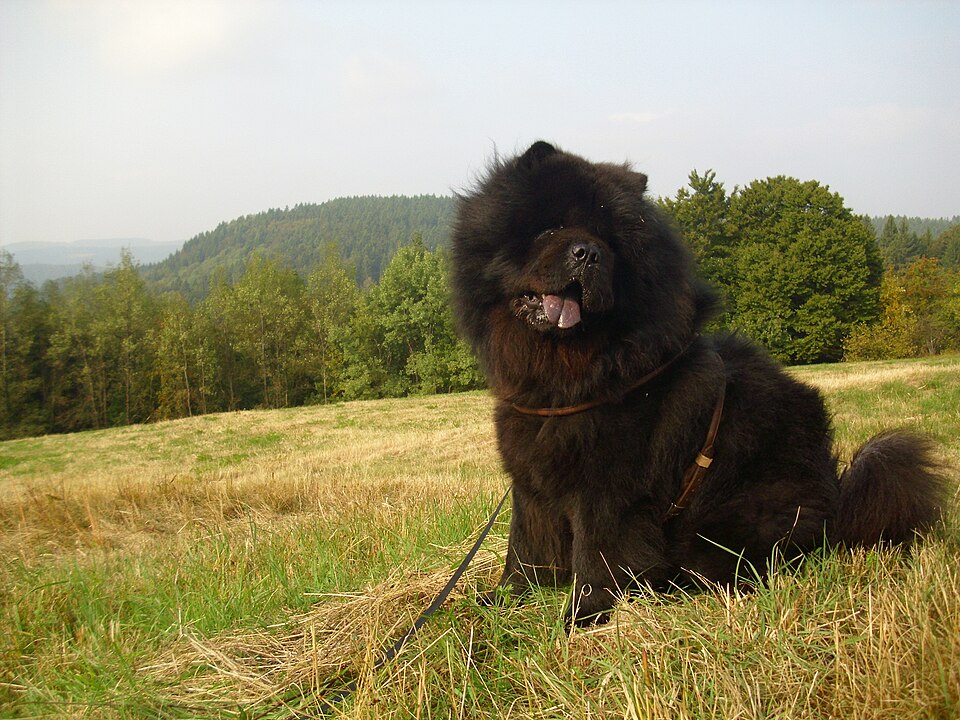
A Chinese dog counted among the oldest breeds, known for its lion-like mane, blue-black tongue and dignified bearing. Calm, clean and loyal to its family, but aloof with strangers. Inward-rolling eyelids (entropion) and poor heat tolerance are the breed's two biggest health issues.

 Lifespan≈ 12.1 yearsUK 2024 data; the RKC says "under 10 years"
 Weight45–70 lb (20–32 kg)AKC
 Height18–22 in46–56 cm; FCI: males 48–56, females 46–51 cm
 OriginChina2,000+ years; guard and hunting dog
 CoatRough or smoothboth dense double coats; frequent brushing
 ExerciseAbout 1 hour a daycalm walks; never in the heat
 With kidsWith supervisionthe AKC rates it as moderate
 TrainingModeratesmart but stubborn; harsh methods backfire
The Chow Chow is a spitz dog known in China for more than 2,000 years and counted among the oldest breeds in the world. With its lion-like mane around the head and shoulders, blue-black tongue and distinctive "scowling" expression, it looks like no other dog. At home it's calm, clean and loyal to its family, and it stays reserved with strangers. However, some of the features that create the breed's look also affect its health: inward-rolling eyelids (entropion) and struggling in the heat are very common in this breed. We've put this page together from breed registry standards, animal welfare resources and scientific studies.
- Temperament: Per the FCI, a quiet dog and a good guard; independent and loyal, yet aloof.
- Eyes: In a UK study published in 2025, about 9% of Chow Chows had entropion recorded within a single year; always check a puppy's eyes.
- Heat: In a 2020 UK study, the Chow Chow had the highest risk of heatstroke of any breed; move exercise to the cool hours in summer.
- Care: The dense coat needs thorough brushing at least twice a week and mats easily.
- Training: Smart but stubborn; harsh methods damage trust, while patience and rewards work.
- Lifespan: A large 2024 UK study found a median lifespan of 12.1 years.
What to know
 What is the Chow Chow like?
The FCI standard describes the Chow Chow as a quiet dog and a good guard: independent and loyal, yet aloof. The AKC also presents it as dignified, serious-minded and aloof: a well-socialized Chow is never fierce or intractable, but always refined and dignified, reserved with strangers and eternally loyal to its loved ones.
In the AKC's breed trait chart, the Chow is rated at the top of the scale for watchdog instincts and at the bottom for barking, so it's usually a quiet dog. Its scores for getting along with other dogs and openness to strangers are on the low side.
- Cleanliness: According to the AKC, owners call Chows among the cleanest of dogs: they housebreak easily, have little doggy odor and are as fastidious as cats.
- Personal space: This isn't a dog that welcomes petting from everyone. Teach children and visitors to let the dog come to them; our guide to dog body language helps you read signs of discomfort.
- Other dogs: Early socialization is especially important in this breed; the AKC recommends puppy training classes.
Every dog is an individual. Breed traits describe general tendencies; how well a puppy was socialized, its training, its daily life and its health shape its personality as much as its breed.
 Who is it a good fit for?
The Chow Chow suits people who want a calm home life, respect their dog's independence and can make time for regular coat care and eye checks. According to the AKC, it has no special exercise needs and adapts well to city life.
| Situation | Good fit? |
|---|---|
| Apartment | Possible; the AKC says it takes to city life, while the Royal Kennel Club recommends a large house |
| Family with kids | With supervision; the AKC rates it as moderate with children |
| Other dogs | Needs care; the AKC rates it low with other dogs |
| Homes with frequent visitors | Reserved and protective; early socialization is a must |
| Hot climates | Hard; the AKC stresses that it doesn't tolerate high heat or humidity well |
| First-time dog owners | Possible, but learning about eye health and coat care is a must |
| A calm lifestyle | Excellent; it isn't an overly active dog |
If you have children at home, a quiet corner where the dog can retreat and clear rules are essential. Our article on kids and dogs offers step-by-step tips.
Where does it come from?
According to the FCI, the Chow's ancestry traces back to China, where it was kept as a guard dog and also used for hunting. Known in China for more than 2,000 years, the breed is thought to be related to Nordic-type spitz dogs, with something of the mastiff in it as well. The AKC notes that Chows appear in artifacts from the Han Dynasty (around 206 BC) and relays that a Tang Dynasty emperor was said to have kept thousands of Chows. Over its long history, it served as a companion to nobles as well as a guard, hauler and hunter.
Because of China's closed-door policy, Chows only began to appear in other countries around 1800. According to the Royal Kennel Club, East India Company traders brought two Chows to Britain in 1780; Queen Victoria's Chow sparked public interest, and the Kennel Club recognized the breed in 1894. The AKC relays a popular explanation for the name: "chow chow" was an 18th-century expression for the miscellaneous, unlisted items in British trading ships' cargo, a way of saying "etcetera." Today the FCI places the breed in Group 5 among the Asian spitz breeds.
Appearance and colors
According to the FCI, the Chow is an active, compact, short-coupled, well-balanced and lion-like dog that carries its tail over its back. The bluish-black tongue is characteristic of the breed. The small, thick ears tilt forward, giving the breed's typical "scowling" expression; the standard says this scowl should never come from loose, wrinkled skin on the head. Its short-striding gait swings like a pendulum, but per the standard the dog must always be able to move freely without any sign of distress.
- Height: Per the FCI, males stand 19–22 in (48–56 cm) and females 18–20 in (46–51 cm) at the shoulder.
- Weight: The FCI gives no weight; the AKC lists 45–70 pounds (about 20–32 kg).
- Coat: There are two types. The rough Chow has an abundant, dense, straight, stand-off outer coat over a soft, woolly undercoat, with a mane around the neck. The smooth Chow has a short, dense, plush coat. The FCI standard published in 2026 explicitly says the coat must not be so heavy that it impedes activity or causes distress in hot weather.
- Colors: Solid black, red, blue, fawn, cream or white; patched or parti-colored coats are not accepted.
- Eyes: Dark, oval and medium-sized; the standard requires eyes that are clean and free from entropion.
Daily care
According to the AKC, both rough- and smooth-coated Chows have a profuse double coat that needs regular grooming: thorough brushing at least twice a week and a monthly bath keep the skin and coat healthy. The Royal Kennel Club recommends daily grooming. The puppy coat and the hair around the head can mat badly if not groomed regularly, so mats need to be worked out and the undercoat brushed down to the skin. Drying thoroughly with a cool-air dryer after a bath is recommended.
- Eyes: The AKC recommends eye and ear care at every grooming session. Eye checks are especially important in this breed (see the Health section below).
- Skin: The AKC advises checking regularly for skin irritation or signs of allergy, even if you haven't changed foods.
- Parasites and nails: Deal with fleas and ticks right away, and trim nails regularly.
In hot weather
In a 2020 UK study by Hall and colleagues, the Chow Chow had the highest risk of heat-related illness (heatstroke) of any breed studied: about 16 times the odds of Labradors. The authors link this to the breed's very thick coat, but note that the small sample size gives the estimate a wide margin of uncertainty. The AKC also stresses that Chows don't tolerate high heat or humidity well and should not exercise during the hot part of the day.
- Walk early in the morning and in the evening.
- Provide a cool room, shade and plenty of water, and never leave your dog in a car.
- According to PDSA, if you can't comfortably keep your palm on the ground for 7 seconds, it's too hot for paws.
See our article on dogs in hot weather for details, and our dog grooming guide for a brushing routine.
Training and exercise
According to the AKC, the Chow is active and alert but has moderate exercise needs: daily walks and gentle play with toys are enough, and rough play or high-impact exercise is not recommended. The AKC suggests moderate-paced walks four or more times a day. The Royal Kennel Club also recommends up to an hour of exercise a day.
For training, the AKC recommends early socialization, puppy classes, and patient, positive, consistent reinforcement. Chows are very intelligent but can be stubborn, and harsh methods should be avoided to build a trusting relationship. Patience, praise and regular practice are the best tools.
- Spread short, calm walks through the day, and skip the midday hours in summer.
- Introduce your puppy to different people, sounds and places gradually, with positive experiences.
- Getting a puppy used to handling (brushing, eye and ear checks) makes life much easier once it's grown.
 Diet and weight
The AKC says good-quality commercial dry or wet foods suit the Chow, and recommends checking the skin for irritation or allergy signs even if the food hasn't changed, since manufacturers sometimes change formulas. Treats can cause allergy and digestive problems too. Avoid table scraps, especially cooked bones and fatty foods.
- Set the daily amount with your vet based on your dog's ideal weight, and count treats as part of it.
- A thick coat can hide extra weight, so check the ribs with your hands. In the study by Hall and colleagues, dogs heavier than their breed average had a higher risk of heatstroke.
- Our article on foods that are dangerous for dogs lists what to avoid.
 Health issues to know about
According to the AKC, Chows can have eyelid entropion, hip and elbow dysplasia, allergies and thyroid problems, and these risks can be reduced through health screening and responsible breeding. The Royal Kennel Club lists an eye exam and hip and elbow screening as minimum requirements for breeding, and places the breed in Category 2 of its Breed Watch list (breeds with points of concern). The information below is for awareness only; ask your vet about diagnosis and treatment.
Entropion (inward-rolling eyelids)
Entropion means the eyelid rolls inward, so the eyelashes and eyelid skin constantly rub against the surface of the eye. According to UFAW, this causes irritation, pain and, over time, possible permanent damage to the eye; without treatment, most affected dogs live with lifelong pain. In most breeds entropion comes from loose eyelids, but in the Chow it's usually caused by a narrow eye opening, and excess skin on the brow and cheeks can add to the problem. That's why corrective surgery can be harder in Chows and may need more than one operation.
In a 2025 study by O'Neill and colleagues, based on the records of more than 2 million dogs in the UK, the one-year prevalence of entropion in Chow Chows was about 9.3%, and their odds of entropion were about 53 times those of mixed-breed dogs. UFAW advises checking whether a puppy keeps its eyes fully open and whether it blinks a lot or has discharge, and avoiding puppies whose parent has or had entropion. The FCI standard also requires eyes free from entropion.
Hips, elbows and thyroid
The AKC's recommended tests include hip, elbow, patella, eye and thyroid evaluations. Ask for the parents' results when you look for a puppy.
- Squinting, frequent blinking, watering, discharge or red eyes
- Pawing or rubbing at the eyes, or a cloudy eye
- Nonstop fast panting in the heat, drooling, vomiting, weakness or collapse (possible heatstroke; move your dog somewhere cool and start cooling right away)
- Constant itching, red skin or ear discharge
How long does it live?
In a 2024 study by McMillan and colleagues that analyzed records of more than 584,000 dogs in the UK, the Chow Chow had a median lifespan of 12.1 years (confidence interval 11.7–12.5), almost the same as mixed-breed dogs (12 years). The Royal Kennel Club, however, lists the breed's lifespan as "under 10 years," and the AKC gives 8–12 years. Differences in data sources and methods may explain part of this gap.
Early treatment of eye problems, an ideal weight, protection from heat and regular vet checkups are the most concrete ways to improve both lifespan and quality of life in this breed.
 Before you get one
- Consider a shelter: Purebred dogs end up in shelters and rescues too. With an adult Chow, its eye health and temperament are already known, which makes the decision easier.
- If you buy from a breeder: Ask to meet the parents, and ask whether either has had entropion or eye surgery. Ask for hip, elbow and eye screening results.
- Check the puppy: As UFAW suggests, see whether it keeps its eyes fully open, blinks constantly or has discharge. If you have doubts, ask for the puppy to be checked by a vet before you take it home.
- Red flags: Steer clear of sellers who won't show you the mother, always have puppies available, can't provide health paperwork or promote an extra-wrinkled face or extra-heavy coat as "beauty."
- Registration: Rules vary by country; many places require or recommend microchipping. In Türkiye, owned dogs must be microchipped and registered in the PETVET system.
Frequently asked questions
Why is a Chow Chow's tongue blue or black?
The blue-black tongue is one of the breed's best-known features, and the FCI standard lists it as characteristic of the breed. Per the standard, the ideal is a solid black mouth, including the roof and lips; blues and fawns may show some lighter shading.
Can a Chow Chow handle hot summers?
It needs care. In a 2020 UK study, the Chow Chow had the highest risk of heatstroke of any breed, and the AKC says the breed doesn't tolerate heat and humidity well. In summer, walk early in the morning and in the evening, provide a cool room and plenty of water during the day, and never leave it in a car.
How can I tell whether a Chow puppy has an eye problem?
UFAW suggests checking whether the puppy keeps its eyes fully open, blinks constantly or has discharge. Some puppies with mild entropion may grow out of it, but there's no way to predict which ones will. Ask for a vet exam to be sure.
Is the Chow Chow a good family dog?
It's very loyal to its family and usually calm at home. But it's aloof with strangers, independent and doesn't welcome petting from everyone, so it always needs supervision and clear rules around young children.
Should I shave my Chow in summer?
The FCI standard doesn't accept trimming that alters the dog's natural outline (except tidying the feet), though that mainly matters for shows. PDSA, on the other hand, suggests considering a clip for heavy-coated dogs in warm months. According to the University of Minnesota's dermatology handbook, hair can fail to grow back fully for months, sometimes 1–2 years, after clipping in dense-coated breeds, so make the call with your vet; thorough, regular brushing is a must either way.
Sources
- FCI · Chow Chow ırk standardı No. 205 (2026)
- AKC (American Kennel Club) · Chow Chow ırk tanıtımı
- The Royal Kennel Club · Chow Chow ırk sayfası (egzersiz, sağlık taramaları)
- UFAW Genetic Welfare Problems · Chow Chow: Entropion
- O'Neill ve ark. · Conformational eyelid disorders in dogs under primary veterinary care in the UK: epidemiology and clinical management, PLOS One (2025)
- Hall ve ark. · Incidence and risk factors for heat-related illness (heatstroke) in UK dogs under primary veterinary care in 2016, Scientific Reports (2020)
- PDSA · Heatstroke in dogs
- University of Minnesota · Small and Large Animal Dermatology Handbook: Canine post-clipping alopecia
- McMillan ve ark. · Longevity of companion dog breeds: those at risk from early death, Scientific Reports (2024)
- Resmî Gazete · Kedi, Köpek ve Gelinciklerin Kimliklendirilmesi ve Kayıt Altına Alınmasına Dair Yönetmelik (26 Şubat 2018)
By Tüylüm · Last checked: November 3, 2026. Compiled from the sources above and written in our own words. Spotted a mistake? Write to [email protected] and we'll fix it right away. Photo from Wikimedia Commons, used under the license shown below it.