 Tüylüm
Cockatoo
Crested, mostly white, highly social and very loud large parrots that live for decades. Merck does not recommend them for inexperienced owners. Screaming, a heavy need for attention, a powerful beak, hormone-driven behavior and feather plucking are the known difficulties of this group.

 Lifespan≈ 25–50 yearsMerck; records run longer
 Length≈ 18–20 in (45–50 cm)sulphur-crested; varies by species
 OriginAustralia, PacificAustralia and Pacific islands
 VoiceVery loudADW: a screech that carries far
 Social lifeFlock birdwants heavy attention and contact
 CageVery largestrong beak wears things down
 DietPellets + veggieskeep fatty foods small
 LegalCITES App. II / Idepends on species; ask for papers
Cockatoos (the family Cacatuidae) are parrots native to Australia and nearby islands, known for their crests and mostly white or pale plumage. One of the most commonly kept at home is the sulphur-crested cockatoo and its relatives. Their cute looks can be misleading: Merck does not recommend them for inexperienced owners. This is a family page; species differ, and most of the details are given for the sulphur-crested cockatoo (Cacatua galerita).
- Not recommended for inexperienced owners: Merck says cockatoos can demand a lot of attention and handling, can develop hormonal behavior problems and scream very loudly.
- Very long life: Merck gives 25 to 50 years; ADW gives far higher records for the sulphur-crested cockatoo, an average of about 65 years in captivity.
- Screaming: ADW says the species' main way of communicating is a loud screech that carries long distances.
- Feather plucking: Merck singles out cockatoos here; stroking the back can trigger mating behavior and make the problem worse.
- CITES: Some species in the genus are in Appendix I; the full species name and papers are a must when buying.
What to know
 What is the Cockatoo like?
Cockatoos are social birds that want attention. ADW says sulphur-crested cockatoos form flocks of about twelve to several hundred in the wild, shelter in the shade during midday heat and gather at communal roosts in the evening. At home you become its flock: it wants to be with you all the time and shouts to let you know.
Merck says some cockatoos can talk in quiet voices but scream very loudly, can demand a lot of attention and handling, can develop hormonal behavior problems and are very likely to chew. In the expert study by Chalmers and colleagues, excessive vocalizing and screaming is discussed among challenging behaviors linked to stress.
Species and individuals vary a lot. This page leans on the sulphur-crested cockatoo; smaller cockatoo species (such as Goffin's) can differ, but the same basic needs apply.
Who is it a good fit for?
A cockatoo may suit experienced people who can put up with a very loud voice, destructiveness and heavy attention demands every day for many years, have access to a bird vet and can plan for what happens after them. Merck says the group is not recommended for inexperienced owners.
| Situation | A good fit? |
|---|---|
| Apartment | Close to unworkable; the screaming bothers neighbors |
| Family with kids | Careful; a strong beak and attention demands, always supervised |
| Home with a cat or dog | Careful; never leave them alone together |
| Long hours away from home | Not a good fit; social isolation is a main welfare issue |
| First-time bird owners | Not a good fit (Merck doesn't recommend them to the inexperienced) |
Where does it come from?
Merck says cockatoos are native to Australia and the South Pacific. ADW says the sulphur-crested cockatoo is numerous in northern and eastern Australia, is Least Concern on the IUCN list and has a population over 500,000. But not every member of the family is this widespread: in the European Union's wildlife trade annexes, species such as Cacatua goffiniana, C. haematuropygia, C. moluccensis and C. sulphurea are marked as Appendix I.
Appearance and colors
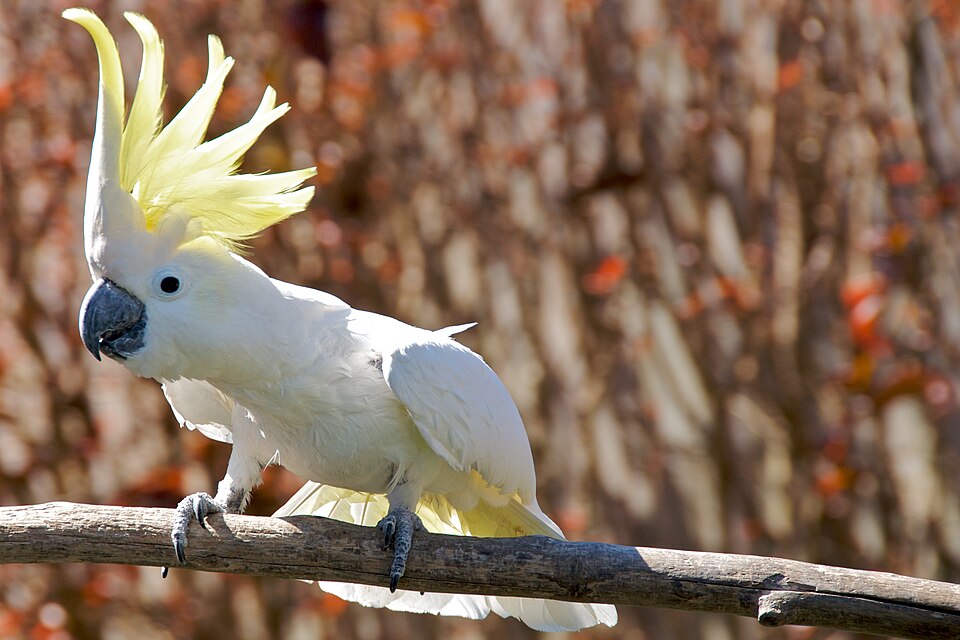
ADW gives the sulphur-crested cockatoo a length of 45 to 50 cm (18 to 20 in), an average weight of 800 g (700 to 950 g, about 1.5 to 2 lb) and a wingspan of about 103 cm (41 in). The plumage is white, with yellow tones in the crest and under the wings. Other species in the family can differ in size and color, so when buying, ask for the full species name and its papers, and don't apply the sulphur-crested measurements on this page to every cockatoo.
 Daily care
- Heavy attention: The review by Piseddu and colleagues says feather damage is more common in parrots left alone more than six hours a day. In the list by Chalmers and colleagues, social isolation is the second most important welfare issue.
- Feather plucking: Merck lists causes as medical (skin inflammation, malnutrition, toxins, cancer, liver or kidney disease), behavioral (stress, boredom, sexual frustration) and environmental (seed diet, lack of sunlight, disrupted sleep). Because stroking the back can stimulate mating behavior, it is a trigger to avoid, especially in cockatoos.
- Hormones: Merck says cockatoos can develop hormonal behavior problems; if you run into them, talk to a bird vet or a behavior specialist.
- Enrichment: Safe, chewable toys and foraging games for that destructive beak. See bird toys.
- Sleep and bonding: Uninterrupted night sleep (Merck); bonding with your bird.
 Cage and living space
RSPCA Australia's rules: width at least three times the combined wingspan of a pair; at least two wing beats between perches; height at least three times the head-to-tail length of the largest bird. For the sulphur-crested cockatoo ADW gives a wingspan of about 103 cm; apply that rule to a pair and the width comes out at around six meters (about 20 feet). We worked that out ourselves; RSPCA doesn't give the figure for cockatoos. For most homes the realistic way out is to offer the bird regular safe flight indoors and a very large living space, or to accept that it isn't a fit.
- Wire: For parrots over 500 g, RSPCA lists strong wire with 25 to 75 mm by 25 to 50 mm mesh and 1.24 to 2.0 mm thickness; chicken wire is easily chewed and can lead to heavy metal poisoning.
- Perches: Chewable natural branches; metal pipe and sandpaper-covered perches aren't recommended.
- Metal: Merck says zinc and lead can come from cages and toys.
- Location: Cage placement guide.
Diet
ADW says in the wild they eat mostly seeds, nuts, fruit, blossoms and insects; in captivity they're given fresh fruit, vegetables, seeds, nuts, pellets, legumes and grains, with fatty foods (such as peanuts) kept small because of obesity risk. Merck says a diet heavy in seeds and nuts is high in fat and low in vitamins and minerals; its goal is a balanced pelleted diet with a smaller share of fresh vegetables and fruits. Build the plan with a bird-savvy veterinarian. See foods that are harmful to birds.
 Health issues to know about
Merck says birds hide illness. What follows is for information; talk to a veterinarian who sees birds for diagnosis and treatment.
- Signs of illness: Fluffed feathers, sleeping a lot, less interest and voice, sitting low on the perch, loss of balance, breathing trouble, changes in droppings and eating or drinking (Merck).
- Psittacine beak and feather disease (PBFD): Merck says it is caused by a circovirus, that testing has made it far less common in cockatoos than before but it can still occur, that it affects young birds, that it can show up as feather loss, feather changes and loss of powder down, and that it has no cure. Ask your veterinarian about testing and quarantine before mixing a new bird with others.
- Feather plucking: See the daily care section above.
- Obesity: ADW mentions the obesity risk of fatty foods.
- Chlamydia (psittacosis): The bacterium Chlamydia psittaci can pass to people; Merck says dried droppings and feather dust can carry it for months and recommends gloves and handwashing when dealing with a sick bird. If you get flu-like symptoms, tell your doctor you keep birds.
- Fume and gas poisoning: Overheated nonstick coatings, self-cleaning ovens and some sprays can kill birds very quickly (Merck). See hidden dangers for birds at home.
- Open-mouth, wheezing or tail-bobbing breathing
- Fluffed up and slumped on the cage floor
- Loss of appetite, vomiting or a clear change in droppings
- Loss of balance or weakness
- Exposure to smoke, spray or nonstick fumes (move to fresh air first, then go to the vet right away)
How long does it live?
Merck gives 25 to 50 years for cockatoos. For the sulphur-crested cockatoo ADW gives a wild average of about 40 years (a record high of 57) and a captive average of about 65 years (a record high of 120); the extreme values may not be well verified. Either way, the bird may outlive its owner. Chalmers and colleagues list the care of elderly birds and the lack of a "life plan" among the important welfare issues.
 Before you get one
- Shelters and rescues: Parrot rescue groups exist, and birds needing new homes are often available.
- CITES and papers: ADW says the sulphur-crested cockatoo is in CITES Appendix II. Some species in the genus are in Appendix I: in the European Union's wildlife trade annexes (Appendix I species marked "(I)"), Cacatua goffiniana, C. haematuropygia, C. moluccensis and C. sulphurea appear. It varies by species: when buying, ask for the full scientific name of the species and its papers. In Türkiye a CITES permit is required for the export, import and re-export of Appendix I and II species; people and businesses that trade in them must register and keep stock records, and specimens obtained against the rules can be seized (Mevzuat Bilgi Sistemi). For details on keeping at home, ask your local Nature Conservation and National Parks provincial directorate.
- Never wild-caught: Ask for the documented breeding source.
- Judge the seller: RSPCA Australia recommends sellers who are honest, knowledgeable, tell you the bird's history and offer a refund or replacement for health problems; Chalmers and colleagues treat selling unweaned chicks to inexperienced owners as a welfare issue.
- Access to avian vets: RSPCA says specialist avian vets may not be available everywhere, so check ahead.
Frequently asked questions
Can a cockatoo be my first bird?
Merck does not recommend them for inexperienced owners. A smaller, quieter species is a safer way to gain experience.
Does it talk?
Merck says some individuals can talk in quiet voices, but the scream is its main way of communicating.
Why does it scream so much?
ADW says the screech is the main way of keeping in touch with the flock in the wild. Chalmers and colleagues discuss excessive screaming among challenging behaviors linked to stress from stimuli that bother the bird; talk to your bird vet or a behavior specialist about the cause.
Can I stroke its back?
Merck says stroking the back can mimic mating behavior, and in cockatoos especially it can raise hormones and make feather plucking worse.
How long does it live?
Merck gives 25 to 50 years; ADW gives higher figures.
Sources
- Animal Diversity Web (University of Michigan) · Cacatua galerita
- Merck Veterinary Manual · Choosing a Pet Bird
- Merck Veterinary Manual · Skin and Feather Disorders of Pet Birds
- Merck Veterinary Manual · Nutritional Disorders of Pet Birds
- Merck Veterinary Manual · Disorders Affecting Multiple Body Systems of Pet Birds (psittacosis, fume and gas poisoning)
- Merck Veterinary Manual · Illness in Pet Birds
- Chalmers, Cooper and Ventura · What are the priority welfare issues facing parrots in captivity?, Animal Welfare (2024)
- Piseddu, van Zeeland and Rault · What we (don't) know about parrot welfare, Animal Welfare (2024)
- RSPCA Australia Knowledgebase · What kind of enclosure does my bird need?
- RSPCA Australia Knowledgebase · Are birds the right companion animals for me?
- European Union · Commission Regulation (EU) 2023/966 (wildlife trade annexes; CITES Appendix I species marked "(I)")
- Mevzuat Bilgi Sistemi (Türkiye) · Regulation on implementing the CITES convention
By Tüylüm · Last checked: November 10, 2026. Compiled from the sources above and written in our own words. Spotted a mistake? Write to [email protected] and we'll fix it right away. Photo from Wikimedia Commons, used under the license shown below it.