 Tüylüm
Amazon Parrot
Medium-sized, green, highly social, talkative and loud parrots that live for decades. Their very long lifespan, loud voice, strong beak and heavy need for attention make them a poor fit for first-time bird owners. Loneliness and feather-damaging behavior are often discussed in this group.

 Lifespan≈ 40–50 yearsMerck; may outlive its owner
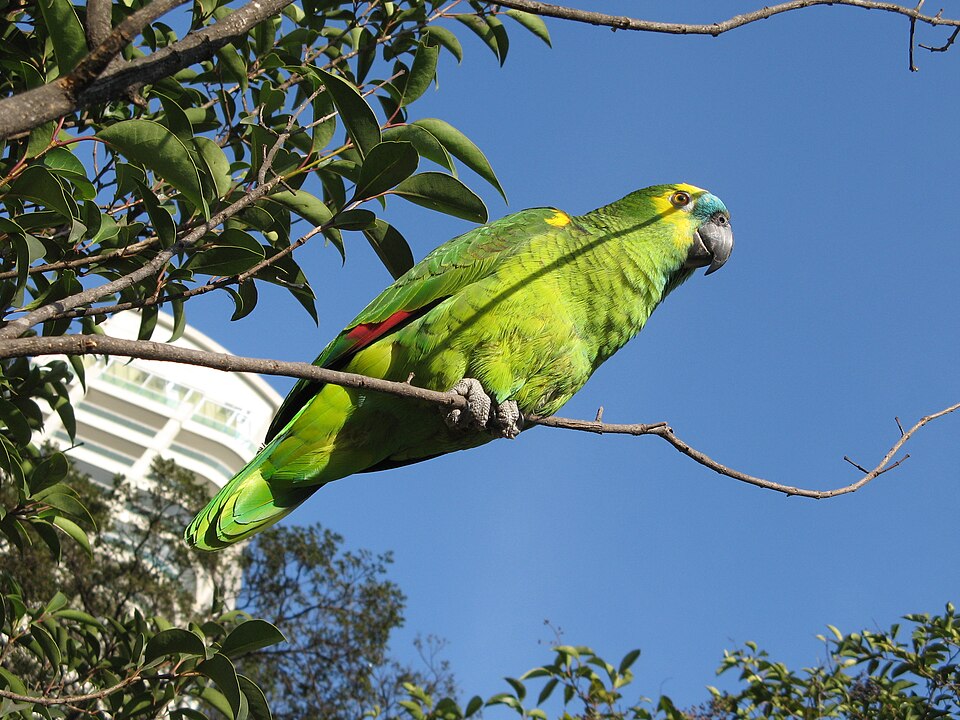
 Length13–15 in (33–38 cm)blue-fronted Amazon (A. aestiva)
 OriginSouth Americaspecies from Mexico to South America
 VoiceLoudtalks, screams, sings
 Social lifeVery socialtrouble if left alone
 CageVery largedaily flight and space are a must
 DietPellets + veggiesprone to obesity
 LegalCITES App. II / Idepends on species; ask for papers
"Amazon parrot" is the common name for the medium-sized, mostly green parrots of the genus Amazona. Dozens of species live across a wide region from Mexico to South America, and one of the species most often kept at home is the blue-fronted Amazon (Amazona aestiva). Their bright colors, talking ability and "personality" make them appealing, but their long lifespan and high needs are a serious responsibility. This is a genus page; species differ, and our sources lean mostly on the blue-fronted Amazon.
- Very long life: Merck gives 40 to 50 years for Amazons; Animal Diversity Web cites a record of up to 70 years in captivity for the blue-fronted Amazon. It may outlive you.
- Loud: Merck describes Amazons as medium to large, often excellent talkers and singers, but loud.
- Social isolation: In a 2024 expert study, social isolation throughout life ranked second among the top welfare issues.
- Feather plucking: Amazons come up often in research on this; the causes are usually a mix of medical, behavioral and environmental factors.
- Not for first-time bird owners: The sources we read (Merck, RSPCA, the expert study) show that birds like these need a lot of time, knowledge and long-term planning.
What to know
 What is the Amazon Parrot like?
Amazon parrots are social, smart and assertive. Merck describes them as sometimes moody and often bonding closely with one person. Animal Diversity Web says the blue-fronted Amazon stays close to its flock all year in the wild, is monogamous, and that nine different vocalizations have been identified, used in feeding, flight, contact, alarm and defense. So at home you live with a bird that communicates constantly: it calls to you, screams and sings.
Intelligence cuts both ways. The 2021 study by Mellor and colleagues is based on a survey of 1,378 pet bird owners covering 50 species; in species with relatively large brains, oral and whole-body repetitive behaviors were more common, and in species whose natural foraging requires a lot of food handling, feather-damaging behavior was more common. About one in five surveyed birds showed feather-damaging behavior. A bored, intelligent bird can end up harming itself.
Every bird is an individual and species differ. Temperament, upbringing, health and living conditions shape behavior. This page is no substitute for a bird vet or a behavior specialist.
Who is it a good fit for?
An Amazon may suit experienced people who can spend hours with the bird every day for many years, are ready for a loud, demanding bird, have access to a bird vet and can plan for what happens after them. The expert study by Chalmers and colleagues says owners often don't know what parrot ownership involves and that having no "life plan" for the bird is among the priority welfare issues.
| Situation | A good fit? |
|---|---|
| Apartment | Hard; the loud voice can bother neighbors and a lot of space is needed |
| Family with kids | Careful; a strong beak and moody nature, bird and child always supervised |
| Home with a cat or dog | Careful; never leave them alone together |
| Long hours away from home | Not a good fit; social isolation is a main welfare issue |
| First-time bird owners | Not a good fit; gain experience first with a smaller, less demanding species |
Where does it come from?
The genus Amazona covers dozens of species spread across Mexico and Central and South America. Animal Diversity Web says the blue-fronted Amazon lives in the Amazon region, especially northeastern Brazil, and in the forests of Bolivia, Paraguay and northern Argentina. The species is Least Concern on the IUCN list but its population is declining; habitat loss from logging and land clearing is the main cause. The same page says illegal capture is also a key driver of over-exploitation and that some birds are used as lures to attract wild parrots.
That is why choosing a documented, captive-bred bird matters for the species too.
Appearance and colors
ADW gives the blue-fronted Amazon a length of 33 to 38 cm (13 to 15 in) and a weight of 275 to 510 g (about 10 to 18 oz, average 400 to 430 g), and says the sexes look alike to the human eye. The body is green, with blue and yellow areas on the forehead and face. Other Amazona species differ in color and size.
 Daily care
- Heavy attention: The systematic review by Piseddu and colleagues says feather damage was more common in parrots left alone more than six hours a day. Social isolation was also linked to repetitive behaviors, less preening and flight, more vocalizing and avoidance of humans.
- Enrichment: Chalmers and colleagues list limited ability to express behaviors (enrichment and flight) as the fourth issue. Offer foraging games, new toys and safe chewable branches. See bird toys.
- Feather plucking: Merck sorts the causes into medical (skin inflammation, malnutrition, toxins, cancer, liver or kidney disease), behavioral (stress, boredom, sexual frustration) and environmental (seed-heavy diet, lack of sunlight, disrupted night sleep). Behavioral causes are usually considered once medical causes are ruled out. If you see plucking, see a bird vet.
- Sleep and light: Merck recommends uninterrupted night sleep and daily sunlight. See birds and sleep and light.
- Bonding: Our bonding with your bird article is built on rewards and going at the bird's pace.
 Cage and living space
RSPCA Australia's rules aren't genus-specific: width at least three times the combined wingspan of a pair; at least two wing beats between perches; height at least three times the head-to-tail length of the largest bird. More is needed for more than one bird or species. RSPCA says cages are usually too small for flight and that birds need either a flight aviary or regular, safe chances to fly indoors.
- Wire: For parrots over 500 g, RSPCA lists strong wire with 25 to 75 mm by 25 to 50 mm mesh and 1.24 to 2.0 mm thickness; thin mesh like chicken wire is easily chewed and swallowed and can lead to heavy metal poisoning.
- Perches: Chewable natural branches of different thicknesses; metal pipe and sandpaper-covered perches aren't recommended.
- Metal: Merck says zinc and lead can come from cages and paint; choose a stainless steel cage.
- Location: In a corner, away from foot traffic, with little risk of collisions with doors and glass. See the cage placement guide.
Diet
Merck says a diet heavy in seeds and nuts is high in fat and low in vitamins and minerals and is linked to liver, kidney, respiratory and bone problems. Birds pick out the tastier seeds and leave the pellets, so mixing them doesn't ensure balance. Merck's goal is a balanced pelleted diet with a smaller share of fresh vegetables and fruits. The same page names Amazons and macaws among the species most prone to obesity; being 20% over ideal weight counts as obese. It recommends measured portions, a larger cage and chances to fly and walk. Build the plan with a bird-savvy veterinarian. See foods that are harmful to birds.
 Health issues to know about
Merck says birds hide illness. What follows is for information; talk to a veterinarian who sees birds for diagnosis and treatment.
- Signs of illness: Merck lists fluffed feathers, sleeping a lot, less interest and talking, sitting low on the perch, loss of balance, breathing trouble, changed droppings and changed eating or drinking.
- Feather damage: If it continues, medical and behavioral causes need to be assessed together; talk to your veterinarian.
- Chlamydia (psittacosis): The bacterium Chlamydia psittaci can pass to people. Merck says it spreads through nasal discharge and droppings, that dried droppings and feather dust can carry it for months, and recommends gloves and handwashing when dealing with a sick bird. If you get flu-like symptoms, tell your doctor you keep birds.
- Fume and gas poisoning: Overheated nonstick coatings, self-cleaning ovens and some sprays can kill birds very quickly (Merck). See hidden dangers for birds at home.
- Heavy metals: Zinc and lead (Merck) can come from cages and toys.
- Open-mouth, wheezing or tail-bobbing breathing
- Fluffed up and slumped on the cage floor
- Loss of appetite, vomiting or a clear change in droppings
- Loss of balance, weakness, tremors
- Exposure to smoke, spray or nonstick fumes (move to fresh air first, then go to the vet right away)
How long does it live?
Merck gives 40 to 50 years for Amazon parrots. Animal Diversity Web cites up to 70 years in captivity for the blue-fronted Amazon but gives no wild lifespan, so read that extreme figure with care. The real takeaway: your bird's life may be longer than your plans. Chalmers and colleagues list the lack of a "life plan" (end of life and rehoming) among the priority issues; talk it over early with family, in a will or with a rescue organization.
 Before you get one
- Shelters and rescues: Parrot rescue groups exist, and birds needing new homes are often available.
- CITES and papers: ADW lists the blue-fronted Amazon in CITES Appendix II, but many species in the genus are in Appendix I. In the European Union's wildlife trade annexes (Appendix I species marked "(I)"), species such as Amazona vittata, A. oratrix, A. barbadensis, A. leucocephala, A. guildingii and A. vinacea appear as Appendix I. It varies by species: when buying, ask for the full scientific name of the species and its papers. In Türkiye a CITES permit is required for the export, import and re-export of Appendix I and II species; people and businesses that trade in them must register and keep stock records, and specimens obtained against the rules can be seized (Mevzuat Bilgi Sistemi). For details on keeping at home, ask your local Nature Conservation and National Parks provincial directorate.
- Never wild-caught: ADW says illegal capture is a major threat to the blue-fronted Amazon. Ask for the documented breeding source.
- Judge the seller: RSPCA Australia recommends sellers who are honest, knowledgeable, tell you the bird's history and diet, offer a refund or replacement for health problems and don't sell unweaned chicks to novices. Chalmers and colleagues treat selling unweaned chicks to inexperienced owners as a welfare issue.
- Access to avian vets: RSPCA says avian vets may not be available everywhere, so check how far the nearest one is and what they charge.
Frequently asked questions
Can an Amazon be my first bird?
The sources don't support that: Merck says they can be loud and moody, and the expert study puts owners' lack of knowledge as the number one problem. A smaller, quieter species is a safer way to gain experience.
Does it talk?
Merck says they are often excellent talkers; still, not every bird talks and talking is no guarantee.
Is it loud?
Yes; Merck says they are loud, and ADW notes the blue-fronted Amazon has a repeated "wak-wak" call.
Can it live alone?
The expert study counts social isolation among the biggest welfare issues and cites isolation-linked feather damage in orange-winged Amazons as an example. You would need to spend long hours with these birds every day.
How long does it live?
Merck gives 40 to 50 years.
Sources
- Animal Diversity Web (University of Michigan) · Amazona aestiva
- Merck Veterinary Manual · Choosing a Pet Bird
- Merck Veterinary Manual · Skin and Feather Disorders of Pet Birds
- Merck Veterinary Manual · Nutritional Disorders of Pet Birds
- Merck Veterinary Manual · Disorders Affecting Multiple Body Systems of Pet Birds (psittacosis, fume and gas poisoning)
- Chalmers, Cooper and Ventura · What are the priority welfare issues facing parrots in captivity?, Animal Welfare (2024)
- Mellor et al. · Nature calls: intelligence and natural foraging style predict poor welfare in captive parrots, Proc R Soc B (2021)
- Piseddu, van Zeeland and Rault · What we (don't) know about parrot welfare, Animal Welfare (2024)
- RSPCA Australia Knowledgebase · What kind of enclosure does my bird need?
- RSPCA Australia Knowledgebase · Are birds the right companion animals for me?
- European Union · Commission Regulation (EU) 2023/966 (wildlife trade annexes; CITES Appendix I species marked "(I)")
- Mevzuat Bilgi Sistemi (Türkiye) · Regulation on implementing the CITES convention
By Tüylüm · Last checked: November 10, 2026. Compiled from the sources above and written in our own words. Spotted a mistake? Write to [email protected] and we'll fix it right away. Photo from Wikimedia Commons, used under the license shown below it.