 Tüylüm
Thai cat (traditional Siamese)
The native pointed cat of Thailand; in the GCCF a pointed breed descended from the Korat, while other registries use the name for a separate breed descended from the Siamese. Social, clever and talkative, and it does not like being alone. It helps to know that the name describes different cats depending on the registry.

 LifespanUsually longGCCF: many reach 17–19; not research data
 Weight8–10 lb (3.6–4.5 kg)GCCF; males are larger
 OriginThailandWichien Maat, the native pointed cat
 CoatShort, glossyglove once or twice a week (GCCF)
 EnergyActiveclimbs, wants to be involved (GCCF)
 VoiceOften vocalGCCF
 With childrenUsually goodGCCF
 Alone timeDifficultdoes not cope well alone (GCCF)
"Thai" is one of the most confusing names in the cat world. It describes the native pointed cat of Thailand, but depending on which registry you look at, the name can point to different cats: in one place cats descended from the Siamese, in another the pointed variety of the Korat. This page explains what the breed is, how it differs from the modern Siamese, its temperament, care and what we know about its health.
- Personality: According to the GCCF, social, clever, affectionate and often vocal; it wants to be involved in household activities and does not cope well alone.
- Name confusion: In the GCCF, "Thai" is a pointed breed descended from the Korat; in other registries the same name is given to cats descended from the Siamese.
- Looks: In the GCCF, Korat-type: medium-sized, muscular, heart-shaped head, large round eyes, a short coat with silver tipping.
- Health: The GCCF tests Korat and Thai lines for GM1 / GM2 and for atherosclerosis (hardening of the arteries).
- Registration: In Türkiye, microchipping and PETVET registration are mandatory for cats.
What to know
 What is the Thai cat (traditional Siamese) like?
According to the GCCF, the Thai is sociable, intelligent and affectionate, and often vocal. It wants to be involved in household activities and in the middle of things, loves to climb and is good with children. On the other hand it can be territorial toward other cats and does not cope well with long periods alone. So a home where someone can give it time, or where two cats can be kept, suits it better.
Every cat is an individual. Breed traits describe general tendencies; meeting people and household sounds as a kitten shapes character at least as much as breed does. Also, these sentences are about the Thai as the GCCF defines it; in other registries the name Thai can be given to cats from a different lineage.
 Who is it a good fit for?
It suits households that can talk to a cat, play with it and not leave it alone for long stretches. Usually good in a home with children, but it can be territorial with other cats.
| Situation | A good fit? |
|---|---|
| Apartment | Yes, but climbing spaces and play are essential |
| Family with children | Usually compatible (GCCF) |
| Other cats | Can be territorial (GCCF); introduce slowly |
| Long hours alone | Not suitable (GCCF) |
| First-time cat owners | Can be a fit; take its voice and attention needs seriously |
Where does it come from?
According to the GCCF, the Thai (Wichien Maat) is the native pointed cat of Thailand and shares ancestry with the Siamese. Siamese cats were brought to the UK in the 1880s. After World War II, the Siamese was bred toward a slimmer build and a longer head, while some breeders kept the older look. The GCCF's Siamese page also says the original cats were medium-sized with long bodies, moderately wedge-shaped heads and large ears, and that a slimmer build was favored later.
This is where the confusion starts: the Thai as the GCCF describes it descends only from the Korat. Breeding of Korats in the West produced pointed kittens from the late 1950s, and in the late 1980s and 1990s recessive genes gave rise to blue and lilac pointed kittens and solid lilac ones. The GCCF granted preliminary recognition in February 2002, and the breed now has championship status. According to the GCCF, Thais in other registries descend from the Siamese and are a separate breed; in other words, the same name describes two different lineages. In the GCCF's own words, Thais are "simply Korats wearing a different coat."
FIFe also recognizes the Thai (THA). According to FIFe's rules, crossbreeding with other breeds is not allowed, only recognized colors are used (cinnamon, fawn, silver, golden and white are not accepted), and new cats can join the breed only as documented imports from Thailand. FIFe's rules do not say whether the cat descends from the Siamese or the Korat.
In short, when you say "Thai," ask the breeder which registry's standard they mean.
 Appearance and colors
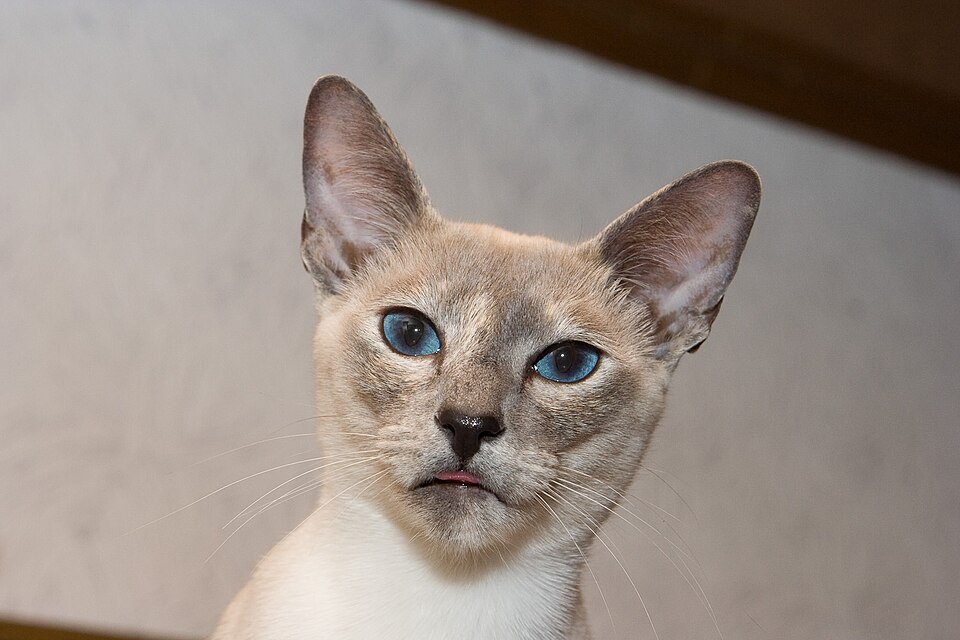
The Thai in the GCCF has the Korat's medium-sized, muscular, lithe build.
- Head and eyes: A heart-shaped head, large round eyes and large ears with rounded tips.
- Coat: Short, fine and glossy, with silver tipping. The tail is medium in length, tapering to a rounded tip.
- Blue and lilac point: The body is off-white, cream or light fawn; the points are any shade of blue or lilac. Adults have clear blue eyes.
- Solid lilac: A warm pinkish-beige body tipped with silver; adults have clear green eyes.
- Eyes in kittens: Kittens and young cats may have yellow or amber eyes that change with age.
- Size: According to the GCCF, usually 8 to 10 lb (3.6 to 4.5 kg); males are larger and heavier than females.
How it differs from the modern Siamese
According to the GCCF, today's Siamese standard calls for a long, svelte body on fine legs, a long, tapering tail, a longer head and a straight profile. The GCCF's Thai instead carries the Korat's head and body, so it is rounder in outline and sturdier. According to the GCCF, Thais in other registries descend from the Siamese and are a separate breed; the same name describes two different lineages. We could not open and read those registries' standards, so we write no details about them.
Daily care
Care is easy: the GCCF says a grooming glove or rubber brush once or twice a week removes dead hair without harming the coat. Do nail, ear and dental care the way your veterinarian shows you. For more, see cat grooming.
- Play and mind: A clever, social cat; give it puzzle feeders, a climbing tree and daily play.
- Voice and body language: It can be talkative; to understand your cat, cat body language helps.
- Time alone: According to the GCCF it does not cope well alone; keep alone time short and consider a second cat: introducing two cats.
 Diet and weight
We found no special diet advice for the Thai. A balanced, complete cat food suited to age and lifestyle is enough. Measure the food, subtract treats from the daily amount, set the daily amount with your veterinarian, and weigh your cat monthly. For choosing, placing and cleaning bowls, see our food and water bowl guide; always keep clean, fresh water within reach. If you want to mix wet and dry food or switch foods, talk to your veterinarian and make the change gradually.
 Health issues to know about
The following is for information only; ask your veterinarian for diagnosis and treatment.
According to the GCCF, Thais are long-lived, but two breed-specific issues are reported:
- GM1 and GM2 gangliosidosis: Two fatal inherited diseases of the nervous system that usually kill affected cats before their first birthday. According to the GCCF, UK Korat and Thai lines tested clear in 1998, and the GCCF requires testing or known clear parents before registration.
- Atherosclerosis (hardening of the arteries): A recessive gene that can cause arterial disease and heart failure was found in the Korat; a genetic test became available in 2025 and breeders are testing their lines. The GCCF writes that Thais are being tested too.
The GCCF's Korat page also notes that because of low body fat, veterinarians should take this into account when planning anesthesia; that is written for the Korat, not said directly about the Thai. The problems listed on the GCCF's Siamese page (some cancers, coughing, asthma-like signs and so on) are written about the Siamese, not the Thai, so we do not transfer them. Ask the breeder for the parents' GM1/GM2 results and the atherosclerosis test. As with any cat, regular veterinary checks of the heart, kidneys and teeth are a good starting point.
- Fast or open-mouth breathing, tiring quickly
- Stumbling, tremors or loss of balance
- Drinking or urinating a lot, loss of appetite or weight loss
- Hiding and reacting when touched (cats hide pain)
How long does it live?
We found no breed-specific lifespan study for the Thai. The GCCF writes that Thais are long-lived, that many reach their late teens and a few pass 20; that is a registry's general statement, not research data. Lifespan is most affected by an ideal weight, regular veterinary checks, spaying or neutering, and a safe home. Regular checks, vaccinations, parasite prevention and dental care are the foundation of care; ask your veterinarian which checks they recommend as your cat ages.
 Before you get one
- Think about shelters too: Pointed, blue-eyed cats turn up in shelters; a loving companion could be waiting there even if it is not a Thai.
- If you buy from a breeder: The breed is rare and the name is confusing. Ask to see the mother and father; ask which registry's standard the cat is a "Thai" under, and ask for GM1/GM2 results, the pedigree and vaccination records. Stay away from sellers who sell every pointed cat as a "Thai" or a "traditional Siamese."
- Red flags: Sellers who will not show the mother, who always have kittens for sale, who offer no paperwork, or who rush you to "buy now."
- Legal registration: In Türkiye, microchipping and PETVET registration are mandatory for cats. Details are in our article on PETVET registration and microchips.
- The first days: International Cat Care recommends starting a new cat in a single room, leaving a place to hide, and waiting for the cat to come out on its own rather than forcing it. Our first week with a new cat article walks through it step by step.
Frequently asked questions
Is the Thai the same as the Siamese?
No, but they get confused. The modern Siamese is slimmer, with a long body and a long head; the GCCF's Thai carries the Korat's head and body. According to the GCCF, in other registries Thai is the name given to cats descended from the Siamese. For a comparison, see our Siamese page.
How is the Thai related to the Korat?
According to the GCCF, the Thai is a pointed Korat: Thais are "simply Korats wearing a different coat." The two share a breeding policy and a breed association, and common genetic tests are used. For details, see our Korat page.
What colors does it come in?
In the GCCF: blue point, lilac point and solid lilac. FIFe does not accept cinnamon, fawn, silver, golden and white.
Can it be left alone at home?
According to the GCCF it does not cope well with long periods alone. Play, attention and an enriched environment are essential.
Does it get along with children and other pets?
The GCCF says it gets along well with children and can be territorial toward other cats. Keep introductions supervised and slow.
How much does it weigh?
According to the GCCF, usually 8 to 10 lb (3.6 to 4.5 kg); males are larger. Work out your own cat's ideal weight with your veterinarian.
Sources
- GCCF (Governing Council of the Cat Fancy) · Thai
- GCCF (Governing Council of the Cat Fancy) · Korat
- GCCF (Governing Council of the Cat Fancy) · Siamese
- FIFe (Fédération Internationale Féline) · Breeding and Registration Rules, 2026 edition (THA section)
- International Cat Care · Helping your new cat or kitten settle in
- Resmî Gazete (Official Gazette of Türkiye) · Regulation on Identification and Registration of Cats, Dogs and Ferrets (February 26, 2018)
By Tüylüm · Last checked: November 10, 2026. Compiled from the sources above and written in our own words. Spotted a mistake? Write to [email protected] and we'll fix it right away. Photo from Wikimedia Commons, used under the license shown below it.