Handling a reptile the right way: getting it used to you, holding it correctly and washing your hands
A cat climbs into your lap; a dog runs to you when it sees you. A reptile usually doesn't. According to the Merck Veterinary Manual, most reptiles can't tolerate much handling; they're best suited to adults and older children who enjoy watching them. According to RSPCA Australia, most reptiles don't like being lifted, either. Still, done the right way, many can get used to handling. In this article, we explain how to hold your reptile in a way that protects both of you.
- Hands off the first week: According to the RSPCA, avoid unnecessary handling during a new reptile's first week; let it settle in.
- Let it see you, never grab: According to the CDC, a startled animal may bite. According to the RSPCA, never try to grab a reptile.
- Support from underneath: Support its whole body, its spine and its legs.
- Never by the tail: Some lizards can drop their tail.
- Keep it short: According to the RSPCA, 10–15 minutes at a time; longer can lower its body temperature.
- Wash your hands: With soap and running water after every touch.
Why isn't a reptile a lap pet?
According to RSPCA Australia, handling a reptile takes knowledge, confidence and often a helper. Reptiles can bite and scratch, and careless handling can injure them too. According to RSPCA Australia, many captive reptiles may have weakened bones; dropping them or failing to support the spine can cause severe injuries.
So the goal isn't to carry it around often; as RSPCA Australia puts it, handle it calmly, safely and briefly. These short moments are useful too: according to the RSPCA, handling a bearded dragon often makes it easier to check for health issues. The CDC also recommends handling your pet often so it gets used to being held.
Temperament varies from species to species. According to RSPCA Australia, bearded dragons and large lizards such as blue-tongued skinks are usually docile, while some species can become aggressive as adults. Get to know your species.
The first week: just watch
All of the RSPCA's species guides say the same thing: avoid unnecessary handling of a new reptile during its first week. Put your bearded dragon in its vivarium, leave food and water, and leave it alone until the next day. Use this time to watch it, too: when it's active, when it hides, what it does when it sees you.
Holding it right, step by step
- Let it see you: According to the CDC, make sure the animal sees you before you pick it up; a startled animal may bite.
- Don't grab from above: According to the RSPCA, never surprise or grab a reptile; it causes stress and can lead to struggling or biting.
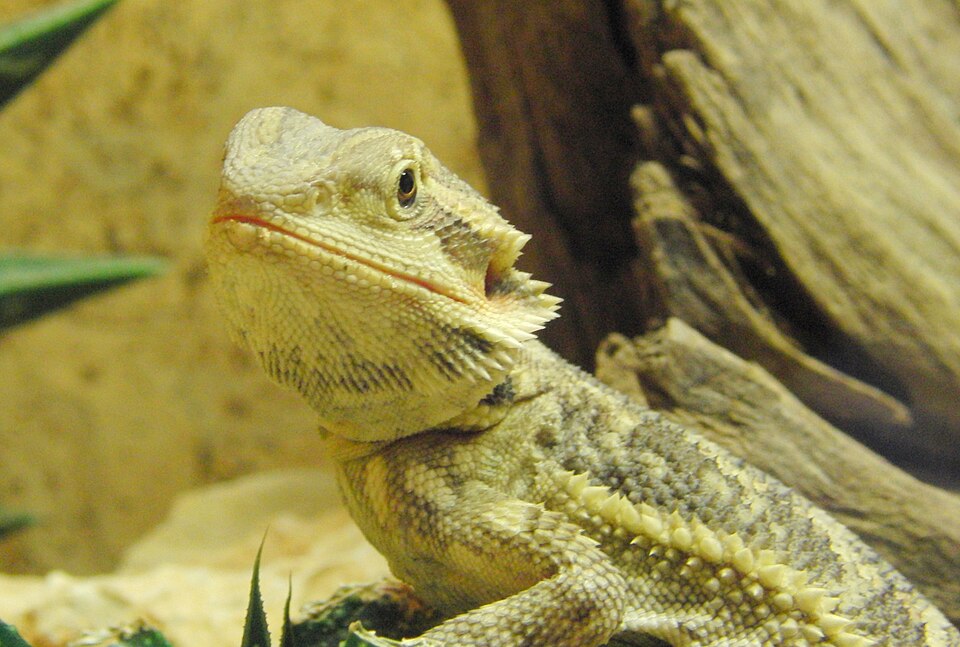
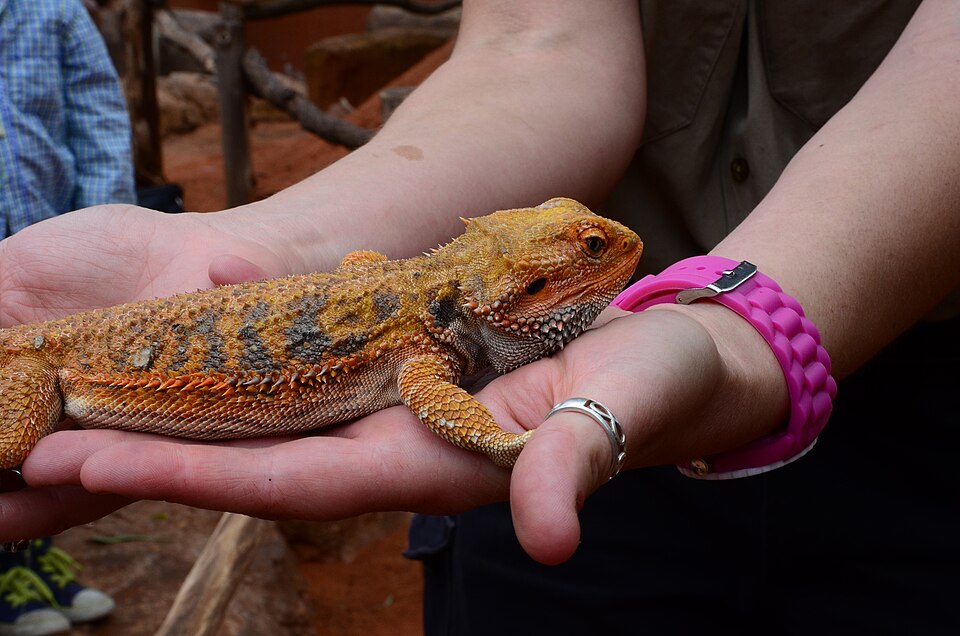
- Lift from underneath: According to the RSPCA, gently scoop up a bearded dragon or a leopard gecko with both hands, so all four feet are supported.
- Be the rock or the tree: RSPCA Australia recommends letting a lizard rest on your hand or forearm; to it, you're a rock or a branch.
- Don't squeeze: According to RSPCA Australia, squeezing usually isn't needed and may make it try to escape.
- Keep it short: According to the RSPCA, 10–15 minutes at a time is safe, depending on the room temperature. Longer can lower its body temperature.
- Other pets away: The RSPCA advises keeping other pets separate, however trustworthy they've been before.
Lizards: leave the tail alone
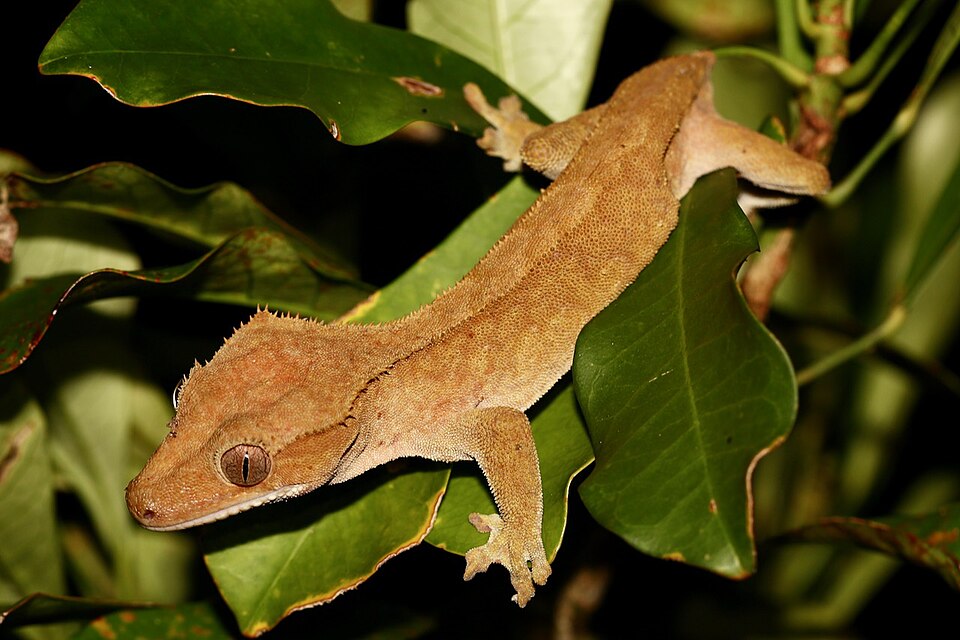
According to RSPCA Australia, geckos and skinks can drop their tails, which sometimes happens when they're lifted by the tail. A leopard gecko's thick tail isn't just for show: according to the RSPCA, if pressure is put on the tail, the gecko can drop it; even though the tail grows back, the gecko uses up its fat stores to regrow it, which is dangerous for its health. Never pick up a lizard by its tail, and never put pressure on it. Details: leopard gecko care.
Snakes: support the body, not the head
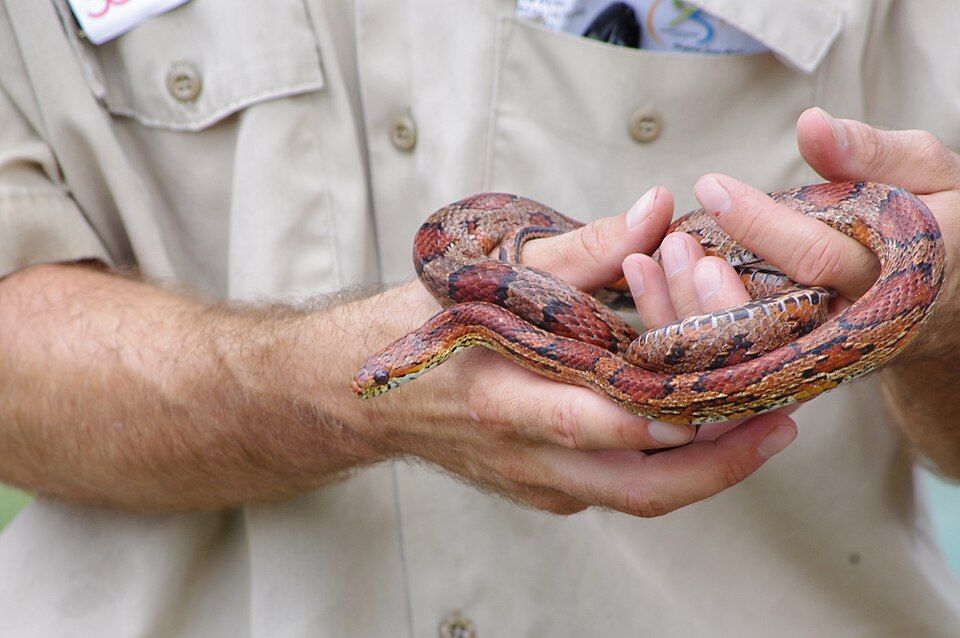
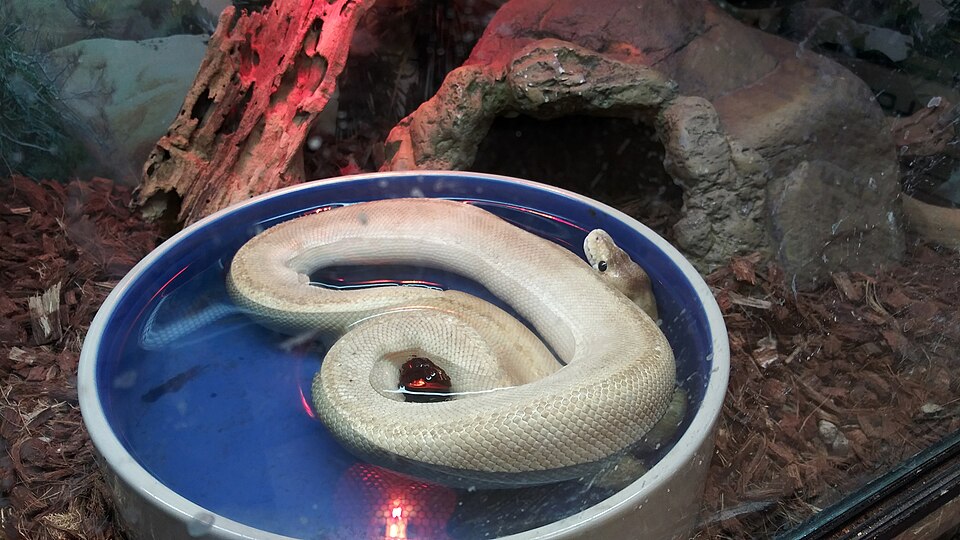
The RSPCA recommends gently scooping up a corn snake with one hand under the body near the head and the other nearer the tail, supporting the whole animal. According to RSPCA Australia, restraining the head usually makes a snake struggle; support the body instead, and support the spine at all times.
- 48 hours after a meal: According to the RSPCA, don't handle a snake for 48 hours after feeding; it may bring up its food.
- Prey scent: According to the RSPCA, don't handle your snake after touching prey; it may smell food and try to bite. Wash your hands well first.
- Shedding: According to the RSPCA, snakes may behave defensively around shedding time; according to RSPCA Australia, a shedding python's skin can be sensitive. Don't handle it during this time.
- Hungry snakes: According to RSPCA Australia, hungry snakes are more likely to bite at feeding time.
- Large snakes: According to RSPCA Australia, you need about one person per meter (about 3 ft) of snake; never handle a python longer than 2 meters (about 6.5 ft) on your own.
Details by species: corn snake, ball python.
Turtles
According to RSPCA Australia, hold a turtle by the rim of its upper shell, at the front and back or at both sides. Even without teeth, it can give a painful nip with the sharp edge of its jaw, and its long claws can scratch. Details: turtle care.
When should you put it down? Signs of stress
A reptile knows how to say "that's enough"; you just need to recognize the signs.
| Species | Put it back if you see these signs |
|---|---|
| Bearded dragon | According to RSPCA Australia, if its back, sides and beard darken; according to the RSPCA, if it backs away or threatens to bite |
| Leopard gecko | According to the RSPCA, if it backs away or tries to bite |
| Snakes | According to the RSPCA, if it pulls its neck back into an "S" shape seen from above; according to RSPCA Australia, if it hisses loudly and constantly, flicks its tongue faster or strikes |
| Turtles | According to RSPCA Australia, if it bites or scratches, or pulls into its shell |
If you see these signs, put it back in its vivarium and try again another time.
Hands: before and after
Reptiles can carry germs that make people sick, even when they look healthy. According to Merck, a reptile doesn't have to be sick to pass these germs on.
- After: According to the CDC, wash your hands with soap and running water after touching your reptile, its food, its equipment or its enclosure, and before eating or drinking.
- No soap? The CDC recommends a hand sanitizer with at least 60% alcohol; supervise young children when they use it.
- Away from your face: According to the CDC, don't kiss your reptile or hold it near your face.
- No snacks: According to Merck, don't eat, drink or smoke while handling your reptile or cleaning its enclosure.
- Bites or scratches: According to the CDC, wash them right away with warm, soapy water, even if they seem minor. See a doctor if the wound is serious, becomes red, painful, warm or swollen, or if your last tetanus shot was more than 5 years ago.
Details: reptiles and Salmonella.
Children and transport
According to the CDC, children younger than 5 shouldn't touch reptiles or their environments. Merck recommends always supervising children around reptiles.
If you need to take your reptile somewhere, according to RSPCA Australia, never carry it loose on your body or in a car. Use a container that's leak-proof, crush-proof and closes securely.
If you're leaving your reptile with a neighbor or friend, Tüylüm's Pet sitter note lets you send the daily tasks, vet details and your own note in a single message. Add your handling rules to the note: "15 minutes at a time, max," "Don't touch for 48 hours after feeding," "Leave it alone while it's shedding."
All of them: Reptiles.
Frequently asked questions
Does my reptile enjoy being held?
According to RSPCA Australia, most reptiles don't like being lifted. But according to the RSPCA, some species, such as corn snakes, can get used to regular handling. Keep it calm and short, support it from underneath, and put it back if you see signs of stress.
How long can I hold it at a time?
According to the RSPCA, 10–15 minutes is safe, depending on the room temperature. If it stays out of the vivarium for longer, its body temperature may drop.
Can I hold my snake right after it eats?
The RSPCA advises against it: wait 48 hours after feeding, or the snake may bring up its food. If you've touched prey, wash your hands first.

Keep track of your pet's care in TüylümLog vet visits, vaccine and medication dates, and we'll remind you when it's time. Share it all with your family in Home.
Sources
- RSPCA Australia · How do I safely handle my reptile?
- RSPCA · How to care for your bearded dragon
- RSPCA · How to care for a leopard gecko
- RSPCA · How to care for a corn snake
- CDC · Reptiles and amphibians
- Merck Veterinary Manual · Special considerations for reptiles
By Tüylüm · Published and last checked: October 26, 2026. Spotted a mistake? Write to [email protected] and we'll fix it right away. Photos are from Wikimedia Commons, used under the license shown below each photo.