Leaving your reptile while you travel: choosing a sitter, written instructions, heat and light
A reptile's heater, lamp and humidity have to keep working every day you're on vacation. In this article we build a source-based checklist for whoever will be looking after your reptile, drawing on the RSPCA's pet sitter advice and corn snake care page, its summer heat warnings, the Merck Veterinary Manual and the CDC's hygiene rules. We have a similar article for fish: going on vacation with an aquarium. Here we focus on what's specific to reptiles.
- Plan ahead: RSPCA Australia says to think from the start about who will look after the reptile when you travel or are in the hospital, over its whole life.
- Sitter: The RSPCA says to meet the sitter first, check references, hold introductory visits, and that a sitter who stays in your home usually works best.
- Written instructions: Routine, food, heat and light setup, your vet's name and a number where you can be reached.
- Heat: The RSPCA's corn snake page recommends a thermostat on the heater and a timer on the lights, and says thermostats can be inaccurate, so daily checks matter.
- Travel: According to the RSPCA, a reptile's journey should be kept as short as possible.
First decision: stay home or come along?
The RSPCA's guide to taking your reptile home is written for new animals, but its transport section gives an idea for travel too: a reptile should be moved in a ventilated container with a secure lid and absorbent paper on the base; each animal travels separately; and the organization wants travel time kept to a minimum. In cold weather or on a long trip, the RSPCA suggests wrapping a small heat source in a towel and placing it outside one end of the box, not inside, because it can burn the animal and the animal may not be able to move away from it.
Our sources don't directly compare taking a reptile along with leaving it at home. You'll decide based on the length of the trip, the species and how capable your sitter is; if you're unsure, ask a veterinarian who knows reptiles. Below we cover leaving it at home.
How to choose a sitter
According to the RSPCA's sitter guide:
- Meet first: Meet in person and make sure the sitter can meet your pet's needs.
- References and insurance: Check references and ask whether the sitter has insurance that would cover your pet in an emergency.
- Introductory visits: Arrange a few before you leave so the animal can settle in.
- Live-in sitter: The RSPCA says a sitter who stays in your home usually works best.
- Never alone: A pet should never be left without a responsible person caring for it.
Reptiles add one more thing: the RSPCA's summer advice also wants the temperature in reptile and amphibian enclosures checked regularly. So don't show the sitter just the food; show them where the thermometer is and what the normal range is. If you can't find a sitter with reptile experience, ask your reptile veterinarian who they'd recommend.
What to put in the written instructions
Starting from the RSPCA's general checklist and adding reptile-specific items:
| Topic | What to write |
|---|---|
| Routine | Daily and weekly jobs; the RSPCA stresses keeping to the usual routine as much as possible |
| Food | What, how much, which days; where the feeder insects or frozen prey are kept |
| Heat and light | Timer schedule, thermometer positions, the normal temperature range |
| Water and humidity | The water dish; when to spray, if needed |
| Veterinarian | Name, phone number and out-of-hours service |
| Emergency | A number where you can be reached |
| Medication | If any: what it is and how to give it, as your veterinarian told you |
When you write the amount and frequency of food, write what your veterinarian told you, not your own guess. Also say whether the sitter should handle the animal; for handling rules see handling your reptile the right way.
Heat and light: timers and thermostats
On its corn snake page the RSPCA recommends putting the UVB light and heat lamp on a plug-in timer, about 12 hours on and 12 hours off, and turning all lights off at night. Every heat source should be connected to a thermostat. Merck also says heat sources should be connected to programmable thermostats that switch the heat on and off as the enclosure gets too cool or too hot.
Why is this so important? According to Merck, overheating is common with heat lamps, and exceeding the upper temperature limit by as little as 10 °F (about 5.5 °C) can be fatal for some species. Merck also says hot rocks cause burns and should be avoided. RSPCA Australia says a thermostat is only accurate if its probe is close enough to the heat source.
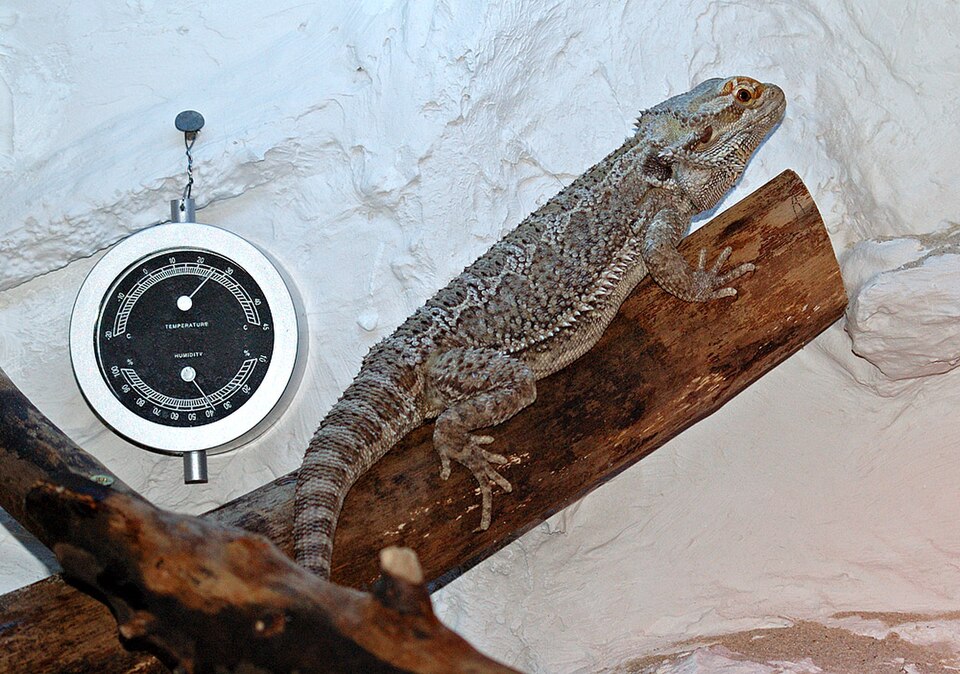
- Measure before you go: The RSPCA notes thermostats aren't accurate; check the warm and cool ends with separate thermometers (Merck says at least two).
- Put everything on a timer: Lamp and heater run on a timer so the sitter doesn't have to switch them manually.
- Show the thermometer: Show the sitter where it is and what the normal range is, and add it to the written notes.
- Keep out of the sun: According to RSPCA Australia, the enclosure should stay out of direct sunlight; sun through a window can overheat it.
The RSPCA's summer page also asks for reptile, amphibian and fish enclosures to be kept out of direct sun and for the temperature to be checked regularly. For lamps and UVB, see UVB and heat for reptiles; for warm and cool zones, see warm side, cool side.
The risk of a power cut
None of our sources explains what to do during a power cut, so we're not writing a specific outage plan. But since a reptile's warmth depends on electricity, ask your veterinarian ahead of time what to do for your species if the power goes out, and write it down for the sitter. It also helps to test the heaters and timers before you leave.
If you notice a change in eating, droppings or behavior, contact a veterinarian who knows reptiles right away. Before you leave, give the sitter a phone number for your reptile's veterinarian.
Hygiene for the sitter
According to the CDC, reptiles can carry Salmonella even when they look healthy. The sitter should wash their hands with soap and water after touching the reptile, its food or its enclosure and before eating, and keep the animal and its supplies out of the kitchen and food-preparation areas. The CDC doesn't recommend reptiles in homes with children under 5, adults 65 or older, pregnant people or people with weakened immune systems; if the sitter's home or the people staying in yours fall into these groups, talk about it first. More in reptiles and Salmonella.
With Tüylüm's Pet sitter note you can send your reptile's daily jobs and notes (timer hours, feeding day, vet details) to the sitter in a single message. Keep your vet's phone number under My vet, daily care tasks on the Today tab and upcoming checkups in My vet visits.
Frequently asked questions
Can I leave my reptile alone for a few days?
Our sources don't say how many days. The RSPCA wants an animal never left without a responsible person; for how long, which species and what condition it's in, ask a veterinarian who knows reptiles.
Can I leave the heat lamp off while I'm away?
Our sources don't cover this. Heat and light are part of a reptile's health; ask your veterinarian before turning them off or changing them.
What should I show the sitter?
The thermometer's location, the timer, the food and water routine and your veterinarian's number. Put it all in writing so the sitter can manage even when you can't be reached.

Keep track of your pet's care in TüylümLog vet visits, vaccine and medication dates, and we'll remind you when it's time. Share it all with your family in Home.
Sources
- RSPCA · Exploring pet sitting options
- RSPCA · Help exotic pets stay cool in summer
- RSPCA · How to care for a corn snake
- RSPCA · Taking your reptile home
- RSPCA Australia · Are reptiles the right pet for me?
- RSPCA Australia · Where should I keep my reptile?
- Merck Veterinary Manual · Providing a home for a reptile
- CDC · Reptiles and amphibians
This article is for general information only; it is not a diagnosis or treatment advice and does not replace a visit to a veterinarian. Talk to your vet about decisions on your pet's health. By Tüylüm · Published and last checked: November 9, 2026. Spotted a mistake? Write to [email protected] and we'll fix it right away. Photos are from Wikimedia Commons, used under the license shown below each photo.