 Tüylüm
Belgian Malinois
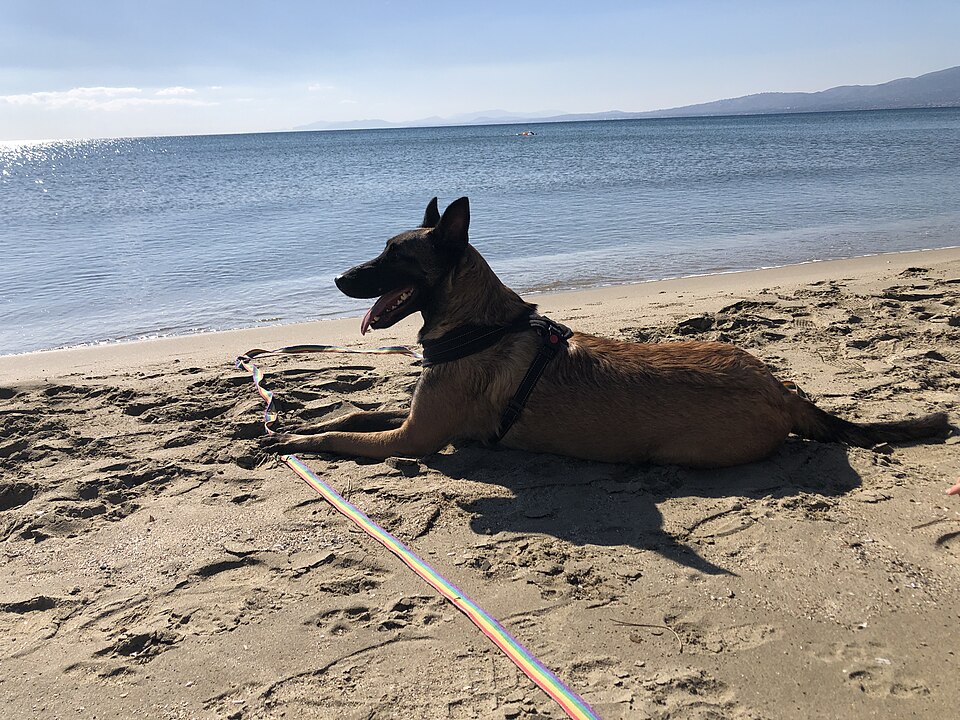
Belgium's short-coated, agile and extremely hardworking herding dog, now widely used as a police and military dog around the world. It needs hours of physical and mental work every day; even its own breed club says it is "not for everyone," and it's usually a tough choice for a first dog.

 Lifespan≈ 12 yearsmedian lifespan in the UK, 2024 study
 Weight40–80 lb (18–36 kg)males 60–80 lb, females 40–60 lb (AKC)
 Shoulder height22–26 in (56–66 cm)males 24–26 in, females 22–24 in
 OriginBelgiumnamed after the city of Malines
 CoatShort and densesheds heavily twice a year
 Exercise2+ hours a daywalks alone are never enough
 With kidsNeeds cautionmay chase running children
 TrainingLearns very fastneeds experience and lifelong training
At first glance the Belgian Malinois looks like a German Shepherd, but it is lighter, more agile and short-coated. It's known for its black-masked face and high energy. A favorite of police and military units, it is also becoming more common as a family dog: on the AKC's registration rankings the breed rose from 51st in 2015 to 32nd in 2025. But a working dog's needs are very different from those of an ordinary family dog. On this page we've pulled together its temperament, care needs and health issues from breed registry standards, the breed club's own guidance and scientific studies, as honestly as we can.
- Temperament: Very smart, alert, closely bonded to its owner and passionate about work; may be reserved with strangers at first.
- Needs a lot to do: More than 2 hours of exercise and training every day; according to the AKC, daily walks are not enough.
- Not for everyone: The American breed club says so plainly; it's usually a hard choice for a first dog.
- Easy coat care: The short coat stays tidy with occasional brushing; it sheds heavily twice a year.
- Health: Hip, elbow and eye screening are recommended; inherited epilepsy and puppy ataxia have been reported in some lines.
What to know
 What is the Belgian Malinois like?
According to the Royal Kennel Club standard, the Malinois is intelligent, alert, naturally vigilant and devoted to its owners; it may be reserved at first but should never be nervous or aggressive. The club describes the breed as having "an appetite for work," being watchful and highly intelligent. That appetite is what sets the Malinois apart from many breeds: it would rather be doing something than resting.
According to the AKC, like most herding breeds the Malinois has a high prey drive and is strongly drawn to anything that moves. That can turn into chasing running children, bikes, cars or cats, so it needs to be redirected into acceptable games through training. It bonds deeply with its owner and loves working together.
The American Belgian Malinois Club writes that the Malinois needs to be actively engaged with its owner both mentally and physically, and that a Malinois without intensive, long-term training will "create its own activities," which are rarely ones its owner enjoys. The problem isn't the dog; it's the unmet need.
Every dog is an individual. Breed traits describe general tendencies; the puppy's parents, how much contact it had with people in its first weeks, its training and its health shape its personality as much as its breed. That's why meeting the parents matters.
 Who is it a good fit for?
To be honest, the Malinois isn't a good fit for most families. The breed club says plainly that if you want a beautiful dog that will just sit at home with you, you should not choose a Malinois. It's also a poor choice for people who work long hours or are already stretched thin. It suits people who run, hike, bike, do dog sports or train regularly.
| Situation | Good fit? |
|---|---|
| Apartment | Very hard; the Royal Kennel Club recommends a large house and a large yard |
| Family with kids | Needs caution; the urge to chase moving things can be a risk with small children |
| Other dogs and cats | Possible with early socialization; high prey drive, so be careful with cats |
| Long hours alone | Not a good fit; when bored it makes its own work |
| First-time dog owners | Usually not a good fit; needs experience and professional training support |
| Dog sports and an active life | Excellent; excels at agility, tracking and obedience |
The breed club suggests that people without the time or experience to raise a puppy consider an older puppy, a young adult or an adult dog; an adult with a known temperament means fewer surprises.
Where does it come from?
According to the Royal Kennel Club, sheepdogs of this type in Belgium date back to the Middle Ages. The first breed club was formed in 1891, and Professor Adolphe Reul of the Belgian veterinary school examined 117 dogs and classified the varieties. Recognized by the FCI as a single breed (the Belgian Shepherd Dog), the group has four varieties: the long, black-coated Groenendael, the long-coated Tervueren, the harsh, wiry-coated Laekenois and the short-coated Malinois. The varieties are named after the areas they came from; according to the AKC, the Malinois takes its name from the city of Malines.
For a long time the Malinois worked as a herding dog in its homeland. According to the AKC, it first came to the United States in 1911, and today it's highly sought after as a police and military dog in many parts of the world. The AKC recognizes it as a separate breed, while the FCI and the Royal Kennel Club treat it as a variety of the Belgian Shepherd Dog.
Appearance and colors
In the Royal Kennel Club's words, it is an agile, fast, lightly built yet robust dog. The ears are upright; there is a black mask on the face, and the ears are mostly black too.
- Height: According to the Royal Kennel Club standard, 24–26 in (61–66 cm) for males and 22–24 in (56–61 cm) for females.
- Weight: According to the AKC, about 60–80 lb (27–36 kg) for males and 40–60 lb (18–27 kg) for females. The standard only says "in proportion to size."
- Coat: Very short on the head and legs, short on the body but thicker around the neck, with a woolly undercoat.
- Colors: Every shade of red, fawn or gray, with a light "black overlay" created by black-tipped hairs. The tail tip is darker, and a little white on the chest and toes is allowed.
The easiest way to tell it from a German Shepherd: a lighter, slimmer build, a short coat, color spread over the whole body instead of a black saddle, and a distinct black mask.
Daily care
The short, weather-resistant coat is easy to care for. The AKC says occasional brushing or going over the coat with a rubber mitt is enough, and that a daily once-over during the twice-yearly shedding periods helps remove the loose hair.
- Nails: Trim regularly; long nails can cause pain and problems with walking and running.
- Ears and teeth: The AKC recommends checking the ears regularly and brushing the teeth often.
- Yard: The breed club considers a securely fenced yard necessary for safe exercise.
- Indoors: According to the club, the Malinois bonds strongly with its people and does poorly in a kennel; it should live indoors as a member of the family.
For more, see our article on dog grooming.
Training and exercise
A Malinois needs several times what most breeds need each day. The Royal Kennel Club recommends more than 2 hours of exercise a day, and the AKC stresses that this is not a dog that can be left in the backyard and that daily walks aren't enough. The breed club jokes that you'll need to jog about 5 miles (8 km) a day with it.
- Body and mind: Running, hiking and biking together tire out the body; tracking, obedience, agility and scent games tire out the mind. It needs both.
- Early socialization: According to the AKC, early socialization and obedience training are musts; the club recommends a puppy socialization class and a group obedience class.
- The chase instinct: Channel its interest in moving things into ball and toy games; the club says retrieve games are a popular outlet.
- Reward-based training: It scores at the top for trainability on the AKC's breed chart; with consistent, reward-based, patient training it makes rapid progress.
- Professional support: If this is your first Malinois, starting with an experienced trainer who uses reward-based methods helps a lot.
Heat is a particular risk for such an eager worker. A 2020 UK study notes that earlier research found Belgian Malinois to have a higher risk of heatstroke than small breeds. On hot days, move exercise to early morning or evening and provide plenty of water and shade. See our article on dogs in hot weather for the signs.
 Diet and weight
The Malinois doesn't need a special food; a complete, balanced dog food suited to its age and activity level is enough. A hard-working dog burns more energy, while a less active one gains weight easily. The AKC notes that some dogs are prone to weight gain and that too many training treats can lead to obesity.
- Measure food; decide the daily amount with your vet based on your dog's ideal weight and activity.
- Count training treats as part of the daily food; using part of the daily ration as training rewards works well.
- You should be able to feel the ribs under a thin layer of fat, and see a waist when you look from above.
- Always have fresh water available.
- Learn which foods are harmful to dogs.
 Health issues to know about
The AKC considers the Malinois a generally healthy breed. Still, some inherited problems have been reported. The information below is for awareness only; ask your vet about diagnosis and treatment.
Hip and elbow dysplasia, eye disease
In hip and elbow dysplasia, the joints don't fit together properly as they develop, and wear and pain set in over time. Limping, a stiff gait and difficulty getting up are signs you might notice. The Royal Kennel Club recommends that breeders do hip and elbow X-ray screening and eye exams; the AKC lists the same three screenings.
Inherited epilepsy
A 2022 genetic study describes the Belgian Shepherd (the breed group that includes the Malinois) as a breed with a relatively high prevalence of idiopathic epilepsy. Idiopathic epilepsy means repeated seizures with no other cause found; researchers are studying gene regions that raise the risk, but there's no test yet that predicts it with certainty. If you notice a seizure, talk to your vet.
Inherited ataxia in puppies
According to a 2023 review, several different inherited diseases of the cerebellum and spinal cord (ataxias) have been described in the Malinois; they start when puppies are a few weeks or a few months old and severely affect balance and walking. The responsible gene changes have been found, and most of the known ones are recessive: a puppy only becomes ill if it inherits the changed gene from both its mother and its father. That's why it's important to ask the breeder whether the parents have been DNA tested for these diseases.
- Seizures, collapse, or long-lasting or back-to-back convulsions
- Heavy panting, stumbling or collapsing in the heat
- Sudden limping or inability to get up
- A puppy that staggers, falls or tangles its legs while walking
How long does it live?
In the 2024 UK study by McMillan and colleagues covering about 585,000 dogs, the median lifespan of roughly 620 Malinois was 12.0 years (confidence interval 11.5–12.6). That's the same as the median for mixed-breed dogs in the same study. The AKC gives 14–16 years, and the breed club also describes a 14–16 year commitment.
The numbers differ because data sources and methods differ. Either way, getting a Malinois means a promise of more than a decade, often 12 to 16 years.
 Before you get one
- Be honest with yourself: Can you give more than 2 hours of exercise and training every day, an active life and years of commitment? If you're not sure, consider a calmer breed or a mixed-breed dog.
- Consider shelters and rescues: Even the American breed club runs its own rescue program and suggests adult dogs. An adult Malinois with a known temperament is a safer start, especially for people new to the breed. Our article on adopting a shelter dog can help.
- If you buy from a breeder: Ask to meet the parents; ask for hip, elbow and eye screening results and ataxia DNA tests. See for yourself that the parents are calm, balanced and healthy.
- Red flags: Steer clear of sellers who promise protection or "toughness," won't show you the mother, can't provide paperwork or always have puppies available.
- Abandonment is illegal: In Türkiye, abandoning a pet is prohibited under Animal Protection Law no. 5199, so think it through carefully before you decide.
- Registration: Rules vary by country; many places require or recommend microchipping. In Türkiye, owned dogs must be microchipped and registered.
Frequently asked questions
Can a Malinois be a family dog?
It can, but only if the family can meet its needs. It bonds deeply with its people and, with enough work, training and attention, is a balanced dog at home. If those needs aren't met, it gets bored and problem behaviors develop. That's why the breed club says it's "not for everyone."
What's the difference between a Malinois and a German Shepherd?
The Malinois is lighter, slimmer and short-coated; its fawn or red color covers the whole body and it has a black mask. The German Shepherd is bigger and heavier and usually has a black saddle. Both need a lot to do.
Can a Malinois be my first dog?
In most cases we wouldn't recommend it. This breed needs experience, time and consistent training. If you're determined, adopt an adult dog with a known temperament and get help from a trainer who uses reward-based methods from day one.
Can a Malinois live in an apartment?
It's very hard. The Royal Kennel Club recommends a large house and a large yard for this breed. A Malinois living in an apartment needs hours of running, work and training outdoors every day.
Do Malinois shed a lot?
Even though the coat is short, they do shed, especially during the twice-yearly shedding periods. Brushing daily during those times makes life easier.
Sources
- FCI · Chien de Berger Belge (Belgian Shepherd Dog), standard no. 15
- Royal Kennel Club · Belgian Shepherd Dog (Malinois) breed page and health screening
- Royal Kennel Club · Belgian Shepherd Dog (Malinois) breed standard
- AKC (American Kennel Club) · Belgian Malinois breed profile
- American Belgian Malinois Club · Is the Malinois right for you?
- McMillan et al. · Longevity of companion dog breeds: those at risk from early death, Scientific Reports (2024)
- Stee et al. · Phenotypic and genetic aspects of hereditary ataxia in dogs, Journal of Veterinary Internal Medicine (2023)
- Belanger et al. · Validation of a chromosome 14 risk haplotype for idiopathic epilepsy in the Belgian Shepherd dog, Genes (2022)
- Hall et al. · Incidence and risk factors for heat-related illness (heatstroke) in UK dogs under primary veterinary care in 2016, Scientific Reports (2020)
- Turkish legislation database · Animal Protection Law no. 5199, article 14
- Resmî Gazete (Official Gazette of Türkiye) · Regulation on the identification and registration of cats, dogs and ferrets (February 26, 2018)
By Tüylüm · Last checked: November 3, 2026. Compiled from the sources above and written in our own words. Spotted a mistake? Write to [email protected] and we'll fix it right away. Photo from Wikimedia Commons, used under the license shown below it.