 Tüylüm
Border Collie
A medium-sized working dog widely regarded as the world's best sheepherder, extremely intelligent and quick to learn. Without mental and physical work it gets bored fast and develops problem behaviors; DNA tests exist for eye problems and several inherited diseases.

 Lifespan≈ 13 yearsmedian lifespan in the UK, 2024 study
 Weight30–55 lb (14–25 kg)per the AKC; the standard gives no weight
 Shoulder height18–22 in (46–56 cm)ideal for males 21 in; females a bit smaller
 OriginGreat Britainnamed for the England–Scotland border
 CoatTwo types, doublemoderately long and smooth coats
 Exercise2+ hours a daymental work matters as much as physical
 With kidsGood with older kidsmay herd and chase small children
 TrainingLearns very fastneeds new challenges to avoid boredom
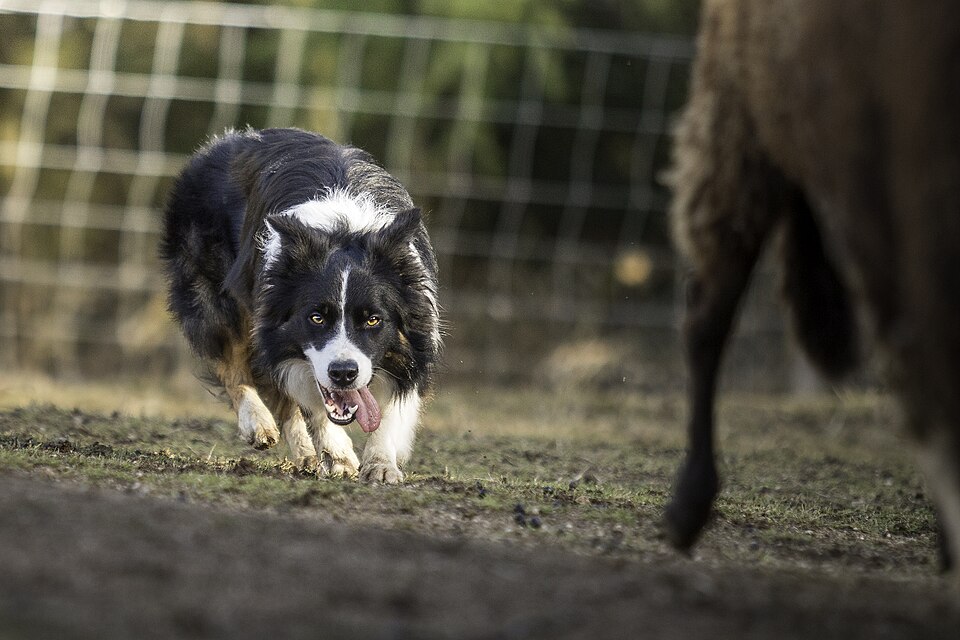
The Border Collie is a herding dog known for the way it crouches low around a flock, its locked-on stare at the sheep and its lightning speed. In many countries it still works on farms, and it's also a star of obedience and agility competitions and of search and scent work. That intelligence and energy make it a wonderful companion, but when it has nothing to do, the same traits become a challenge. On this page we've pulled together its temperament, care needs and health issues from breed registry standards, animal welfare resources and scientific studies.
- Temperament: Very smart, alert and responsive to its owner; can be somewhat reserved with strangers.
- Needs a job: According to the Royal Kennel Club, more than 2 hours of exercise a day, plus daily mental work.
- Herding instinct: It may try to "gather" animals and people, sometimes including running children.
- Health: Screening and DNA tests exist for eye disease, deafness, epilepsy and inherited diseases such as TNS and NCL.
- Lifespan: In a large UK study the median lifespan was 13.1 years, slightly longer than for mixed-breed dogs.
What to know
 What is the Border Collie like?
In the words of the Royal Kennel Club standard, the Border Collie is keen, alert, responsive and intelligent, and should be neither nervous nor aggressive. The club stresses that this natural activity and intelligence mean the dog needs to be kept engaged to lead a fulfilled life.
Its most distinctive trait is the herding instinct. According to the AKC, because it tends to herd animals and people, it does best with older, well-behaved children. Following a running toddler and trying to "gather" them is part of that instinct; it isn't malicious, but it does need to be redirected through training.
It loves its family but, according to the AKC, may be somewhat reserved with strangers. It learns very quickly and doesn't do well with nothing to do: on the AKC's breed chart it scores at the top for both trainability and mental stimulation needs.
Every dog is an individual. Breed traits describe general tendencies; the puppy's parents, how much contact it had with people in its first weeks, its training and its health shape its personality as much as its breed.
 Who is it a good fit for?
The Border Collie is a wonderful companion for active people and families who like doing things with their dog. The AKC says plainly that it isn't a breed for someone who prefers to stay indoors or travels away from home often.
| Situation | Good fit? |
|---|---|
| Apartment | Hard; the Royal Kennel Club says a small house can work but a large yard is needed |
| Family with kids | Good with older, well-behaved children; may chase and try to herd small children |
| Other dogs | Usually gets along with early socialization |
| Cats and small pets | Needs care because of the herding instinct |
| Long hours alone | Not a good fit; problem behaviors develop when it's bored |
| First-time dog owners | Only if you'll truly make time for training and exercise |
If there are small children at home, it's important not to let the dog chase them and to teach children to play calmly with it. Our article on kids and dogs goes into detail.
Where does it come from?
According to the Royal Kennel Club, the breed is named after the border regions of England, Scotland and Wales, where it first proved its worth working sheep in the hills and mountains. According to the AKC, "collie" is a Scottish dialect word for sheepdogs, and the breed was first classified as the "Scotch Sheep Dog."
For centuries, the Border Collie was selected for working ability rather than looks, and it still works sheep and cattle today. According to the club, the breed has only become popular in the show ring relatively recently. Its intelligence and speed also make it successful in obedience, agility and as a sniffer dog detecting explosives and drugs.
Appearance and colors
A medium-sized, athletic and agile dog. The Royal Kennel Club describes its stealthy gait and carriage as part of its working ability.
- Height: According to the Royal Kennel Club, the ideal height for males is 21 in (53 cm), with females slightly smaller. The AKC gives 19–22 in (48–56 cm) for males and 18–21 in (46–53 cm) for females.
- Weight: The standard gives no weight; the AKC gives 30–55 lb (14–25 kg).
- Coat: There are two types: moderately long and smooth. Both have a dense, weather-resistant undercoat. Moderately long coats have a mane, feathering on the hindquarters and a bushy tail.
- Colors: Black and white is the best known; tricolor, red and white, blue, lilac, merle and many other colors are in the standard. According to the standard, white should never predominate.
- Eyes: Usually brown; in merles one or both eyes may be blue.
Daily care
The AKC says that for both coat types, going over the dog with a pin brush once or twice a week is enough to prevent mats and dirt, and that daily brushing is needed during shedding season. Grooming time is also a good moment to check the skin and ears.
- Nails: The AKC recommends trimming the nails regularly.
- Ears and teeth: The AKC recommends checking the ears regularly for signs of infection and brushing the teeth regularly.
- Paws: Check the paws after walks; show your vet any cuts or cracks.
For more, see our article on dog grooming.
Training and exercise
According to the AKC, this breed needs far more than a walk around the block or a quick romp in the yard each day; it thrives when it has a job to do and space to run. The Royal Kennel Club recommends more than 2 hours of exercise a day. If your Border Collie doesn't work on a farm, you need to provide that job.
- Early socialization: The AKC says positive exposure to many different people and situations until about 7 months of age is especially vital.
- Lifelong training: Obedience training that starts early and continues throughout life, according to the AKC, keeps it happy and provides the mental stimulation it needs.
- Dog sports: Agility, obedience, rally, tracking, flying disc and flyball are where this breed shines.
- Brain games: Scent games, finding hidden toys and learning new tricks tire out its mind even on rainy days.
- Recall: For a dog drawn to fast, moving things, a reliable recall is essential for safety.
- Barking: On the AKC's breed chart its barking level is above average. Our article on why dogs bark can help.
 Diet and weight
It doesn't need a special food; a complete, balanced dog food suited to its age and activity level is enough. A working farm dog and a dog that walks an hour a day have very different needs. The AKC reminds owners that some dogs are prone to weight gain and that too many treats can lead to obesity.
- Measure food; decide the daily amount with your vet based on your dog's ideal weight and activity.
- Count training treats as part of the daily food.
- You should be able to feel the ribs under a thin layer of fat, and see a waist when you look from above.
- Always have fresh water available, especially after hard exercise.
- Learn which foods are harmful to dogs.
 Health issues to know about
The AKC considers the Border Collie a generally hardy and healthy breed. Still, according to a 2021 genetic study, at least 25 inherited disorders are known in the breed; the good news is that DNA tests exist for many of them. The information below is for awareness only; ask your vet about diagnosis and treatment.
Collie eye anomaly (CEA) and other eye problems
CEA is an inherited eye disease in which layers at the back of the eye don't develop fully, and it is seen especially in herding breeds. According to a large 2023 study, it does not progress and vision is only minimally affected in most dogs, but in severe cases retinal detachment or bleeding inside the eye can cause blindness. The Royal Kennel Club recommends, as a minimum, that breeders have an eye exam done (including gonioscopy, which shows glaucoma risk), plus a DNA test for CEA.
TNS and NCL
- TNS (trapped neutrophil syndrome): The bone marrow makes white blood cells, but not enough of them get into the blood, which weakens the immune system. According to Soh and colleagues, affected puppies are smaller than their littermates and fail to thrive. A 2024 study says TNS should be suspected in young Border Collies with fever, lameness and digestive problems.
- NCL (neuronal ceroid lipofuscinosis): A disease in which waste material builds up in nerve cells, progressing with vision loss, behavior changes and movement problems, and leading to early death.
Both are recessive: a puppy only becomes ill if it inherits the changed gene from both its mother and its father. According to Soh and colleagues, since the tests became available, registered breeders have avoided breeding from carriers to reduce these diseases.
Epilepsy
According to UFAW, the Border Collie is considered one of the breeds with a particularly high incidence of idiopathic epilepsy (repeated seizures with no cause found). The first seizure usually happens between 1 and 4 years of age. Several genes are thought to be involved, and there is no DNA test yet.
Deafness and the merle color
The AKC lists deafness among the problems breeders should screen for, and the Royal Kennel Club recommends hearing tests (BAER), including for litters. The merle color gene is linked to deafness risk: in a 2009 study, 2.7% of dogs with one copy of the merle gene were deaf in one ear and 0.9% in both, while in "double merle" dogs with two copies the figures were 10% and 15%. That's why the Royal Kennel Club has not registered puppies from merle-to-merle matings since 2013; vision problems are among the reasons too.
MDR1 and other tests
The MDR1 gene change causes serious sensitivity to certain medications. According to Washington State University, its frequency in Border Collies is under 5%; even so, the Royal Kennel Club recommends an MDR1 DNA test. The club's list also includes IGS, sensory neuropathy, Raine syndrome, and hip and elbow screening. If you know your dog's MDR1 status, tell your vet.
- Seizures, collapse or back-to-back convulsions
- Unexplained fever, limping or repeated digestive problems in a young dog
- Worsening vision, bumping into things, or bleeding or cloudiness in the eye
- No response to sounds
How long does it live?
The Border Collie is one of the longer-lived breeds. In the 2024 study by McMillan and colleagues, the median lifespan of about 13,000 UK Border Collies was 13.1 years, compared with 12.0 years for mixed-breed dogs. A 2022 life table study using VetCompass data calculated a life expectancy at birth of 12.10 years, the third-longest of the 18 breeds studied. The AKC gives a range of 12–15 years.
A long life means a long commitment: the puppy you bring home today will want work and attention every day for 13 to 15 years. Brain games stay important in old age too.
 Before you get one
- Consider a shelter: Border Collies and herding mixes end up in shelters and rescues too. An adult dog's energy level and personality are already known. Our article on adopting a shelter dog can help.
- If you buy from a breeder: Ask for the parents' eye exam (including gonioscopy), hip and elbow screening, and CEA, TNS, NCL and MDR1 DNA test results. If you're getting a merle puppy, make sure only one parent is merle.
- Red flags: Steer clear of sellers who won't show you the mother, can't show test results, always have puppies available or breed two merles together.
- Lifestyle: Make sure you can give more than 2 hours of exercise and training a day; factor in how often you travel.
- Registration: Rules vary by country; many places require or recommend microchipping. In Türkiye, owned dogs must be microchipped and registered.
- The first days: Our guide to bringing home a new puppy walks you through it step by step.
Frequently asked questions
Is the Border Collie the smartest dog in the world?
It's certainly a very smart breed that learns extremely fast; it scores at the top for trainability on the AKC's breed chart. But that intelligence asks a lot of its owner: a Border Collie without new things to learn and jobs to do gets bored.
Can a Border Collie live in an apartment?
It's hard. The Royal Kennel Club says the home can be small but a large yard and more than 2 hours of exercise a day are needed. If you can provide long walks, runs and brain games every day, it can live in an apartment; if you can't, even a big yard won't be enough.
Why does my Border Collie chase children?
That's the herding instinct inherited from its sheep-working ancestors; it may try to gather running children like a flock. Instead of punishing it, redirect that energy into ball and toy games, and always supervise play with small children.
Is a merle Border Collie unhealthy?
Dogs with one copy of the merle gene have a relatively low risk of deafness. The real risk is in "double merle" puppies from two merle parents; deafness and vision problems are far more common in them. Always ask the breeder about the parents' colors.
How much do they shed?
They do shed, especially during shedding season. Brushing once or twice a week is usually enough; during shedding season you'll need to brush daily.
Sources
- Royal Kennel Club · Border Collie breed page, health screening and breeding restrictions
- Royal Kennel Club · Border Collie breed standard
- AKC (American Kennel Club) · Border Collie breed profile
- McMillan et al. · Longevity of companion dog breeds: those at risk from early death, Scientific Reports (2024)
- Teng et al. · Life tables of annual life expectancy and mortality for companion dogs in the United Kingdom, Scientific Reports (2022)
- Soh et al. · Evaluation of genetic diversity and management of disease in Border Collie dogs, Scientific Reports (2021)
- Suciu et al. · Clinical findings, treatment and outcome of trapped neutrophil syndrome in Border Collies: 12 cases, Journal of Small Animal Practice (2024)
- UFAW Genetic Welfare Problems · Border Collie: Idiopathic epilepsy
- Clark et al. · Global frequency analyses of canine prcd-PRA and collie eye anomaly, Genes (2023)
- Strain et al. · Prevalence of deafness in dogs heterozygous or homozygous for the merle allele, Journal of Veterinary Internal Medicine (2009)
- Washington State University · Breeds commonly affected by the MDR1 mutation
- Resmî Gazete (Official Gazette of Türkiye) · Regulation on the identification and registration of cats, dogs and ferrets (February 26, 2018)
By Tüylüm · Last checked: November 3, 2026. Compiled from the sources above and written in our own words. Spotted a mistake? Write to [email protected] and we'll fix it right away. Photo from Wikimedia Commons, used under the license shown below it.