 Tüylüm
German Shepherd
A large, highly intelligent herding dog that works in everything from police service to guiding the blind, and bonds closely with its family. It needs long daily exercise and mental work; hip and elbow dysplasia and a spinal cord disease of older age are the key health issues.

 Lifespan≈ 11 yearsmedian lifespan in the UK, 2024 study
 Weight48–88 lb (22–40 kg)males 66–88 lb, females 48–71 lb (FCI)
 Shoulder height22–26 in (55–65 cm)males 24–26 in, females 22–24 in
 OriginGermanybreed club founded in 1899
 CoatDouble, sheds a lotcomes in a standard and a long coat
 Exercise2+ hours a daymental work is a must, not just walks
 With kidsGood, with supervisionbig and strong; early socialization is key
 TrainingLearns very fastneeds consistent, reward-based training
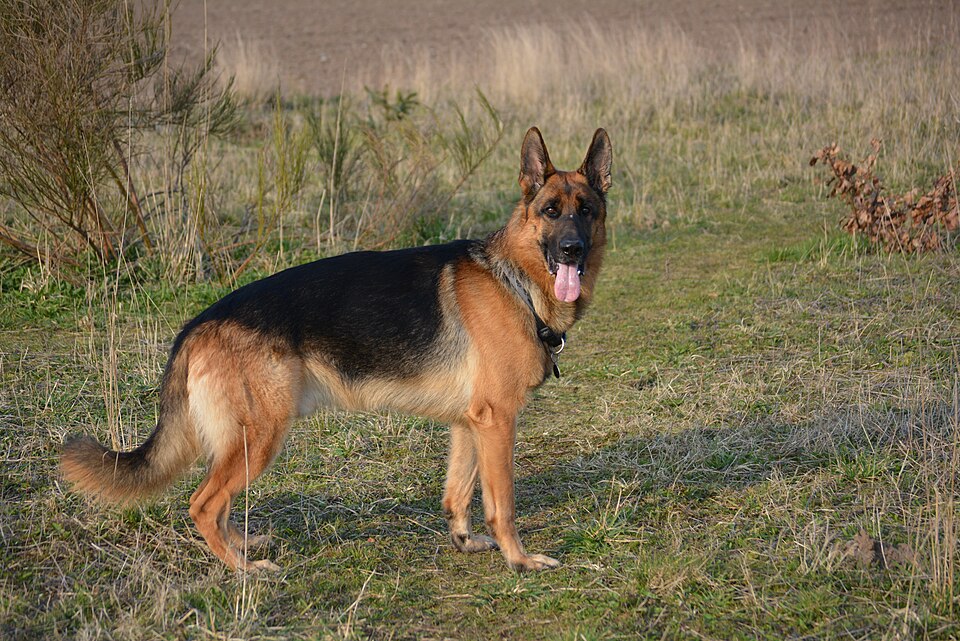
The German Shepherd is one of the most recognizable dogs in the world, with its upright ears, intelligent expression and large, muscular build. It was bred to herd sheep and today also works as a police, search-and-rescue and guide dog. It is deeply attached to its family and eager to learn, but it needs just as much to do. On this page we've pulled together its temperament, care needs and health issues from breed registry standards, animal welfare resources and scientific studies.
- Temperament: Smart, loyal, steady and protective; wants to be part of family life.
- Needs a lot to do: According to the Royal Kennel Club, more than 2 hours of exercise a day, plus training and brain games.
- Sheds heavily: The double coat blows out heavily once or twice a year; brush every few days.
- Health: Hip and elbow dysplasia, a spinal cord disease of older age (degenerative myelopathy) and bloat are known risks.
- Lifespan: In a large UK study the median lifespan was 11.3 years, slightly shorter than for mixed-breed dogs.
What to know
 What is the German Shepherd like?
In the words of its breed standard, the German Shepherd is a dog with strong nerves that is self-assured, attentive and willing to please. It learns very quickly and retains what it learns; the AKC lists its ability to absorb and keep training for many specialized jobs among the breed's defining traits. It bonds tightly with its family and likes to keep an eye on everything going on at home and join in.
It is a natural watchdog: on the AKC's breed chart it scores at the top for watchdog and protective nature and in the middle for openness to strangers. That protective instinct can turn into problem behavior in a dog that is poorly socialized or bored. In a large UK study of veterinary records published in 2017, aggression was one of the five most commonly recorded problems in the breed and was more common in males than in females. The answer is not punishment; it is plenty of socialization from puppyhood, reward-based training and a daily job to do.
A German Shepherd that can't move enough, or is left alone in the yard or the house all day, gets bored. The AKC stresses that dogs who don't get enough exercise become frustrated and can develop unwanted behaviors.
Every dog is an individual. Breed traits describe general tendencies; the puppy's parents, how much contact it had with people in its first weeks, its training and its health shape its personality as much as its breed.
 Who is it a good fit for?
The German Shepherd suits active households that can give their dog a few hours every day and enjoy training. It's a tough choice for anyone looking for a calm house dog or who is away from home all day.
| Situation | Good fit? |
|---|---|
| Apartment | Hard; possible with long daily walks and a job to do, but this is a big, active dog |
| Family with kids | Good if well socialized; always supervise around small children because it is big and strong |
| Other dogs and cats | Usually gets along with early, careful introductions |
| Long hours alone | Not a good fit; wants to be with its family and causes trouble when bored |
| First-time dog owners | Only if you'll truly make time for training; professional help is a good idea |
Teach children not to bother the dog while it eats or sleeps and not to hug or squeeze it. Our article on kids and dogs has more.
Where does it come from?
According to the FCI standard, the breed club (the SV) was founded in Frankfurt on September 20, 1899, on the suggestion of A. Meyer and cavalry captain Max von Stephanitz. The goal was to create a high-performing working dog from the herding dogs of central and southern Germany. Von Stephanitz spent more than thirty years developing and promoting the breed.
As livestock farming changed and the need for herding dogs fell, the breed made its name as a police and military dog. According to the AKC, film dogs such as Rin Tin Tin made it hugely popular in the United States in the early 1900s. It is still one of the most widely used working dogs in the world.
The Royal Kennel Club notes that the breed's appearance has changed over the last fifty years, that this has caused "fierce debate" and that there is now a marked split between show and working lines. We cover this in the health section.
Appearance and colors
A medium-to-large dog, slightly longer than it is tall, powerful and well muscled. The head is wedge-shaped, the ears are upright and pointed, and the eyes are almond-shaped and dark. It moves with a long, ground-covering, fluid trot.
- Height: According to the FCI, 24–26 in (60–65 cm) for males and 22–24 in (55–60 cm) for females.
- Weight: According to the FCI, 66–88 lb (30–40 kg) for males and 48–71 lb (22–32 kg) for females.
- Coat: There are two varieties: the "double coat" with a short, harsh outer coat, and the "long double coat" with longer, softer hair. Both have a dense undercoat.
- Colors: Black with reddish-brown, yellow or light gray markings; solid black; and gray with darker shading (sable). White is not accepted in the FCI standard.
According to the standard, the topline should run without a break from the neck to the tail, falling away gently. The FCI notes that over-angulated hindquarters reduce stability and stamina.
Daily care
The coat is thick and dense but not complicated to care for. The AKC says a quick brushing every few days is usually enough, and that brushing more often during the heavy shedding periods once or twice a year cuts down a lot of the hair around your home. According to the AKC, an occasional bath is enough.
- Nails: If they don't wear down on their own, check them monthly; long nails affect how a dog walks.
- Ears: Check weekly; in UK data, outer ear infections were the most commonly recorded problem in the breed. Show your vet any redness, odor or itching.
- Teeth: Get your puppy used to regular tooth brushing early.
- Bed: A big dog needs a roomy, soft bed.
For more, see our article on dog grooming.
Training and exercise
The German Shepherd needs to work both its body and its mind. The Royal Kennel Club recommends more than 2 hours of exercise a day. That doesn't just mean walks: tracking, scent games, obedience work, fetch or agility tire it out far more and make it much happier.
- As a puppy: The AKC suggests starting with short daily walks and play sessions in a safely fenced area.
- Early socialization: Safely introduce your puppy to different people, sounds, places and dogs. The AKC calls puppy classes "vital."
- Reward-based training: This breed doesn't respond well to harsh methods; it makes rapid progress with consistent, reward-based training.
- Leash skills: With a big, strong dog, teach loose-leash walking and a reliable recall early.
- Brain games: Scent games meet its mental needs even on rainy days.
Environmental factors play a role in hip dysplasia alongside genes. Plan the type and amount of exercise during the growth period with your vet, and start long, fast runs only after the skeleton has finished developing.
 Diet and weight
It doesn't need a special food; a complete, balanced dog food suited to its age (puppy, adult or senior) and to large breeds is enough. The real issue is how much: in UK data, being overweight was one of the five most common problems in the breed. Extra weight also adds load to dysplastic joints.
- Measure food instead of eyeballing it; decide the daily amount with your vet based on your dog's ideal weight.
- Count treats as part of the daily food.
- You should be able to feel the ribs under a thin layer of fat, and see a waist when you look from above.
- The Merck Veterinary Manual lists feeding once a day and eating quickly among the risk factors for bloat, and suggests splitting food into several small meals and limiting exercise before and after eating.
- Learn which foods are harmful to dogs, and don't feed from the table.
 Health issues to know about
The information below is for awareness only; ask your vet about diagnosis and treatment. In the 2017 study by O'Neill and colleagues, the most common causes of death in UK German Shepherds were musculoskeletal problems (16.3%) and inability to stand (14.9%). That shows why the joint and spine problems below matter so much in this breed.
Hip and elbow dysplasia
In hip dysplasia, the hip joint of a growing puppy develops loosely; over time the joint wears, develops arthritis and becomes painful. According to UFAW, studies have reported that 18–49% of German Shepherds are affected. Both genes and environmental factors play a part. Limping, a stiff gait, difficulty getting up and reluctance to run and play are signs you might notice. The Royal Kennel Club recommends, as a minimum, that breeders have both parents' hips and elbows X-ray screened.
Degenerative myelopathy
A slowly progressing, non-painful disease in which the spinal cord gradually degenerates. According to UFAW, the first signs usually appear around 8–9 years of age as swaying and unsteadiness in the hind legs; over time the hind legs give way. There is a DNA test for the gene change that raises the risk, and the Royal Kennel Club recommends it for breeders. Not every dog that tests "at risk" will develop the disease, but choosing a puppy from tested parents lowers the risk.
The sloping-back debate in show lines
Some show lines with a back that slopes steeply toward the rear and over-angulated hind legs have been criticized for years. The Royal Kennel Club places the breed in "Category 2" of its Breed Watch program; the points judges are asked to watch are "incorrect hind conformation and/or poor rear movement" and "nervous temperament." Its standard calls soft or roached backs and over-angulated hindquarters highly undesirable and requires the dog to be able to stand comfortably without any support. When choosing a puppy, look at whether the parents move easily and whether their hind legs are sound.
Other issues
- Bloat (GDV): An emergency in which the stomach fills with gas and twists. The AKC advises owners to learn the signs in advance, and the Merck Veterinary Manual lists the German Shepherd among breeds at risk.
- Digestion and skin: UFAW and the O'Neill study list exocrine pancreatic insufficiency (the pancreas doesn't make enough digestive enzymes), stubborn sores around the anus (anal furunculosis) and narrowing of the spine in the lower back among the breed's reported predispositions.
- MDR1: The MDR1 gene change, which causes serious sensitivity to certain medications, is most common in herding breeds; Washington State University's table gives a frequency of about 10% for German Shepherds. A simple DNA test can tell you; share the result with your vet.
- A swelling belly, unproductive retching, restless pacing and drooling (possible bloat; minutes matter)
- Sudden limping, inability to get up or weakness in the hind legs
- Bloody diarrhea or diarrhea that lasts for days, or rapid weight loss
- Seizures, collapse or trouble breathing
How long does it live?
Lifespan figures vary by country and study. In a 2024 UK study by McMillan and colleagues covering about 585,000 dogs, the median lifespan of roughly 20,000 German Shepherds was 11.3 years, compared with 12.0 years for mixed-breed dogs. A 2022 life table study using VetCompass data calculated a life expectancy at birth of 10.16 years, and the 2017 study found a median lifespan of 10.3 years. The AKC gives a range of 12–14 years.
These are averages: in the 2017 study a quarter of the dogs lived past 12, and the oldest was 17. A healthy weight, regular exercise, coming from parents screened for healthy joints and regular vet checkups in old age are the things that most affect lifespan and quality of life.
 Before you get one
- Consider a shelter: Purebred dogs and their mixes end up in shelters and rescues too. An adult dog's temperament is already known, which is a big advantage, especially for first-time owners. Our article on adopting a shelter dog can help.
- If you buy from a breeder: Ask for the parents' hip and elbow X-ray results, their degenerative myelopathy DNA test and an eye exam. Ask to meet the parents and watch their temperament and how they move.
- Red flags: Steer clear of sellers who won't show you the mother, can't provide paperwork, always have puppies available or praise toughness as a "guard dog" selling point.
- Time and budget: A few hours of exercise and training a day, plus food and vet bills for a big dog, is a responsibility that lasts more than a decade.
- Registration: Rules vary by country; many places require or recommend microchipping. In Türkiye, owned dogs must be microchipped and registered.
- The first days: Our guide to bringing home a new puppy walks you through it step by step.
Frequently asked questions
Can a German Shepherd live in an apartment?
It can, but that depends on you, not the apartment. The Royal Kennel Club recommends more than 2 hours of exercise a day. If you can provide long walks, play and training every day, it can be happy in an apartment; if you can't, even a big yard won't solve the problem.
Do German Shepherds shed a lot?
Yes. Because of the dense undercoat they shed all year, and once or twice a year they go through a very heavy shedding period. During those times you'll need to brush almost daily.
Are they good with kids?
A well-socialized German Shepherd is very attached to its family and can get along well with children. Still, it is a big, strong dog; never leave it unsupervised with small children, and teach children how to behave around dogs.
Is the long-coated German Shepherd a separate breed?
No. The FCI and the Royal Kennel Club recognize the long coat as part of the same breed. Both varieties have an undercoat, and both shed heavily.
How can I prevent hip dysplasia?
You can't prevent it completely, but you can lower the risk: choose a puppy from parents with screened hips and elbows, keep the puppy at a healthy weight as it grows and avoid overly strenuous exercise during the growth period. If you notice limping or trouble getting up, see your vet.
Sources
- FCI · Deutscher Schäferhund (German Shepherd Dog), standard no. 166
- Royal Kennel Club · German Shepherd Dog breed page and health screening
- Royal Kennel Club · German Shepherd Dog breed standard
- Royal Kennel Club · Breed Watch: German Shepherd Dog (Category 2)
- AKC (American Kennel Club) · German Shepherd Dog breed profile
- O'Neill et al. · Demography and disorders of German Shepherd Dogs under primary veterinary care in the UK, Canine Genetics and Epidemiology (2017)
- McMillan et al. · Longevity of companion dog breeds: those at risk from early death, Scientific Reports (2024)
- Teng et al. · Life tables of annual life expectancy and mortality for companion dogs in the United Kingdom, Scientific Reports (2022)
- UFAW Genetic Welfare Problems · German Shepherd: Hip dysplasia
- UFAW Genetic Welfare Problems · German Shepherd: Degenerative myelopathy
- Merck Veterinary Manual · Gastric dilation and volvulus in small animals
- Washington State University · Breeds commonly affected by the MDR1 mutation
- Resmî Gazete (Official Gazette of Türkiye) · Regulation on the identification and registration of cats, dogs and ferrets (February 26, 2018)
By Tüylüm · Last checked: November 3, 2026. Compiled from the sources above and written in our own words. Spotted a mistake? Write to [email protected] and we'll fix it right away. Photo from Wikimedia Commons, used under the license shown below it.