 Tüylüm
Kangal Shepherd Dog
Türkiye's best-known shepherd dog: a large, calm livestock guardian with a black mask. Devoted to its family but independent and wary of strangers, it needs a large, secure space, early socialization and an experienced owner. It is not an apartment dog.

 Lifespan≈ 10–13 yearsUK median 10.1; the AKC says 11–13
 Weight88–132 lb (40–60 kg)FCI: males 106–132 lb, females 88–110 lb
 Height at shoulder26–31 in (65–78 cm)FCI: males 28–31 in, females 26–29 in
 OriginTürkiye (Sivas)named after the town of Kangal
 CoatShort-to-medium, denseheavy shedding at season changes
 Exercise2+ hours a dayRKC advice; large fenced area
 With kidsDevoted to familyits size means constant supervision
 TrainingIndependent thinkerpatience, rewards, early socialization
The Kangal Shepherd Dog is a large, black-masked dog that has guarded sheep flocks from wolves and other predators on the steppes of central Anatolia for centuries. In Türkiye it's close to a national symbol, but it's worth remembering that it was bred as a livestock guardian: devoted to its family, calm and self-assured, yet independent and territorial. On this page we've brought together the FCI breed standard, information from kennel clubs abroad, Turkish academic research and official regulations.
- Temperament: Calm, bold and independent; affectionate with its family, wary of strangers when on duty.
- Living space: Not suited to apartments; it needs a large area with a tall, solid fence.
- Owner: Best with someone patient and consistent who has experience with large, protective dogs.
- Health: Watch for hip dysplasia and bloat, both seen in large breeds; ask for the parents' hip X-ray results.
- Legal: In Türkiye, microchipping and PETVET registration are mandatory, and taking a Kangal out of the country requires prior approval from the Ministry.
What to know
 What is the Kangal Shepherd Dog like?
The FCI standard describes the Kangal as a good guardian that is not aggressive: steady and bold, naturally independent, intelligent and trainable, loyal and affectionate with its owners, and wary of strangers when on duty. The standard lists aggressive or overly shy dogs as disqualifying faults. In other words, the breed ideal is not an edgy dog but a balanced one.
According to the standard of the United Kennel Club (UKC) in the U.S., the Kangal is alert, territorial and protective of the family or animals it has bonded with. It prefers to deter predators with its presence and its bark, and will stand its ground if it has to. It is instinctively wary of strange dogs but usually not belligerent toward people, and stays reserved with strangers unless its owner is there to reassure it.
Livestock guardians were selected to make their own decisions without waiting for a shepherd's command. At home, that independence can look like "not listening," but the dog is really weighing up the situation for itself.
Every dog is an individual. A 2022 study of more than 18,000 dogs (Morrill et al., Science) found that breed explains only about 9% of the behavioral differences between individual dogs. How a dog is raised and what it experiences matter at least as much as its breed.
 Who is it a good fit for?
The Kangal suits owners who live in a house with a yard or in the countryside, have experience with large, protective dogs and can give their dog time every day. The UK's Royal Kennel Club (RKC) recommends a large house, a large yard, a rural setting and more than two hours of exercise a day for the Anatolian Shepherd Dog.
| Situation | Good fit? |
|---|---|
| Apartment | No; it needs space, quiet and time outdoors |
| House with a yard, farm | Yes; the fence must be tall, solid and dig-proof |
| Family with kids | Loyal and affectionate with family; its size means constant supervision around children |
| Other dogs | Wary of strange dogs on its territory; introduce them slowly |
| First-time dog owners | Not recommended; it needs experience and consistent handling |
| Guarding livestock | Its original job; the UKC says it protects the animals it has bonded with |
In a home with frequent visitors, being able to settle the dog calmly in a separate area makes life easier for everyone. If neighbors are close by, plan for barking too; our article on why dogs bark can help.
Where does it come from?
The breed takes its name from the town of Kangal in Sivas Province. According to the FCI standard, the area drew worldwide attention for its high-quality dogs that were remarkably uniform in type and color. The standard suggests that Turkic peoples migrating from Central Asia, who lived by nomadic herding, may well have brought their strong livestock dogs with them, and it links the dogs' uniform dun coat and black mask to the Akkaraman sheep they guard. The UKC points out that how much the modern breed descends from those dogs, versus working dogs already native to Anatolia, is still an open question.
According to a 2012 review by researchers at Igdir and Ankara universities, the dog's original local name is "Karabash" (black head); the name "Kangal" came into use in the 1980s. In a 2005 genetic study (Altunok et al.), purebred Kangals formed a group distinct from free-roaming dogs in central Anatolia, Akbash dogs and Turkish sighthounds; the authors saw this as evidence that the Kangal deserves recognition as a breed. The UKC notes that the breed is celebrated at festivals in Türkiye and appears on postage stamps and commemorative coins.
Why is the name "Anatolian Shepherd" debated?
Shepherd dogs taken from Türkiye to the U.S. and Europe were registered abroad for a long time as "Anatolian Shepherd Dogs." The American Kennel Club (AKC) still uses that name, and its standard accepts all color patterns and markings equally. The RKC's color list also includes white and tricolor dogs alongside masked fawn shades. In Türkiye, by contrast, the Kangal, Akbash and Kars are treated as separate breeds. A 2004 review (Daskiran and Ertugrul) noted that the criteria used in standards abroad did not match the breed traits accepted for the Kangal in Türkiye.
Since June 15, 2018, FCI breed no. 331 has been called the "Kangal Shepherd Dog" rather than the "Anatolian Shepherd." According to a notice from KIF, the Turkish kennel federation that is an FCI member, papers for dogs registered as "Anatolian" can be changed to Kangal only if the dog fits the Kangal standard. The UKC keeps three separate standards: Anatolian Shepherd (1993), Kangal Dog and Akbash Dog (both 1998). In short, a dog called "Anatolian" abroad could be a Kangal, an Akbash or a mix of these breeds; its pedigree and appearance tell you more than its name.
Appearance and colors
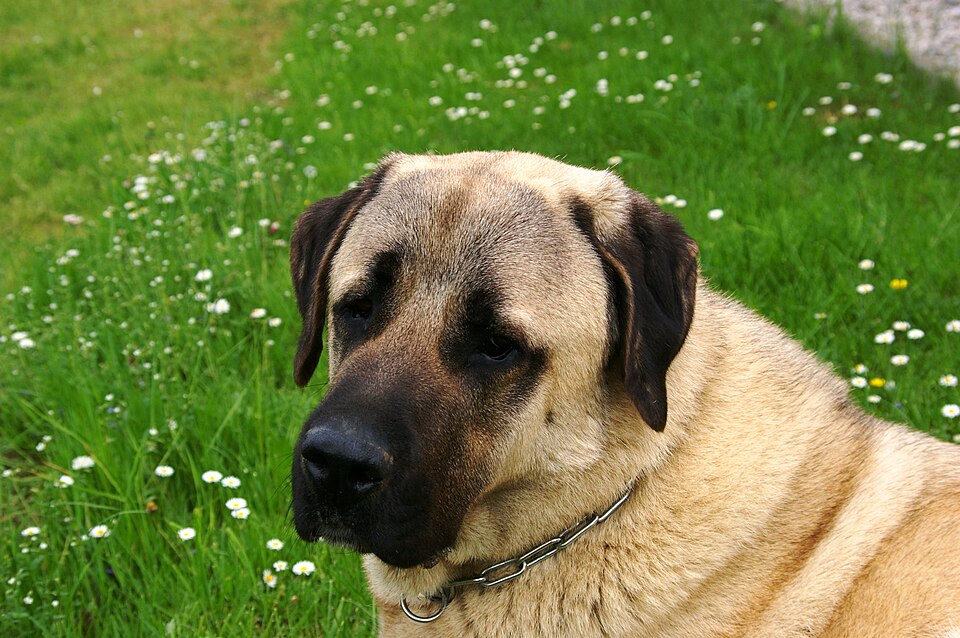
According to the FCI, the Kangal is a large, powerfully built molosser-type dog with a rectangular body; its body length is about 10–12% greater than its height at the shoulder. The ears are medium-sized, triangular and drop down, and the dog is capable of great speed.
- Height and weight (FCI): Males stand 28–31 in (72–78 cm) and females 26–29 in (65–73 cm) at the shoulder, with a tolerance of about 1 in (2 cm); males weigh 106–132 lb (48–60 kg) and females 88–110 lb (40–50 kg).
- Measurements in Türkiye: The review by Yilmaz and Ertugrul reports averages of 105 lb (47.6 kg) and 29.9 in (75.9 cm) for adult males, and 96 lb (43.5 kg) and 28.9 in (73.3 cm) for females.
- Color: A single color, from light fawn to wolf sable. A black mask is required and the ears are dark. A white patch on the chest no wider than about 4 in (10 cm) is not a fault, and a little white may appear on the feet.
- Coat: 1.2–2.8 in (3–7 cm) long, with a harsh outer coat and a dense undercoat; longer on the neck, shoulders and thighs.
- Tail: Carried low with a curl at the tip when relaxed, and high and curled over the back when alert.
The UKC notes that height should be judged at maturity, which it puts at a minimum of two years.
In Türkiye, the Animal Protection Law (no. 5199, article 8) bans cropping the ears or docking the tail of pets to change their appearance; if there is a medical reason, the decision belongs to a veterinarian. The FCI standard also describes the ears in their natural, drop shape. Cropped ears are not a breed trait.
Daily care
The Kangal's coat is short to medium in length and harsh; brushing once or twice a week is usually enough. According to the UKC, much of the undercoat sheds in warm weather, and brushing daily during the spring and fall shed cuts down on hair in the house and yard. It rarely needs a bath; see our article on dog grooming for more.
- Shade and water: The FCI says the breed can endure extremes of heat and cold, but in summer it still needs shade, a cool place to lie and fresh water at all times. Our article on dogs in hot weather covers the signs of heatstroke.
- Shelter: If it stays outdoors, provide a dry, insulated, windproof doghouse and a raised bed.
- Nails, ears, skin: The FCI accepts dewclaws on the hind legs; because those nails don't touch the ground, they can overgrow. Check the nails and the drop ears regularly, and show your vet any odor or redness.
Training and exercise
The Kangal is a large working dog and needs activity; the RKC recommends more than two hours of exercise a day for the Anatolian Shepherd Dog. Long walks, time to roam in a large fenced area and sniffing games all suit it. Don't let it off leash in an unfenced area.
Short, consistent, reward-based sessions work best. Rather than repeating a command over and over, reward the right behavior and build it into daily routines; with a large, independent dog, patience is your best tool.
- Early socialization: As a puppy, give it positive experiences with different people, sounds, vehicles and calm dogs.
- Basic cues: Coming when called, waiting and walking without pulling are the foundation of living safely with a large dog. Our guide to loose-leash walking walks you through it.
- Vet prep: While it's young, use rewards to get it used to being touched, having its mouth and paws handled and, if needed, wearing a muzzle.
Harsh punishment breaks trust. Provoking a Kangal to make it "tougher," locking it in the dark or setting it against other dogs is dangerous and wrong; in Türkiye, making animals fight is a crime under the Animal Protection Law (article 28/A). If you run into behavior problems, get help from your vet and a trainer who uses positive methods.
 Diet and weight
The Kangal doesn't need a special food; a complete, balanced dog food suited to its age and activity level is enough. There are foods made for large-breed puppies; decide on the type and amount with your vet.
The Merck Veterinary Manual lists feeding once a day and eating quickly among the risk factors for bloat, and it recommends limiting exercise before and after meals and avoiding raised food bowls for high-risk dogs. In practice: split the daily food into at least two meals, use a slow-feeder bowl if it gulps, and don't let it run right after eating.
If you can feel the ribs under a thin layer of fat and see a waist when you look from above, its weight is good. Be careful with bones, cooked bones and table scraps; take a look at our list of foods that are dangerous for dogs. Fresh water should always be available.
 Health issues to know about
The FCI describes the breed as a hardy working dog, but there are few large, breed-specific health studies. The information below is for awareness only; ask your vet about diagnosis and treatment.
Hip dysplasia
The hip joint doesn't develop properly, which can lead to limping and difficulty getting up. The RKC recommends that Anatolian Shepherd Dog breeders have hips X-rayed and scored before breeding. In a small 2005 study at Firat University in Türkiye, hip dysplasia was found in 6 of the 15 Kangals examined. The sample is far too small to give a breed rate, but it's a reminder that the problem exists in this breed. When buying a puppy, ask for the parents' hip X-ray results.
Bloat (gastric dilatation-volvulus)
According to the Merck Veterinary Manual, this is mainly a problem of large, deep-chested dogs: the stomach fills with gas and twists on itself. It is life-threatening and needs immediate treatment. The main signs are retching without bringing anything up, drooling, restlessness and a swollen belly. Having a close relative that had bloat, eating quickly and being fed once a day are listed among the risk factors.
Wounds and external parasites
Dogs that live outdoors are more exposed to wounds, ticks and fleas, and a thick coat can hide small injuries. Check the skin while you brush, and set up a parasite prevention plan with your vet.
- Retching without bringing anything up, a swollen belly, heavy drooling
- Sudden limping, being unable to get up, or weakness in the hind legs
- A deep, bleeding or swelling bite wound
- Fast, labored breathing in the heat, staggering or collapse
How long does it live?
We couldn't find a large lifespan study focused on the Kangal. In a 2024 study (McMillan et al.) using data on about 585,000 dogs from 18 organizations in the UK, 110 dogs registered as "Anatolian Shepherd" (40 of which had died) had a median lifespan of 10.1 years. Because the sample is small, the range is wide: 7.6 to 11.2 years. The AKC gives 11–13 years for the Anatolian Shepherd Dog.
In the same study, mixed-breed dogs had a median lifespan of 12 years, and larger breeds generally lived shorter lives. Regular vet checkups, a healthy weight and recognizing the signs of bloat early are the most practical steps for this breed.
 Before you get one
- Consider a shelter: According to the UKC, Kangals and Kangal mixes are now common in Turkish cities; check shelters and rescue groups too. Seeing an adult dog's temperament up front is a real advantage with a large breed. Our guide to adopting a shelter dog explains the process.
- If you buy from a breeder: Meet the parents on site; look for calm, steady temperaments, hip X-ray results and puppies that are being raised around people.
- Red flags: Avoid dogs sold as "tough," "man-stopper" or "fighter," and sellers who won't show you the mother.
- Preparation: A fence, a doghouse, a collar and leash made for a large dog. Food and care costs are noticeably higher than for a small dog.
- Registration: Rules vary by country. In Türkiye, owned cats and dogs must be microchipped and registered in the PETVET system; see our article on PETVET registration and microchips.
The Kangal is one of the native breeds that Türkiye's Ministry of Agriculture and Forestry protects as a genetic resource. Under a 2012 regulation on native domestic animal genetic resources, these resources cannot be taken out of the country without the Ministry's permission, and the Ministry's 2022 instructions make the Kangal's departure subject to prior approval. Applications go to the provincial directorate, and a commission assesses the dog's breed. Rules can change, so check with the provincial or district directorate of agriculture well before you travel.
Frequently asked questions
Can a Kangal live in an apartment?
It isn't recommended. The Kangal is a large, territorial livestock guardian, and the RKC recommends a large house, a large yard and a rural setting for similar dogs.
Is the Kangal an aggressive dog?
The FCI standard describes the breed as a good guardian that is not aggressive, and it treats aggression as a disqualifying fault. A Kangal is loyal and affectionate with its family and wary of strangers. Poor socialization, provocation and bad living conditions cause problems in any dog, including this one; because of its size, managing it well matters.
Is the Kangal the same as the Anatolian Shepherd?
Not exactly. The AKC's Anatolian Shepherd standard accepts every color, while the FCI has described this breed since 2018 as the "Kangal Shepherd Dog," with a fawn coat and black mask.
Should a Kangal's ears be cropped?
No. In Türkiye, cropping a pet's ears or docking its tail for looks is banned under the Animal Protection Law, and the FCI standard describes the ears in their natural form.
Can I take a Kangal out of Türkiye?
Taking a Kangal abroad requires prior approval from the Ministry, along with a microchip, PETVET registration, a pet passport and the destination country's rules. Get the current requirements from the provincial or district directorate of agriculture.
Sources
- FCI · Kangal Shepherd Dog breed standard (No. 331, 2018)
- FCI · Newsletter annex, KIF notice: breed no. 331 renamed from "Anatolian" to "Kangal" (July 2018)
- UKC (United Kennel Club) · Kangal Dog breed standard
- AKC (American Kennel Club) · Official standard of the Anatolian Shepherd Dog
- Royal Kennel Club · Anatolian Shepherd Dog breed page
- Yılmaz and Ertuğrul · Native dog breeds and types of Turkey, Iğdır University Journal of the Institute of Science and Technology (2012)
- Daşkıran and Ertuğrul · Kangal dog breeding and breed characteristics, YYÜ Journal of the Institute of Science (2004)
- Altunok et al. · Genetic evidence for the distinctness of Kangal dogs, Bulletin of the Veterinary Institute in Pulawy (2005)
- McMillan et al. · Longevity of companion dog breeds: those at risk from early death, Scientific Reports (2024)
- Durmuş and Han · Hip dysplasia in some dog breeds, Fırat University Journal of Eastern Studies (2005, in Turkish)
- Merck Veterinary Manual · Gastric dilation and volvulus in small animals
- Morrill et al. · Ancestry-inclusive dog genomics challenges popular breed stereotypes, Science (2022)
- Türkiye Ministry of Agriculture and Forestry · Instructions for taking cats and dogs abroad (2022, in Turkish)
- Türkiye legislation database · Regulation on the use and export of native domestic animal genetic resources (2012, in Turkish)
- Türkiye legislation database · Animal Protection Law no. 5199, current text (in Turkish)
By Tüylüm · Last checked: November 3, 2026. Compiled from the sources above and written in our own words. Spotted a mistake? Write to [email protected] and we'll fix it right away. Photo from Wikimedia Commons, used under the license shown below it.