 Tüylüm
Lhasa Apso
A long-coated, alert, self-assured little dog that lived for centuries in Tibetan monasteries as watchdog and companion. Aloof with strangers, it needs daily coat care; its somewhat short face makes it prone to dry eye, cherry eye and corneal ulcers, yet it's among the longest-lived breeds here.

 Lifespan≈ 14 yearsmedian, 2024 UK study; mixed breeds 12.0
 Weight12–18 lb (5.4–8.2 kg)AKC
 Height≈ 10 in (25 cm)RKC ideal for males; females slightly smaller
 OriginTibetmonastery watchdog and companion
 CoatLong, heavy, straightneeds daily care
 SheddingLowbut no dog is "hypoallergenic"
 ExerciseUp to 1 hour a dayRoyal Kennel Club guidance
 EyesNeed attentionhigh risk of dry eye and cherry eye
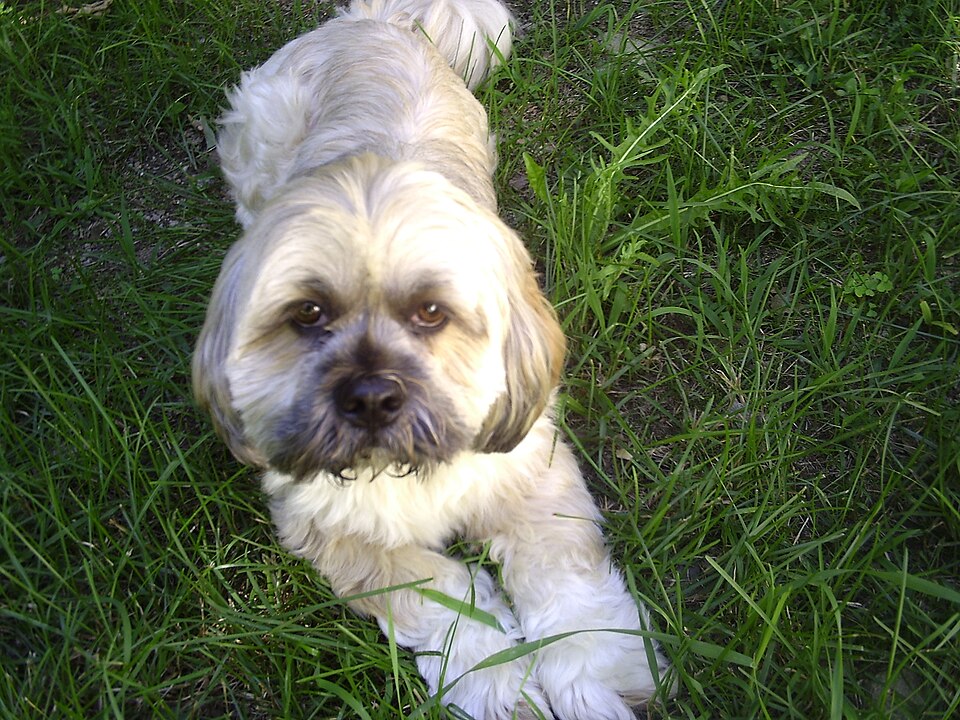
With its long, heavy coat, the fringe that falls over its eyes and its beard, the Lhasa Apso is a small dog that lived for centuries in Tibetan monasteries. It was both companion and watchdog to the monks, and it still has an alert, self-assured temperament today. On this page we've pulled together its temperament, care needs and health issues from breed registry standards, animal welfare resources and scientific studies.
- Temperament: According to the breed standard, cheerful and assertive; alert and steady, but somewhat aloof with strangers.
- Coat: The Royal Kennel Club recommends daily grooming; it sheds little, but that doesn't make it safe for people with allergies.
- Eyes: UK data show a markedly higher risk of dry eye, cherry eye and corneal ulcers in this breed.
- Screening: A DNA test for an inherited retinal disease (PRA4) and eye exams are recommended.
- Lifespan: A large 2024 UK study found a median lifespan of 14 years, among the longest of the breeds studied.
What to know
 What is the Lhasa Apso like?
The Royal Kennel Club's breed standard describes the Lhasa Apso as gay and assertive; its temperament is alert and steady, but somewhat aloof with strangers. According to the Royal Kennel Club, the breed lived for centuries with monks in Tibet's isolated monasteries, serving as both companion and watchdog. Because it was believed to bring prosperity and good fortune to its owner, it was called the "Talisman Dog," and it was even believed that monks who died might be reincarnated as one of the monastery dogs.
That watchdog past may mean a dog that notices visitors and doesn't warm to strangers right away. Calm, positive experiences with different people and places as a puppy help it grow into a more relaxed adult.
Every dog is an individual. Breed traits describe general tendencies; the parents' temperament, how a puppy was socialized and its health shape its personality as much as its breed.
 Who is it a good fit for?
According to the Royal Kennel Club's breed profile, the Lhasa Apso is a small dog that suits apartment living, can live in town or country, needs up to an hour of exercise a day and needs daily coat care.
| Situation | Good fit? |
|---|---|
| Apartment | Good; a small home is enough |
| Time for daily grooming | A must; the long coat tangles |
| Daily walks and play | Up to an hour a day |
| A home with lots of visitors | Aloof with strangers; early socialization matters |
| Family with dog allergies | No guarantee; there's no "hypoallergenic" dog breed |
In homes with children, it's important to teach them not to pick the dog up against its will, not to touch its face and eyes and to leave it alone when it retreats to its own corner. Our article on kids and dogs at home has more.
Where does it come from?
FCI records list Tibet (China) as the breed's country of origin, with Great Britain holding its standard. According to the Royal Kennel Club, the Lhasa Apso was one of the first breeds to be kept as a companion dog. It was jealously guarded in Tibet and didn't reach other countries until the late 19th century.
The Kennel Club recognized the breed in 1908 and at first classified it together with the Tibetan Terrier as "Lhasa Terriers." The two breeds were separated in 1934, and both have done well in the show ring since.
Appearance and colors
The Royal Kennel Club standard describes a small, balanced, compact dog with a level back, slightly longer than it is tall.
- Height: According to the Royal Kennel Club standard, the ideal height for males is 10 inches (25 cm) at the shoulder, with females slightly smaller. The AKC gives 10–11 inches (25–28 cm) for males.
- Weight: According to the AKC, 12–18 lb (5.4–8.2 kg).
- Head: The head furnishings fall over the eyes but shouldn't affect the dog's ability to see; it has good whiskers and a beard. The muzzle is straight and about 1.5 inches (4 cm) long, roughly one-third of the total length from nose to the back of the skull.
- Eyes: Dark, medium-sized and oval; neither large and full nor small and sunken.
- Coat: The topcoat is long, heavy, straight and hard, neither woolly nor silky, over a moderate undercoat. According to the standard, the coat should never impede movement.
- Tail: Set high and carried over the back, often with a kink at the end, and well feathered.
- Colors: Golden, sandy, honey, dark grizzle, slate, smoke, parti-color, black, white or brown; any color except merle is acceptable.
Although the Lhasa Apso's muzzle is of moderate length, a large 2024 UK longevity study classifies the breed in its flat-faced group, and Utrecht University includes a Lhasa Apso mix among its examples when describing the Netherlands' rules for short-nosed dogs. On the Royal Kennel Club's Breed Watch list, however, the breed is in category 1, meaning no specific points of concern have been flagged for judges.
Daily care
The Royal Kennel Club recommends grooming a Lhasa Apso every day; its breed profile lists it as a breed that doesn't shed.
- Brushing: The long, heavy topcoat and moderate undercoat tangle if not brushed regularly; make a short daily brush a habit.
- Around the eyes: Keep the area around the eyes clean so the fringe doesn't irritate them; you can tie the fringe up if needed. Show your vet any redness, discharge, cloudiness or squinting.
- Shorter trim: If it isn't a show dog, having the coat trimmed shorter by a groomer can make care easier, though regular brushing still matters.
- Ears and paws: Check the ears and between the toes, hidden under the long hair, every week.
- Teeth: Get your puppy used to tooth brushing early.
Our dog grooming guide walks you through brushing and bathing step by step.
 Training and exercise
The Royal Kennel Club recommends up to an hour of exercise a day for the Lhasa Apso. Daily walks, ball and toy games and sniffing games strike a good balance for this breed.
- Reward-based training: It's a self-assured dog; short, rewarding and consistent sessions work best.
- Socialization: Because it can be aloof with strangers, introduce your puppy calmly to different people, sounds and places.
- Brain games: Hidden treats and sniffing games tire out its mind too.
- In hot weather: It's counted among the flat-faced breeds, so move summer walks to the cool hours; our article on dogs in hot weather explains the signs of heatstroke.
 Diet and weight
Lhasa Apsos don't need a special food; a complete, balanced dog food that suits their age is enough. A long coat can hide changes in weight, so trust your hands and the scale rather than your eyes.
- Measure food; decide the daily amount with your vet based on your dog's ideal weight.
- Count treats as part of the daily food, and don't feed from the table.
- Being able to feel the ribs under the coat and a thin layer of fat is a good sign.
- Weigh your dog once a month.
Some human foods are toxic to dogs; see our list of foods dogs should never eat.
 Health issues to know about
The Lhasa Apso is generally a long-lived breed, but its eyes need special attention. The information below is for awareness only; ask your vet about diagnosis and treatment.
Dry eye (KCS)
When tear production is too low, the surface of the eye dries out, turns red and can become painful. A 2021 UK study using VetCompass data found that Lhasa Apsos had about 22 times the risk of dry eye compared with mixed-breed dogs. The study's authors recommend measuring tear production during yearly health checks in predisposed breeds.
Cherry eye and corneal ulcers
Prolapse of the third-eyelid gland ("cherry eye") was about 11 times more common in Lhasa Apsos than in mixed-breed dogs in a 2022 VetCompass study. In a 2017 study, corneal ulcers (sores on the clear surface of the eye) were recorded in about 2% of Lhasa Apsos, with about 5 times the risk of mixed-breed dogs. A veterinary article published by the Royal Kennel Club stresses that corneal ulcers are very painful and can deepen quickly, so squinting, watering or cloudiness calls for an immediate vet visit.
Inherited retinal disease (PRA)
According to Cornell University, PRA is an inherited disease in which the cells of the retina at the back of the eye gradually break down; it's painless but leads to blindness, often starting with poorer night vision. Signs are usually noticed late: reluctance to enter a dark room or go out at night, hesitating on stairs, or bumping into door frames in new surroundings. The Royal Kennel Club recommends that Lhasa Apso breeders at a minimum do the PRA4 DNA test, plus eye exams.
Hemophilia B
According to UFAW, a severe form of this inherited clotting disorder has been reported in Lhasa Apsos. Because the gene is on the X chromosome, it's more common in males. Signs usually show before 6 months of age, as prolonged bleeding, bruising and swelling after procedures like vaccinations or spaying and neutering. The disease is rare, but a genetic test exists.
- Squinting, watering, cloudiness or sudden redness in an eye
- A red swelling in the corner of the eye
- Bleeding that won't stop, or unexplained bruising or swelling
How long does it live?
A 2024 study using data on about 585,000 dogs from 18 UK sources found a median lifespan of 14.0 years for the Lhasa Apso; for mixed-breed dogs it was 12.0 years. So although it's classified among the flat-faced breeds, the Lhasa Apso lives about two years longer than mixed breeds. The Royal Kennel Club gives its lifespan as "over 12 years," and the AKC as 12–15 years. A long life means regular checkups and eye care in old age.
 Before you get one
- Consider a shelter: Purebred dogs end up in shelters too. Our article on adopting a dog from a shelter covers the first steps.
- Screening: Ask for the parents' PRA4 DNA test and eye exam results. Ask whether there's any bleeding problem in the family; according to UFAW, there's a genetic test for hemophilia B.
- Eye check: Look for discharge, redness or a prolapsed gland in the puppy's and parents' eyes.
- Time: Make sure you can set aside time for daily grooming; this breed can mean a commitment of more than 14 years.
- Allergies: A low-shedding dog can still trigger allergies. A 2012 study found no evidence for calling any dog breed "hypoallergenic."
- Registration: Rules vary by country. In Türkiye, owned dogs must be microchipped and registered in the PETVET system.
Frequently asked questions
Does the Lhasa Apso shed? Is it hypoallergenic?
The Royal Kennel Club lists it as a non-shedding breed, but that doesn't make it safe for people with allergies. In a 2012 study, so-called hypoallergenic breeds didn't have less of the main dog allergen in their coats; they had more, and the researchers concluded no breed can be called hypoallergenic.
How long do Lhasa Apsos live?
The 2024 UK study found a median lifespan of 14 years, about two years longer than mixed-breed dogs.
How is a Lhasa Apso with strangers?
The breed standard describes it as alert and steady but somewhat aloof with strangers. It was a monastery watchdog, so early socialization matters.
Can I keep its coat short?
Yes, if it isn't a show dog, a shorter trim can make care easier. A short coat still needs regular brushing and care around the eyes.
Why should I pay so much attention to its eyes?
Because UK data show a markedly higher risk of dry eye, cherry eye and corneal ulcers in this breed. Eye problems caught early are often easier to manage; when in doubt, see your vet right away.
Sources
- The Royal Kennel Club (UK) · Lhasa Apso: breed profile and health screening
- The Royal Kennel Club · Lhasa Apso breed standard
- The Royal Kennel Club (author: Dr. Rowena Packer, RVC) · Eye problems in brachycephalic dogs
- AKC (American Kennel Club) · Lhasa Apso breed profile
- FCI · Lhasa Apso (227) breed nomenclature
- Science for Animal Welfare (UFAW) · Lhasa Apso: Haemophilia B
- Cornell Riney Canine Health Center · Progressive retinal atrophy
- O'Neill et al. · Keratoconjunctivitis sicca in dogs under primary veterinary care in the UK: an epidemiological study, Journal of Small Animal Practice (2021)
- O'Neill et al. · Breed and conformational predispositions for prolapsed nictitating membrane gland (PNMG) in dogs in the UK: A VetCompass study, PLOS One (2022)
- O'Neill et al. · Corneal ulcerative disease in dogs under primary veterinary care in England: epidemiology and clinical management, Canine Genetics and Epidemiology (2017)
- McMillan et al. · Longevity of companion dog breeds: those at risk from early death, Scientific Reports (2024)
- Utrecht University, Faculty of Veterinary Medicine · Criteria for breeding healthy short-nosed dogs
- Vredegoor et al. · Can f 1 levels in hair and homes of different dog breeds: lack of evidence to describe any dog breed as hypoallergenic, Journal of Allergy and Clinical Immunology (2012)
- Resmî Gazete (Türkiye) · Regulation on the identification and registration of cats, dogs and ferrets (February 26, 2018)
By Tüylüm · Last checked: November 3, 2026. Compiled from the sources above and written in our own words. Spotted a mistake? Write to [email protected] and we'll fix it right away. Photo from Wikimedia Commons, used under the license shown below it.