 Tüylüm
Maltese
An ancient companion dog from the ports of the Mediterranean, known for its long, silky white coat and bright expression. Affectionate, calm and adaptable, but its coat needs daily care. Gum disease, slipping kneecaps and extra-tiny puppies sold as "mini" are the things to know about most.

 Lifespan≈ 13.1 yearsmedian, 2024 UK study
 Weight6.5–9 lb (3–4 kg)FCI standard; AKC: under 7 lb
 Height8–10 in (20–25 cm)FCI: males 21–25, females 20–23 cm
 OriginMediterraneanan old dog of central Mediterranean ports
 SheddingLowbut the long coat needs daily combing
 Exercise~30 minutes a dayRoyal Kennel Club guidance
 With kidsWith supervisiontiny and fragile; watch for falls
 TrainingSmartlearns well with short, rewarding sessions
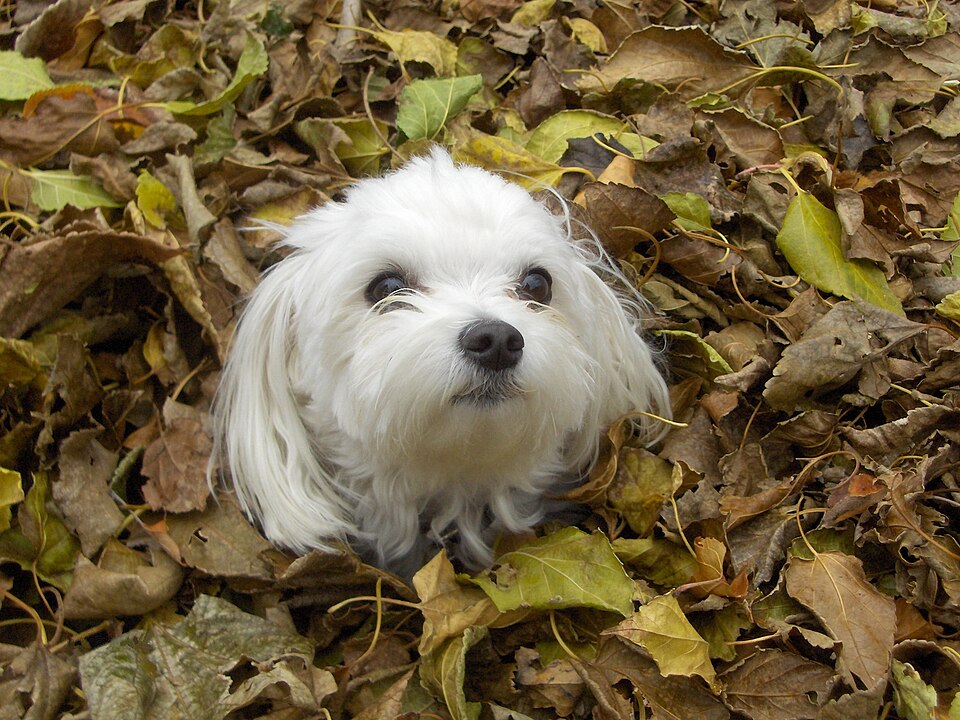
The Maltese is a tiny companion dog known for its pure white, silky coat that can grow all the way to the floor. Despite the word "terrier" sometimes attached to its name, it has no hunting job today; it was chosen to live alongside people, and the FCI places it with the bichon family. On this page we've pulled together its temperament, coat care and health issues from breed registry standards, animal welfare resources and scientific studies.
- Temperament: The FCI standard describes it as lively, affectionate, very calm and very intelligent; it loves being close to its people.
- Coat: It sheds little, but the long coat mats quickly without daily combing. Tear stains show up clearly on white fur.
- Size: 6.5–9 lb (3–4 kg) according to the FCI. Its small body is fragile; jumping from arms or furniture can cause fractures.
- Health: Gum disease, slipping kneecaps and tracheal collapse are common in small breeds; a predisposition to the congenital heart vessel problem PDA has been reported in the Maltese.
- Lifespan: A 2024 UK study found a median lifespan of 13.1 years.
What to know
 What is the Maltese like?
The FCI breed standard describes the Maltese as lively, affectionate, very calm and very intelligent, and the Royal Kennel Club calls it sweet-tempered and smart. It would rather stay close to its people, resting in a lap or beside you, than go on long hikes. It watches everything going on at home with interest, but it usually isn't exhaustingly active.
The Royal Kennel Club's description of the toy group fits this breed well: small companion dogs with friendly personalities that love attention and don't need a lot of exercise, some of them a little picky about food. Its tiny body shouldn't make anyone treat it like a toy, though. A Maltese, like any dog, needs to sniff, explore, play and have a quiet corner of its own to rest in.
Every dog is an individual. Breed traits describe general tendencies; the parents' temperament, how a puppy was socialized and the training it gets shape its personality as much as its breed.
 Who is it a good fit for?
The Maltese is a good match for people who spend a lot of time with their dog, can set aside a few minutes every day for grooming, and have a fairly calm household.
| Situation | Good fit? |
|---|---|
| Apartment | Excellent; the Royal Kennel Club says a small home and garden are enough |
| Family with kids | With supervision; a fall from someone's arms is a serious accident at this size |
| Other dogs and cats | Most get along well; keep a close eye on play with big dogs |
| Long hours alone | May struggle; it's a companion dog that loves attention |
| First-time dog owners | Good, as long as there's time for daily coat and dental care |
Young children often want to carry, squeeze or hold a small dog. According to UFAW, the most common cause of foreleg fractures in toy breeds is falling from the owner's arms or jumping down from a height. It's best to teach kids to pet the dog while sitting on the floor and to give the dog a place it can retreat to and rest. Our article on kids and dogs at home has more tips.
Where does it come from?
According to the FCI, the breed's name doesn't come from the island of Malta: "Maltese" goes back to an old Semitic root meaning harbor or refuge, which also shows up in the names of many coastal places around the Mediterranean. The breed's ancestors were small dogs living in the port cities of the central Mediterranean, hunting the mice and rats in warehouses and ships' holds.
These dogs have a very long history. The FCI mentions small dogs called "canes melitenses" in a list of dogs from the time of Aristotle, and notes that they were favorite companions of Roman ladies; Renaissance painters also portrayed them in the salons of the day. According to the Royal Kennel Club, these little white dogs may have been brought to Malta by Phoenician traders; in 1805 a Knight of Malta wrote about dogs with long silky hair, and the Royal Library of Malta holds an 1833 portrait of a dog that looks much like today's Maltese.
Appearance and colors
The Maltese is a small dog, slightly long in the body for its height, that carries its head proudly. Its eyes are large and round, and its nose is black. The Royal Kennel Club standard asks that the muzzle not be too short compared with the skull, so this is not a flat-faced breed.
- Height: According to the FCI, males stand 21–25 cm (about 8–10 in) at the shoulder and females 20–23 cm (about 8–9 in). The Royal Kennel Club sets a limit of 25 cm (10 in).
- Weight: The FCI gives 3–4 kg (6.5–9 lb); the AKC gives under 7 pounds (about 3.2 kg).
- Coat: According to the FCI, there is no undercoat; the coat is long, straight, glossy and silky. The Royal Kennel Club notes that it doesn't shed noticeably but needs daily grooming.
- Color: Pure white; the Royal Kennel Club standard also allows slight lemon markings.
Show dogs wear their coats floor-length. A pet Maltese's coat can also be clipped short to make care easier; that's a decision to make based on your dog's and your own routine.
 Daily care
Coat care is the biggest part of looking after this breed. The Royal Kennel Club recommends grooming every day: long, fine hair tangles quickly, especially behind the ears, in the armpits and between the legs. As mats tighten, they pull on the skin and hurt.
- Combing: Comb down to the skin every day. Even with a short clip, a few combing sessions a week are needed.
- Groomer: Have the coat cut by an experienced groomer. The RSPCA suggests checking whether a groomer asks for vaccination records, uses reward-based handling and avoids enclosed drying boxes in which a dog can't escape the heat.
- Tear stains: Reddish-brown stains running from the eyes toward the nose are common on white fur. According to a veterinarian-written PetMD article, the color comes from porphyrin, an iron-containing pigment in tears, and staining usually happens because eyelid structure lets tears spill onto the face. Wiping around the eyes with a damp cloth a few times a day and keeping the hair around the eyes short reduces staining. If staining is new, getting worse, or the eye looks red and painful, have your vet take a look.
- Teeth: Get your puppy used to tooth brushing early; gum disease is very common in small breeds.
- Ears and nails: Check the ears weekly and show your vet any bad smell, redness or discharge. Don't decide on your own what to do about hair in the ear canal; ask your vet. Trim the nails regularly.
- Cold: The PDSA notes that small animals have a harder time holding their body heat. A coat can help a Maltese with a short clip in winter; see our article on dogs in cold weather.
Our dog grooming guide walks you through a combing and bathing routine step by step.
Training and exercise
The Royal Kennel Club recommends up to 30 minutes of exercise a day for this breed. That may sound like little, but it matters: short daily walks, new smells and indoor games keep both its weight and its mood in good shape. Sniffing games are a great option for rainy days.
- Reward-based training: It's a smart dog, and short, rewarding, frequently repeated sessions work best. Harsh methods frighten a small, sensitive dog.
- Early socialization: Give your puppy calm, positive experiences with different people, sounds and gentle dogs.
- Harness: The windpipe can be delicate in small breeds. A harness that holds the chest and doesn't press on the throat is a better choice than a collar that pulls on the neck. Loose-leash training teaches walking without pulling.
- Fewer jumps: Put a ramp or steps by the sofa and bed, and hold the dog securely with both hands when you carry it.
- Hot weather: In summer, walk during the cooler hours. Our article on dogs in hot weather explains the signs of heatstroke.
 Diet and weight
A Maltese doesn't need a special food; a complete, balanced dog food suited to its age and size is enough. In such a small dog, even a few extra treats change its weight quickly, so measure its food and count treats as part of the daily amount.
The Merck Veterinary Manual notes that toy breed puppies can have drops in blood sugar during their first six months, usually linked to an immature liver, and that this can generally be managed with frequent meals. Plan the number and timing of your puppy's meals with your vet, and contact your vet right away if you see weakness, trembling or fainting. Some human foods are toxic to dogs; check our list of foods dogs should never eat.
 Health issues to know about
The Maltese is a long-lived breed, but some problems common in small breeds and a few breed-specific predispositions have been reported. The information below is for awareness only; ask your vet about diagnosis and treatment.
Gum disease
A 2021 UK study of more than 22,000 dogs found that about 12.5% were diagnosed with periodontal (gum) disease within a year, and the risk fell as body weight rose. In other words, small breeds are at higher risk. If you notice bad breath, red gums, tartar or trouble eating, see your vet. Regular tooth brushing is the most effective prevention, as the researchers also emphasize.
Slipping kneecaps
In patellar luxation, the kneecap slides out of its normal place; it can cause lameness, pain and arthritis over time. In a 2016 English study, small breeds were clearly predisposed, and dogs lighter than their breed average had a higher risk. If you see your dog skipping its hind leg now and then or limping, see your vet.
Tracheal collapse
According to the Merck Veterinary Manual, weakening of the cartilage rings that hold the windpipe open is most common in toy and miniature breeds. A dry, persistent cough that sounds like a goose honk is the typical sign, and extra weight makes it worse.
Congenital heart vessel problem (PDA)
Before birth, a blood vessel lets blood bypass the lungs, and it normally closes at birth; in PDA it doesn't, and the heart has to work harder. According to UFAW, the Maltese is among the breeds predisposed to it. The good news: if it's found early, it can often be treated. A continuous heart murmur that a vet hears with a stethoscope in a puppy can be the first clue, which is why UFAW recommends a veterinary exam for every puppy before purchase.
Inborn liver and brain problems
The Merck Veterinary Manual lists the Maltese among the breeds in which brain signs caused by abnormal liver blood vessels (hepatic encephalopathy) are often seen; signs usually begin before a puppy is six months old. If you notice staring into space, unexplained barking or whining, or restlessness, tell your vet. UFAW also mentions the Maltese among toy breeds predisposed to fluid buildup in the brain (hydrocephalus). The Royal Kennel Club recommends that breeders use the eye examination scheme.
- A honking cough, trouble breathing or bluish gums
- Limping, or not putting weight on a leg at all, after a fall or a jump
- Weakness, trembling, staring into space or fainting in a puppy
- Red eyes, a sudden increase in watering, or squinting
How long does it live?
A 2024 UK study using data from about 585,000 dogs from 18 sources found a median lifespan of 13.1 years (confidence interval 12.6–13.5) for the Maltese. In the same study, the median lifespan of crossbred dogs was 12.0 years. The AKC gives a life expectancy of 12–15 years for the breed.
A median lifespan means half of the dogs died before that age and half after it, so many Maltese comfortably live past 15. Regular dental care, a healthy weight, a home that's safe from falls and yearly vet checkups are the most practical ways to help this little dog live a long, comfortable life.
 Before you get one
- Consider a shelter: Purebred dogs end up in shelters and rescues too. Our article on adopting a shelter dog covers the first steps.
- If you buy from a breeder: See the mother with her puppies at home, ask for the parents' eye examination results and make sure the puppy has been checked by a vet.
- "Teacup," "mini" or "pocket" ads: The Royal Kennel Club doesn't recognize any teacup breed and won't register dogs as teacup. It notes that these dogs are often produced by breeding the smallest, weakest puppies of litters, and that some sellers let puppies go before 8 weeks to make them look smaller; breathing, bone, joint, heart and stomach problems are more likely in these dogs. The RSPCA also warns that words like "miniature" and "teacup" in ads can be a sign of sellers cashing in on popular terms.
- Red flags: Steer clear of sellers who won't show you the mother, always have puppies available, can't provide paperwork or rush you to "buy now."
- Registration: Rules vary by country; many places require or recommend microchipping. In Türkiye, owned dogs must be microchipped and registered in the PETVET system.
- The first days: Our guide to bringing a puppy home walks you through the first night and first week.
Frequently asked questions
Do Maltese shed, and are they good for people with allergies?
According to the Royal Kennel Club, they don't shed noticeably. But low shedding doesn't mean allergy-free. In a 2012 study, so-called "hypoallergenic" breeds actually had higher levels of the main dog allergen in their coats, and there was no difference between breeds in airborne allergen levels at home; the researchers concluded there is no evidence for calling any breed hypoallergenic. If you have allergies, talk to your doctor and spend time around the breed before deciding.
How big do they get?
The FCI standard gives 3–4 kg (6.5–9 lb). Work out your own dog's ideal weight with your vet; being too thin or too heavy causes problems quickly in such a small body.
Are the brown stains under the eyes a disease?
Usually not: a pigment in tears stains the white fur. Still, if the staining is new or getting worse, or the eye is red and watering a lot, have your vet check it, since eyelash or tear duct problems can also cause it.
Is a "mini" or "teacup" Maltese a separate breed?
No. The Royal Kennel Club doesn't recognize any teacup breed; the word just describes a dog that's smaller than average. Health problems are more likely in extremely small dogs, so make the parents' health and temperament your priority, not size.
Can they be left home alone?
Because it loves being near its people, long hours alone can be hard on a Maltese. Being alone needs to be taught gradually; our article on separation anxiety explains how, step by step.
Sources
- The Royal Kennel Club · Maltese: ırk tanıtımı ve sağlık taramaları
- FCI · Maltese ırk standardı No. 65
- AKC (American Kennel Club) · Maltese ırk tanıtımı
- Science for Animal Welfare (UFAW) · Maltese: Patent duktus arteriozus (PDA)
- Science for Animal Welfare (UFAW) · Chihuahua: Hidrosefali (Malta terrieri de yatkın ırklar arasında)
- Science for Animal Welfare (UFAW) · Oyuncak ırklarda ön bacak (radius ve ulna) kırıkları
- McMillan ve ark. · Longevity of companion dog breeds: those at risk from early death, Scientific Reports (2024)
- O'Neill ve ark. · Epidemiology of periodontal disease in dogs in the UK primary-care veterinary setting, Journal of Small Animal Practice (2021)
- O'Neill ve ark. · The epidemiology of patellar luxation in dogs attending primary-care veterinary practices in England, Canine Genetics and Epidemiology (2016)
- Merck Veterinary Manual · Congenital and inherited disorders of the nervous system in dogs
- Merck Veterinary Manual · Tracheal collapse in dogs
- The Royal Kennel Club · Buying a teacup dog
- RSPCA · Choosing the right dog groomer
- RSPCA · Buying a puppy: puppy sales
- PDSA · Hypothermia in pets
- PetMD (veteriner hekim yazısı) · Dog tear stains: causes, treatment and prevention
- Vredegoor ve ark. · Can f 1 levels in hair and homes of different dog breeds: lack of evidence to describe any dog breed as hypoallergenic, Journal of Allergy and Clinical Immunology (2012)
- Resmî Gazete · Kedi, Köpek ve Gelinciklerin Kimliklendirilmesi ve Kayıt Altına Alınmasına Dair Yönetmelik (26 Şubat 2018)
By Tüylüm · Last checked: November 3, 2026. Compiled from the sources above and written in our own words. Spotted a mistake? Write to [email protected] and we'll fix it right away. Photo from Wikimedia Commons, used under the license shown below it.