 Tüylüm
Havanese
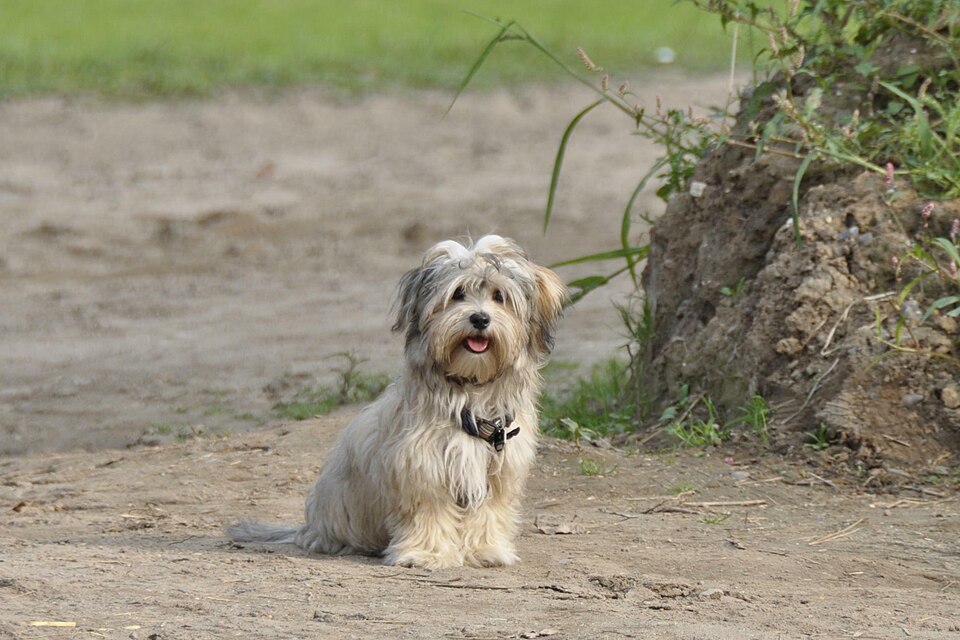
A cheerful little bichon with a long, silky coat, considered the national dog of Cuba and known for loving children. Adaptable and easy to train, but its coat needs daily care. Eyelash and eye problems, and the short, bowed front legs seen in some dogs, are the things to know about in this breed.

 Lifespan≈ 14.5 yearsUK 2024; few dogs, so less certain
 Weight7–13 lb (3.2–5.9 kg)AKC
 Height9–10.5 in (23–27 cm)FCI; Royal Kennel Club: 23–28 cm
 OriginCubacame from the western Mediterranean
 CoatLong, softneeds daily combing; sheds little
 Exercise~30 minutes a dayRoyal Kennel Club guidance
 With kidsLoves themFCI: plays with children endlessly
 TrainingEasyFCI: exceptionally bright, easy to train
The Havanese is the colorful member of the bichon family: a small, long-coated companion dog like its relatives the Bichon Frise and the Maltese, but unlike them it comes in many colors. The Royal Kennel Club introduces it as the national dog of Cuba, and the AKC describes it as a cheerful, lively and sociable companion. On this page we've pulled together its temperament, care needs and health issues from breed registry standards, animal welfare resources and scientific studies.
- Temperament: According to the FCI, exceptionally bright, affectionate, happy, charming, playful and a bit of a clown; it loves children and plays with them endlessly.
- Coat: Its long, soft, preferably wavy coat sheds little, but according to the Royal Kennel Club it needs daily care.
- Activity: The Royal Kennel Club recommends up to 30 minutes of exercise a day; it suits apartment life.
- Health: A Norwegian study found extra eyelashes that can rub the eye in 14.5% of dogs; cataracts and, in some dogs, short, bowed front legs are also being researched in this breed.
- Lifespan: A 2024 UK study found a median lifespan of 14.5 years, but the data come from a small number of dogs.
What to know
 What is the Havanese like?
The FCI standard describes the Havanese as exceptionally bright, affectionate, happy, charming, playful and even a bit of a clown; according to the standard, it loves children and plays with them endlessly. The Royal Kennel Club likewise asks for a lively, affectionate, intelligent, friendly and outgoing temperament. The AKC notes that the breed has become especially popular with city dwellers in the United States.
The FCI also notes that the Havanese is easy to train as a dog that alerts you when someone comes to the door. Because it's a people-loving dog that enjoys being part of family life, being alone needs to be taught gradually.
Every dog is an individual. Breed traits describe general tendencies; the parents' temperament, how a puppy was socialized and the training it gets shape its personality as much as its breed.
 Who is it a good fit for?
The Havanese is a good choice for families looking for a playful, people-loving small dog, who spend a lot of time at home and can set aside a few minutes every day for coat care.
| Situation | Good fit? |
|---|---|
| Apartment | Excellent; the Royal Kennel Club says a small home and garden are enough |
| Family with kids | Good; according to the FCI it loves children, but as a small dog it needs supervision |
| Other dogs and cats | Early, calm introductions matter |
| Long hours alone | May struggle; being alone needs to be taught gradually |
| First-time dog owners | Good; it's easy to train, as long as you're ready for daily coat care |
Teach children to pet the dog while sitting on the floor and to leave it alone while it eats or sleeps; a small dog can easily get hurt falling from someone's arms. Our article on kids and dogs at home has more tips.
Where does it come from?
According to the FCI, the Havanese has its origins in the western Mediterranean: the breed developed along the Spanish and Italian coasts, and these dogs are thought to have been brought to Cuba early on by Italian ship captains. The FCI also notes that calling its most common brown color "tobacco" gave rise to the legend that the breed was born in Havana. According to the Royal Kennel Club, this member of the bichon family is Cuba's national dog, and the AKC presents it as the only dog breed native to Cuba.
The breed's recent history was shaped by political change in Cuba. According to the FCI, those events led to the complete disappearance of the old bloodlines in Cuba; a few dogs were taken out of the country, and their descendants survived in the United States. The Royal Kennel Club also describes how the breed became more widely known after many people fled to the US with their dogs following the change of regime.
Appearance and colors
A sturdy, short-legged small dog that is slightly longer in the body than it is tall. Its tail is carried like a plume over its back, and its eyes are large and dark. The FCI asks for lively, springy movement.
- Height: According to the FCI, 23–27 cm (9–10.5 in) at the shoulder, with 21–29 cm tolerated; the Royal Kennel Club gives 23–28 cm.
- Weight: 7–13 pounds (3.2–5.9 kg) according to the AKC.
- Coat: According to the FCI, long, abundant, soft and preferably wavy. The Royal Kennel Club notes that the breed doesn't shed noticeably.
- Color: Most of the bichon family is white, but the Havanese comes in many colors: the Royal Kennel Club's standard colors include black, white, cream, gold, red, chocolate, sable and combinations of these with white, as well as particolor and tricolor patterns.
Some Havanese are reported to have short, bowed front legs; this is covered in the health section below.
Daily care
The Royal Kennel Club recommends daily grooming for the Havanese. The long, soft coat tangles easily, especially behind the ears, in the armpits and between the legs.
- Combing: If the coat is long, comb every day, making sure the comb reaches the skin. A pet Havanese's coat can also be clipped short to make care easier; then a few combing sessions a week may be enough.
- Groomer: The RSPCA suggests checking whether a groomer asks for vaccination records, uses reward-based handling and avoids enclosed drying boxes in which a dog can't control its body temperature.
- Eyes: Tie up or trim the hair around the eyes so it doesn't touch them, and wipe around the eyes with a damp cloth. Frequent blinking, watering, redness or squinting can be signs of an eyelash problem; see your vet.
- Teeth: Get your puppy used to tooth brushing early; in a large 2021 UK study, the risk of gum disease rose as body weight fell.
- Ears and nails: Check the ears weekly and decide with your vet what to do about hair in the ear canal. Trim the nails regularly.
Our dog grooming guide walks you through a combing and bathing routine step by step.
Training and exercise
The Royal Kennel Club recommends up to 30 minutes of exercise a day for the Havanese. Because it's a playful dog, games like fetch, hide-and-seek and sniffing alongside walks both tire it out and make it happy. Our article on sniffing games has ideas.
- Reward-based training: According to the FCI, it's a bright dog that's easy to train; short, rewarding, fun sessions work best. Learning tricks can be an enjoyable shared hobby with this breed.
- Early socialization: Give your puppy positive experiences with different people, sounds and calm dogs.
- Alerting: It's natural for it to let you know someone is at the door; if it barks a lot, our article on why dogs bark can help you find the reason.
- Leash: Teach walking without pulling while it's young; our loose-leash training guide can help.
- Being alone: Teach being alone gradually, starting with short periods; our article on separation anxiety explains how, step by step.
 Diet and weight
A Havanese doesn't need a special food; a complete, balanced dog food suited to its age and size is enough. In a small dog, even a few extra treats change its weight quickly, so measure its food and count training treats as part of the daily amount.
- If you can feel the ribs under a thin layer of fat and see a waist from above, the weight is about right.
- Weighing your dog once a month shows changes early.
- Some human foods are toxic to dogs; check our list of foods dogs should never eat.
 Health issues to know about
The Havanese is generally a long-lived breed, and the Royal Kennel Club lists no conformation concerns that show judges need to watch for in it. But some eye and leg problems are being researched. The information below is for awareness only; ask your vet about diagnosis and treatment.
Extra eyelashes (distichiasis)
These are eyelashes that grow from the wrong place on the edge of the eyelid. In a 2021 study of 1,156 Havanese in Norway, 14.5% of the dogs had them; most were mildly affected, and mild cases usually show no signs. In some dogs, though, the lashes irritate the eye and can lead to painful corneal problems. The study showed that the condition is largely inherited.
Cataracts
A cataract is a clouding of the lens of the eye; it can reduce vision and, in severe cases, lead to blindness. A 2023 study describes cataracts as an important health issue in the Havanese and notes a breed predisposition. The researchers point out that dogs in Norway are brought for eye examinations at an average of 3.4 years of age, when most genetically at-risk dogs don't yet show visible changes. The Royal Kennel Club recommends, at a minimum, the eye examination scheme to breeders.
Short, bowed front legs
Some Havanese have short, bowed front legs. According to a 2020 study, this may be linked to a gene change that shortens legs in dogs (the FGF4 retrogene). Most affected dogs show no signs of pain, but in some the problem is serious; the researchers note that this build can put abnormal strain on the joints and lead to arthritis. In the same study, dogs carrying at least one copy of the "normal" form of the gene were 31.3 cm tall at the shoulder on average, while those carrying two copies of the altered form were 26.4 cm; the normal form had steadily declined in the breed over the past two decades. The authors recommend preserving a more moderate build. The Royal Kennel Club also recommends elbow screening to breeders.
- Squinting, frequent blinking, redness or cloudiness in the eye
- Limping, pain in the front legs or reluctance to walk
- Trouble going up or down stairs
- Loss of appetite, lethargy or a sudden change in behavior
How long does it live?
A 2024 UK study using data from about 585,000 dogs from 18 sources found a median lifespan of 14.5 years for the Havanese, well above the 12.0-year median for crossbred dogs. However, this figure rests on a small number of dogs: only 56 Havanese deaths were included, and the upper limit of the confidence interval couldn't be calculated. The AKC also gives a life expectancy of 14–16 years for the breed.
Eye checks, dental care, a healthy weight and yearly vet visits are the most practical ways to help a Havanese enjoy that long life in comfort.
 Before you get one
- Consider a shelter: Purebred dogs end up in shelters and rescues too. Our article on adopting a shelter dog covers the first steps.
- If you buy from a breeder: See the mother with her puppies at home. Ask for the eye examination and elbow screening results the Royal Kennel Club recommends; the breed club also runs its own health scheme. Check that the parents' front legs are straight.
- The age of eye exams: According to the cataract researchers, a single exam at a young age may miss cataracts that appear later; ask for the parents' results from exams at older ages too.
- The "hypoallergenic" promise: Low shedding doesn't mean allergy-free. In a 2012 study, so-called "hypoallergenic" dogs had higher levels of the main dog allergen in their coats, and the researchers concluded there is no evidence for calling any breed hypoallergenic.
- Red flags: Steer clear of sellers who won't show you the mother, always have puppies available, can't provide paperwork or rush you to "buy now."
- Registration: Rules vary by country; many places require or recommend microchipping. In Türkiye, owned dogs must be microchipped and registered in the PETVET system.
Frequently asked questions
Do Havanese shed, and are they good for people with allergies?
According to the Royal Kennel Club, they don't shed noticeably. But research has found no evidence for calling any breed "hypoallergenic." If you have allergies, talk to your doctor and spend time with the breed before deciding.
What's the difference between a Havanese and a Bichon Frise?
Both belong to the bichon family. The most visible difference is color and coat: the Bichon is always white with a curly coat, while the Havanese comes in many colors and has a long, soft, wavy coat. See our Bichon Frise page for details.
Is a Havanese good for a family with kids?
According to the FCI standard, the Havanese loves children and plays with them endlessly. Still, because it's a small dog, play should be supervised; teach kids to pet the dog while sitting on the floor.
Is a Havanese with bowed front legs unhealthy?
Not always. According to research, most Havanese with short, bowed front legs show no signs of pain, but some can develop joint problems. If you see limping, reluctance to walk or avoiding stairs, see your vet.
Can they be left home alone?
It's a people-loving dog that enjoys being part of family life, so long hours alone can be hard on it. Being alone needs to be taught gradually; our article on separation anxiety explains how, step by step.
Sources
- The Royal Kennel Club · Havanese: ırk tanıtımı ve sağlık taramaları
- The Royal Kennel Club · Havanese ırk standardı
- FCI · Havanese (Bichon havanais) ırk standardı No. 250
- AKC (American Kennel Club) · Havanese ırk tanıtımı
- McMillan ve ark. · Longevity of companion dog breeds: those at risk from early death, Scientific Reports (2024)
- Bellamy ve ark. · Short and sweet: foreleg abnormalities in Havanese and the role of the FGF4 retrogene, Canine Medicine and Genetics (2020)
- Bellamy ve ark. · Heritability of distichiasis in Havanese dogs in Norway, Canine Medicine and Genetics (2021)
- Bellamy ve ark. · Cataracts in Havanese: genome wide association study reveals two loci associated with posterior polar cataract, Canine Medicine and Genetics (2023)
- O'Neill ve ark. · Epidemiology of periodontal disease in dogs in the UK primary-care veterinary setting, Journal of Small Animal Practice (2021)
- RSPCA · Choosing the right dog groomer
- Vredegoor ve ark. · Can f 1 levels in hair and homes of different dog breeds: lack of evidence to describe any dog breed as hypoallergenic, Journal of Allergy and Clinical Immunology (2012)
- Resmî Gazete · Kedi, Köpek ve Gelinciklerin Kimliklendirilmesi ve Kayıt Altına Alınmasına Dair Yönetmelik (26 Şubat 2018)
By Tüylüm · Last checked: November 3, 2026. Compiled from the sources above and written in our own words. Spotted a mistake? Write to [email protected] and we'll fix it right away. Photo from Wikimedia Commons, used under the license shown below it.