 Tüylüm
Pekingese
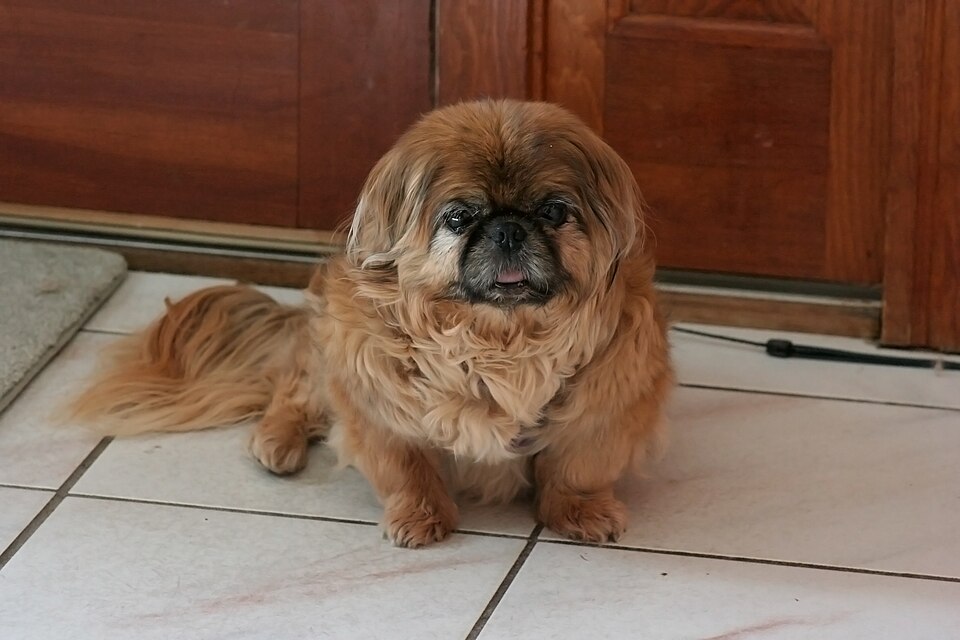
A small, dignified, lion-like dog from China's imperial palace: fearless, loyal and aloof with strangers. Its flat face puts its BOAS risk on par with Pugs and Bulldogs, its large eyes injure easily and its long coat needs daily care; parents with a more moderate build are the better choice.

 Lifespan≈ 13.3 yearsmedian, 2024 UK study; mixed breeds 12.0
 Weight11–12 lb (5–5.4 kg)RKC ideal maximum; AKC up to 14 lb
 Height6–9 in (15–23 cm)AKC
 OriginChinathe imperial palace's dog
 CoatLong, with a maneneeds daily care
 ExerciseUp to 30 min a dayRoyal Kennel Club guidance
 Heat toleranceVery lowhigh BOAS risk; a cool home in summer
 EyesVery delicatelarge and prominent; a knock can dislodge one
With its mane, large eyes and dignified rolling walk, the Pekingese is, in the words of the Royal Kennel Club standard, "leonine in appearance": a small dog that looks like a lion. For centuries it was the favorite of China's imperial palace, and it takes its name from Peking (Beijing). Despite its small body, it's self-assured and fearless. But its very flat face, large prominent eyes and long coat call for an informed, attentive owner. On this page we've pulled together its temperament, care needs and health issues from breed registry standards, animal welfare resources and scientific studies.
- Temperament: According to the breed standard, fearless, loyal and aloof; it should be neither timid nor aggressive.
- Breathing: In Cambridge's 2026 study, BOAS was as common as in Pugs, French Bulldogs and Bulldogs, and most dogs had narrowed nostrils.
- Eyes: Shallow eye sockets and large eyes; even a minor knock can push an eye out of its socket.
- Coat: The Royal Kennel Club recommends daily grooming; an excessively long, heavy coat is undesirable.
- Back: Its short-legged build is linked to a predisposition to disc problems.
- Lifespan: A large 2024 UK study found a median lifespan of 13.3 years, one of the longer-lived breeds in this group.
What to know
 What is the Pekingese like?
The Royal Kennel Club's breed standard describes the Pekingese as fearless, loyal and aloof, and stresses that it should be neither timid nor aggressive. According to the standard, it is a well-balanced dog of great dignity and quality, with an alert, intelligent expression. The Royal Kennel Club writes that the breed has great character and determination and is capable of living life to the full.
Its aloofness means you shouldn't expect a dog that throws itself at strangers. Earning its trust can take time; a calm, respectful approach that doesn't force things may work well. In English it's often called simply a "Peke."
Every dog is an individual. Breed traits describe general tendencies; the parents' temperament, how a puppy was socialized and its health shape its personality as much as its breed.
 Who is it a good fit for?
According to the Royal Kennel Club's breed profile, the Pekingese is a small dog that suits apartment living and needs no more than half an hour of exercise a day, but it does need daily grooming.
| Situation | Good fit? |
|---|---|
| Apartment | Good, as long as the home can be kept cool in summer |
| A calm home | Excellent; up to half an hour of exercise a day is enough |
| Time for daily grooming | A must; an unkempt coat tangles |
| Hot climate, home that can't be cooled | Not suitable; breathing problems and heatstroke risk |
| Long walks, running | Not suitable |
In homes with children, it's important not to touch the dog's face and eyes or pick it up against its will; a Pekingese's eyes can be injured by even a minor knock. Our article on kids and dogs at home has more.
Where does it come from?
According to the Royal Kennel Club, short-legged, short-faced dogs of "Peke" type can be traced in China as far back as the Tang dynasty in the 8th century. The breed was a favorite in the imperial palace in Peking; it was a dog of the upper castes, and commoners weren't allowed to own one.
When the British sacked Peking in 1860, four dogs were brought back to Britain, and they soon became sought after in elite society. The breed was very popular in Victorian times; The Kennel Club accepted it for registration in 1910, and it drew large entries at dog shows. The Royal Kennel Club notes that the breed's popularity has declined in recent years, perhaps because of the work its coat requires. According to the FCI, the breed's country of origin is China and its standard is held by Great Britain.
Appearance and colors
The Royal Kennel Club standard describes a small, well-balanced, moderately thick-set dog: a Pekingese should look small but be surprisingly heavy when picked up, and heavy bone and a sturdy body are essential. The front legs are short, thick and slightly bowed, and the gait is slow, dignified and rolling.
- Weight: According to the Royal Kennel Club standard, ideally no more than 11 lb (5 kg) for males and 12 lb (5.4 kg) for females. The AKC gives up to 14 lb (about 6.4 kg).
- Height: According to the AKC, 6–9 inches (15–23 cm) at the shoulder.
- Head and nose: The head is large and wider than it is deep. The standard asks for a nose that is "not too short" with large, open nostrils, and calls pinched nostrils and a heavy wrinkle over the nose unacceptable.
- Coat: Moderately long and straight, with a mane forming a cape around the neck; a coarse topcoat over a thick, softer undercoat. The standard calls excessive coat highly undesirable.
- Colors: All colors and markings are of equal merit; albino, liver and merle are unacceptable.
On the Royal Kennel Club's Breed Watch list for show judges, the Pekingese is in category 3; the points needing special attention are signs of breathing distress, an excessively profuse coat, protruding eyes, a heavy wrinkle over the nose, pinched nostrils, poor muscle tone, eye irritation and poor rear movement.
Daily care
The Royal Kennel Club recommends grooming a Pekingese every day and notes that the breed sheds.
- Brushing: With its thick, soft undercoat, make a short daily brush a habit, and don't forget the feathering on the ears, the backs of the legs and the tail.
- Face fold: According to UFAW, the extra skin folds on a Pekingese's face and around its tail are prone to inflammation. Gently clean and dry the fold over the nose every day; show your vet any bad smell, redness or discharge.
- Eyes: Check daily for redness, watering, cloudiness or squinting. According to a veterinary article published by the Royal Kennel Club, the eye surface is less sensitive in flat-faced dogs, so an ulcer may not show obvious signs.
- Teeth: Teeth can be crowded in a short jaw; start tooth brushing early.
- Home: A cool room, shade and fresh water at all times are a must in summer.
Our dog grooming guide walks you through brushing and bathing step by step.
 Training and exercise
The Royal Kennel Club recommends up to half an hour of exercise a day for the Pekingese. Short, gentle walks, indoor games and sniffing games are enough. Because it's independent and aloof, choose short, rewarding, patient sessions rather than pushing it.
- Harness: A veterinary article published by the Royal Kennel Club recommends a harness instead of a collar for dogs with BOAS, to avoid pressure on the airway.
- Brain games: Hidden treats and sniffing games keep it busy without straining its breathing.
- Socialization: Give your puppy calm, positive experiences with different people, sounds and places.
A UK study of 2016 data found that flat-faced dogs had about twice the odds of heatstroke compared with dogs with medium-length muzzles. In summer, move walks to early morning and late evening, don't go out in the midday heat and never leave your dog in a car. According to the Royal Kennel Club's article, very heavy panting, glazed eyes, vomiting, excessive drooling, a dark red tongue and staggering are signs of overheating; if you see them, move your dog into the shade right away, soak it with water, offer small sips of water and call your vet at the same time. See our article on dogs in hot weather for details.
 Diet and weight
Pekingese don't need a special food; a complete, balanced dog food that suits their age is enough. The long coat can hide weight gain, so trust your hands and the scale rather than your eyes. A veterinary article published by the Royal Kennel Club notes that extra weight makes BOAS signs worse and that flat-faced dogs should be kept lean.
- Measure food; decide the daily amount with your vet based on your dog's ideal weight.
- Count treats as part of the daily food, and don't feed from the table.
- Being able to feel the ribs under the coat and a thin layer of fat is a good sign.
- Weigh your dog once a month.
Some human foods are toxic to dogs; see our list of foods dogs should never eat.
 Health issues to know about
The Pekingese is one of the longer-lived breeds in this group, but living longer doesn't mean breathing and eye problems don't affect its quality of life. The information below is for awareness only; ask your vet about diagnosis and treatment.
Airway obstruction (BOAS)
According to UFAW, many if not all Pekingese are affected to some degree: narrow nostrils, a long soft palate and sometimes a narrow windpipe. In the Cambridge group's 2026 study of 14 flat-faced breeds, the Pekingese was one of two "high-risk" breeds whose BOAS rates didn't differ from those of Pugs, French Bulldogs and Bulldogs, and only about 18% of the Pekingese examined had open nostrils. In August 2026, the Royal Kennel Club recognized RFGS breathing grading for the Pekingese and will add it to its recommended screening from January 2027. Snoring and snorting at rest, labored breathing, stopping on walks, brief pauses in breathing during sleep and foamy saliva are among the signs. Snoring while awake isn't normal.
Eye problems
UFAW notes that the Pekingese has an extremely flat head with large, prominent eyes, and that probably all Pekingese are affected by "brachycephalic ocular syndrome" to some degree: the eyelids may not close fully, hairs on the nose fold can rub the eye and tear production may be poor. Because the eye sockets are shallow, a minor knock can dislodge an eye; this is an emergency. The Royal Kennel Club recommends eye exams for breeders.
Skin-fold infections
According to UFAW, the extra skin folds on the face and around the tail can become inflamed from friction and moisture; regular cleaning is the best protection.
Back and disc problems
A 2017 genetic study lists the Pekingese among the short-legged breeds, like the Dachshund and the French Bulldog, that are prone to disc disease, and links this predisposition across breeds to an extra copy of a gene called FGF4. In a 2020 review, the extra copy was found at a frequency of 61% in the Pekingese tested, and disc calcification has been linked to the risk of disc disease in Dachshunds and Pekingese. Sudden back pain or weakness in the hind legs needs urgent veterinary attention.
Birth and other issues
In a 2010 UK survey, the Pekingese was among the ten breeds with the highest cesarean rates. The inflammatory brain disease known from Pugs (NME) has also been reported in some other small breeds, including the Pekingese.
- Struggling to breathe, bluish or gray tongue and gums, collapse
- Signs of overheating: very heavy panting, staggering, vomiting
- An eye that bulges out, or sudden cloudiness, squinting or redness in an eye
- Sudden back pain or weakness in the hind legs
- Seizures or a sudden change in behavior
How long does it live?
A 2024 study using data on about 585,000 dogs from 18 UK sources found a median lifespan of 13.3 years for the Pekingese; for mixed-breed dogs it was 12.0 years. So despite its flat face, the Pekingese is one of the breeds that lives longer than mixed breeds. The Royal Kennel Club gives the breed's lifespan as "over 12 years," and the AKC as 12–14 years. A long life means years of breathing and eye care, which is why regular checkups matter.
 Before you get one
- Consider a shelter: Purebred dogs end up in shelters too. Our article on adopting a dog from a shelter covers the first steps.
- Genetic diversity: The Royal Kennel Club asks Pekingese breeders, at a minimum, to prioritize genetic diversity, in other words to avoid close inbreeding, and also recommends eye exams.
- Breathing: The parents' nostrils should be open; avoid parents that snore or wheeze while awake. Ask for RFGS results if available.
- A moderate build: The standard itself asks for a nose that isn't too short and a coat that isn't excessive; favor parents with less flat faces and less prominent eyes.
- Time: Make sure you can set aside time every day for grooming and eye checks.
- Registration: Rules vary by country. In Türkiye, owned dogs must be microchipped and registered in the PETVET system.
Frequently asked questions
Does a Pekingese need brushing every day?
Yes. The Royal Kennel Club recommends daily grooming and notes that the breed sheds. Regularly brushing the thick undercoat reduces tangles and the hair around your home.
Why is the Pekingese called a "lion dog"?
The Royal Kennel Club standard describes the Pekingese as leonine in appearance, and the mane around its neck strengthens that impression.
Can a Pekingese handle hot weather?
It struggles. Flat-faced dogs can't cool themselves well by panting. In summer, short walks in the cool hours, a cool home and fresh water at all times are a must.
How long do Pekingese live?
The 2024 UK study found a median lifespan of 13.3 years; the Royal Kennel Club says "over 12 years."
How is a Pekingese with strangers?
The breed standard describes it as aloof, but it shouldn't be timid or aggressive. It's usually reserved and dignified with strangers; let it approach new people in its own time.
Sources
- The Royal Kennel Club (UK) · Pekingese: breed profile and health screening
- The Royal Kennel Club · Pekingese breed standard
- The Royal Kennel Club · Breed Watch: Pekingese (category 3)
- The Royal Kennel Club and University of Cambridge · Respiratory Function Grading Scheme (RFGS)
- The Royal Kennel Club (author: Dr. Rowena Packer, RVC) · Brachycephalic obstructive airway syndrome (BOAS)
- The Royal Kennel Club (author: Dr. Rowena Packer, RVC) · Eye problems in brachycephalic dogs
- AKC (American Kennel Club) · Pekingese breed profile
- FCI · Pekingese (207) breed nomenclature
- Science for Animal Welfare (UFAW) · Pekingese: Brachycephalic airway obstruction syndrome
- Science for Animal Welfare (UFAW) · Pekingese: Brachycephalic ocular syndrome
- Science for Animal Welfare (UFAW) · Pekingese: Skin fold dermatitis
- Tomlinson et al. · A cross-sectional study into the prevalence and conformational risk factors of BOAS across fourteen brachycephalic dog breeds, PLOS One (2026)
- Brown et al. · FGF4 retrogene on CFA12 is responsible for chondrodystrophy and intervertebral disc disease in dogs, PNAS (2017)
- Dickinson and Bannasch · Current Understanding of the Genetics of Intervertebral Disc Degeneration, Frontiers in Veterinary Science (2020)
- Evans and Adams · Proportion of litters of purebred dogs born by caesarean section, Journal of Small Animal Practice (2010)
- van Renen et al. · Allele frequency of a genetic risk variant for necrotizing meningoencephalitis in pug dogs from Europe and association with the clinical phenotype, Frontiers in Veterinary Science (2024)
- Hall et al. · Incidence and risk factors for heat-related illness (heatstroke) in UK dogs under primary veterinary care in 2016, Scientific Reports (2020)
- McMillan et al. · Longevity of companion dog breeds: those at risk from early death, Scientific Reports (2024)
- Resmî Gazete (Türkiye) · Regulation on the identification and registration of cats, dogs and ferrets (February 26, 2018)
By Tüylüm · Last checked: November 3, 2026. Compiled from the sources above and written in our own words. Spotted a mistake? Write to [email protected] and we'll fix it right away. Photo from Wikimedia Commons, used under the license shown below it.