 Tüylüm
Shih Tzu
A long-coated, short-nosed companion dog with roots in Tibet, developed in the palaces of China. Friendly but independent. Its short muzzle can bring breathing, eye and heat problems, and its long coat needs daily care. Eye care is the most important daily job with this breed.

 Lifespan≈ 12.8 yearsmedian, 2024 UK study
 Weight10–18 lb (4.5–8 kg)RKC and FCI; ideal 10–16 lb
 Heightup to 10.5 in (27 cm)RKC and FCI standards
 OriginTibet and Chinadeveloped in China's imperial palaces
 SheddingLowbut the long coat needs daily care
 ExerciseUp to 1 hour a dayRoyal Kennel Club; keep it short in heat
 With kidsWith supervisionits large, prominent eyes injure easily
 TrainingModeratefriendly but independent
The Shih Tzu is a small companion dog bred in the imperial palaces of China, with a name meaning "lion dog." In the Royal Kennel Club's description, the hair growing out in every direction on its face gives it a "chrysanthemum-like" look. Its short muzzle and large, prominent eyes are its most familiar features, and also the parts of its health that need the most attention. On this page we've pulled together its temperament, care needs and health issues from breed registry standards, animal welfare resources and scientific studies.
- Temperament: According to the FCI and Royal Kennel Club standards, intelligent, active and alert; friendly but independent.
- Coat: It sheds little, but according to the Royal Kennel Club its long coat needs daily care. Cleaning around the eyes is part of the daily routine.
- Short muzzle: A brachycephalic (short-nosed) breed. According to UFAW, this build brings a tendency toward breathing difficulties, heatstroke and eye problems.
- Health: In a large UK study, the most common problems were gum disease, impacted anal sacs and ear problems; eye problems affected about 12% of the dogs.
- Lifespan: A 2024 study found a median lifespan of 12.8 years.
What to know
 What is the Shih Tzu like?
The FCI and Royal Kennel Club standards describe the Shih Tzu as intelligent, active and alert; friendly but independent. The AKC presents it as a sweet-faced little "lion dog" whose mischief and good cheer have delighted owners for a thousand years.
The word "independent" in the standard is a reminder that a Shih Tzu may not do everything it's asked right away, which is why a patient, reward-based approach works best with this breed. According to the FCI, it's a companion dog: it was bred not to do a job but to live alongside its people, right in the middle of family life.
Every dog is an individual. Breed traits describe general tendencies; the parents' temperament, how a puppy was socialized and the training it gets shape its personality as much as its breed.
 Who is it a good fit for?
The Shih Tzu suits people living in apartments who can spend time every day on coat and eye care and protect their dog on hot summer days.
| Situation | Good fit? |
|---|---|
| Apartment | Excellent; the Royal Kennel Club says a small home and garden are enough |
| Family with kids | With supervision; its large eyes are vulnerable to bumps and scratches |
| Other dogs and cats | Early, calm introductions matter; rough play puts its eyes at risk |
| Hot climate and summer | Needs care; short-nosed dogs handle heat poorly |
| First-time dog owners | Good, as long as you're ready for daily care and health monitoring |
Teach children not to touch the dog's face and eyes, and to pet it while sitting on the floor. Our article on kids and dogs at home has more tips.
Where does it come from?
According to the FCI, the Shih Tzu has its roots in Tibet, but the breed developed in China from dogs living in the imperial palaces. The Royal Kennel Club also notes that it descends from Tibetan breeds, that in its early days it was known as the "Lhasa Lion Dog," and that the Pekingese may have played a part in its development.
After China became a republic in 1912, some of these dogs reached the West; according to the FCI, the first recorded import to Britain was in 1931. According to the Royal Kennel Club, the first Shih Tzus were shown in England in 1933 alongside Lhasa Apsos; comparing head type and other features soon made it clear that they were separate breeds. The Shih Tzu Club of England was founded in 1934, and the breed was officially recognized in the 1940s.
Appearance and colors
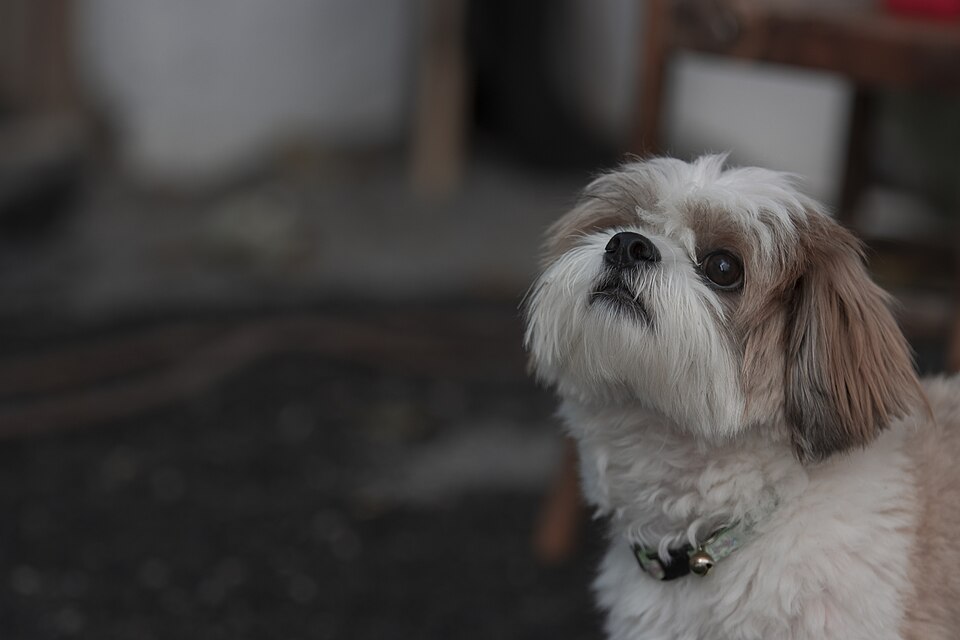
A sturdy, abundantly coated dog that is longer in the body than it is tall. The head is broad and round and the muzzle short and wide; the hair on the muzzle grows upward and frames the face like a flower. The Royal Kennel Club standard asks that this hair not affect the dog's ability to see.
- Height: According to the Royal Kennel Club and FCI, no more than 27 cm (10.5 in) at the shoulder. The AKC gives 9–10.5 inches.
- Weight: 4.5–8 kg (10–18 lb) according to the standards, ideally 4.5–7.5 kg (10–16 lb). In the UK study, the average adult weight was 7.9 kg (about 17 lb).
- Coat: According to the Royal Kennel Club standard, a long, dense outer coat that isn't curly, with a moderate undercoat; a slight wave is allowed. The club says it doesn't shed noticeably and recommends tying up the hair on the head without adornment.
- Color: The Royal Kennel Club's standard colors include black and white, gold and white, brindle, grey and white, solid black, solid gold and liver; blue, cream, lilac and solid white are non-standard in the UK.
 Daily care
Caring for a Shih Tzu comes in two parts: coat and eyes.
Coat
The Royal Kennel Club recommends daily grooming. The long coat mats easily; mats pull at the skin and can hide skin problems underneath. In the UK study, skin problems were the most common group of problems in Shih Tzus (16.6%).
- Combing: Comb down to the skin every day if the coat is long. With a short clip, a few times a week may be enough.
- Groomer: Have the coat cut by an experienced groomer. The RSPCA recommends avoiding enclosed drying boxes in which a dog can't control its body temperature; this matters even more for a short-nosed breed that copes poorly with heat.
- Head hair: Tie up or trim the hair that falls over the eyes; hair rubbing on the eye causes irritation.
Eyes
According to UFAW, the Shih Tzu's short skull means shallow eye sockets and prominent eyes; hair on the nasal fold and inward-turning eyelids can irritate the eye constantly, and tears spill onto the face.
- Every day: Gently wipe around the eyes with a clean, damp cloth. According to a veterinarian-written PetMD article, the reddish-brown stains on the face come from a pigment in tears, and in short-nosed dogs tears can collect on the face; regular wiping reduces both staining and wetness.
- When to see a vet: Squinting, frequent blinking, redness, sticky or greenish discharge, a dull-looking eye or rubbing at the face can signal an urgent eye problem.
- Knocks: A toy, a branch or another animal's paw can easily injure the eye; take care in brushy areas on walks.
Other care
Get your puppy used to tooth brushing early, check the ears weekly and trim the nails regularly. In the UK study, impacted anal sacs were the second most common problem (7.4%); if your dog scoots, tell your vet. Our dog grooming guide walks you through a combing and bathing routine.
Training and exercise
The Royal Kennel Club recommends up to an hour of exercise a day for the Shih Tzu. But with a short-nosed dog, adjusting exercise to the weather is a must: according to UFAW, dogs with this build are very prone to heatstroke, and breathing effort limits how much exercise they can take.
- Short, frequent walks: Several short walks spread through the day are better than one long one.
- In the heat: In summer, walk early in the morning and in the cool of the evening; don't play in the midday heat. Our article on dogs in hot weather explains the signs of heatstroke.
- Harness: Use a harness that holds the chest and doesn't press on the throat.
- Reward-based training: It has an independent nature; short, rewarding, patient sessions work best. Our articles on loose-leash training and sniffing games can help.
 Diet and weight
A Shih Tzu doesn't need a special food; a complete, balanced dog food suited to its age and size is enough. In a short-nosed dog, extra weight makes breathing even harder, so keeping a healthy weight matters especially in this breed.
- Measure food and count treats as part of the daily amount.
- If you can feel the ribs under a thin layer of fat and see a waist from above, the weight is about right.
- The hair on the face and beard can stay wet and dirty after meals; wipe and dry it.
- Some human foods are toxic to dogs; check our list of foods dogs should never eat.
 Health issues to know about
A 2024 UK study of the veterinary records of more than 11,000 Shih Tzus found that the most common problems were gum disease (9.5%), impacted anal sacs (7.4%) and ear problems (5.5%); among groups of problems, skin, dental and eye problems stood out. The information below is for awareness only; ask your vet about diagnosis and treatment.
Breathing problems linked to the short muzzle (BOAS)
According to UFAW, in all short-nosed breeds the upper jaw and nose are shortened while the soft tissues of the nose and throat stay the same size, so they're squeezed into a smaller space. The result: narrow nostrils, an overly long soft palate and a narrowed airway. Snoring, noisy breathing, mouth breathing, disrupted sleep and tiring quickly with exercise can all be signs of this syndrome. Because the short skull is part of the breed standard, UFAW believes many Shih Tzus have the problem to some degree. Anesthesia also carries a higher risk in these dogs; talk this through with your vet before any surgery.
Eye problems
UFAW notes that the Shih Tzu is an extremely short-skulled breed with large, prominent eyes, and that almost every individual may have "brachycephalic ocular syndrome" to some degree: the eyelids may not close fully, eyelid or nasal fold hair irritates the eye, and tear production may fall short. In the UK study, corneal ulcers were seen in 3.5% of dogs. Because the eye socket is shallow, even a minor knock can push the eye out of its socket; this is an emergency.
Dry eye (KCS)
When the immune system damages the tear glands, the eye doesn't get enough tears. According to UFAW, the Shih Tzu is predisposed to this disease, which in this breed often comes with painful corneal ulcers and usually starts before four years of age. In the UK study, dry eye was recorded in 3.7% of Shih Tzus older than seven. A red eye, sticky discharge and a dull-looking cornea are signs; early treatment helps protect vision.
Other conditions
In the UK study, umbilical hernias were recorded in 10.7% of Shih Tzus younger than two, and heart murmurs in 7% of those older than seven. Earlier research cited in the same study reports that disc disease of the spine is also more common in the breed. The Royal Kennel Club recommends, at a minimum, the eye examination scheme to breeders.
- An eye pushed out of its socket, sudden cloudiness or holding an eye shut
- Struggling to breathe, a bluish tongue or gums, or fainting
- Heavy panting, staggering or vomiting on a hot day (heatstroke)
- Back or neck pain, or weakness in the hind legs
How long does it live?
Among short-nosed breeds, the Shih Tzu is relatively long-lived:
- A 2024 UK study using data from about 585,000 dogs found a median lifespan of 12.8 years; for crossbred dogs, the figure was 12.0 years.
- In the 2024 veterinary clinic study, the median age at death of Shih Tzus was 12.7 years; the authors note that the breed appears relatively long-lived compared with dogs overall.
- In 2022 UK life tables, life expectancy at birth was 11.05 years.
The AKC gives 10–18 years. Eye and dental care, a healthy weight and protection from heat are the most practical factors in this breed's lifespan and quality of life.
 Before you get one
- Consider a shelter: Purebred dogs end up in shelters and rescues too. Our article on adopting a shelter dog covers the first steps.
- Check the breathing: UFAW recommends having a puppy examined along with its mother and father before you buy, and not buying from parents that show signs of breathing or eye problems or have had surgery or treatment for them. Watch for yourself whether the parents breathe quietly at rest, whether they snore and whether their eyes are healthy.
- Avoid extremes: According to UFAW, these problems come directly from the short skull; a flatter face or bigger eyes may look "cuter," but they mean more risk. Choose parents with less flat faces and open-looking nostrils.
- Eye examination: Ask for the results of the eye examination the Royal Kennel Club recommends.
- Red flags: Steer clear of sellers who won't show you the mother, always have puppies available, can't provide paperwork or rush you to "buy now."
- Registration: Rules vary by country; many places require or recommend microchipping. In Türkiye, owned dogs must be microchipped and registered in the PETVET system.
- The first days: Our guide to bringing a puppy home walks you through the first night and first week.
Frequently asked questions
Do Shih Tzus snore, and is that normal?
Snoring is common in short-nosed dogs, but according to UFAW it can be one of the signs of a breathing problem caused by a narrowed airway (BOAS). If snoring comes with tiring quickly on walks, mouth breathing or disrupted sleep, see your vet.
Why are its eyes always watery?
Because of the short muzzle, tears can spill onto the face, and hair can irritate the eye. Wiping around the eyes every day and keeping hair away from them helps. But redness, discharge, squinting or a dull look is not normal; see your vet right away.
What should I watch for in hot weather?
According to UFAW, short-nosed dogs are very prone to heatstroke. Walk during the cool hours in summer, keep your home cool, always have water available and never leave your dog in a car. If you see heavy panting or staggering, contact your vet immediately.
Do they shed, and are they good for people with allergies?
According to the Royal Kennel Club, they don't shed noticeably. But low shedding doesn't mean allergy-free; science hasn't shown any breed to be hypoallergenic. If you have allergies, talk to your doctor and spend time with the breed before deciding.
Is the Shih Tzu the same as the Lhasa Apso?
No. According to the FCI and the Royal Kennel Club, both have Tibetan roots and were shown together in the early years, but comparing head type and other features showed that they are separate breeds. See our Lhasa Apso page for details.
Sources
- The Royal Kennel Club · Shih Tzu: ırk tanıtımı ve sağlık taramaları
- The Royal Kennel Club · Shih Tzu ırk standardı
- FCI · Shih Tzu ırk standardı No. 208
- AKC (American Kennel Club) · Shih Tzu ırk tanıtımı
- Dale ve ark. · Demography, common disorders and mortality of Shih Tzu dogs under primary veterinary care in the UK, Canine Medicine and Genetics (2024)
- McMillan ve ark. · Longevity of companion dog breeds: those at risk from early death, Scientific Reports (2024)
- Teng ve ark. · Life tables of annual life expectancy and mortality for companion dogs in the United Kingdom, Scientific Reports (2022)
- Science for Animal Welfare (UFAW) · Shih Tzu: Brakisefalik hava yolu tıkanıklığı sendromu (BOAS)
- Science for Animal Welfare (UFAW) · Shih Tzu: Brakisefalik göz sendromu
- Science for Animal Welfare (UFAW) · Shih Tzu: Kuru göz (keratokonjonktivitis sikka)
- PetMD (veteriner hekim yazısı) · Dog tear stains: causes, treatment and prevention
- Vredegoor ve ark. · Can f 1 levels in hair and homes of different dog breeds: lack of evidence to describe any dog breed as hypoallergenic, Journal of Allergy and Clinical Immunology (2012)
- RSPCA · Choosing the right dog groomer
- Resmî Gazete · Kedi, Köpek ve Gelinciklerin Kimliklendirilmesi ve Kayıt Altına Alınmasına Dair Yönetmelik (26 Şubat 2018)
By Tüylüm · Last checked: November 3, 2026. Compiled from the sources above and written in our own words. Spotted a mistake? Write to [email protected] and we'll fix it right away. Photo from Wikimedia Commons, used under the license shown below it.