 Tüylüm
Pug
A loving, people-focused little companion dog with roots in China. Its flat face makes it highly prone to breathing problems, heatstroke, eye injuries and skin-fold infections, so choosing a pup from screened parents with open nostrils and keeping it at a healthy weight really matter.

 Lifespan≈ 11.6 yearsmedian, 2024 UK study; mixed breeds 12.0
 Weight14–18 lb (6.3–8.1 kg)Royal Kennel Club ideal weight
 Height10–13 in (25–33 cm)AKC
 OriginChinadeveloped in the Netherlands and Britain
 SheddingNoticeableshort coat, but sheds a lot
 ExerciseUp to 1 hour a daysplit into short, easy walks
 Heat toleranceVery lowcool hours, shade and a cool home in summer
 With kidsAffectionatesupervise; its eyes injure easily
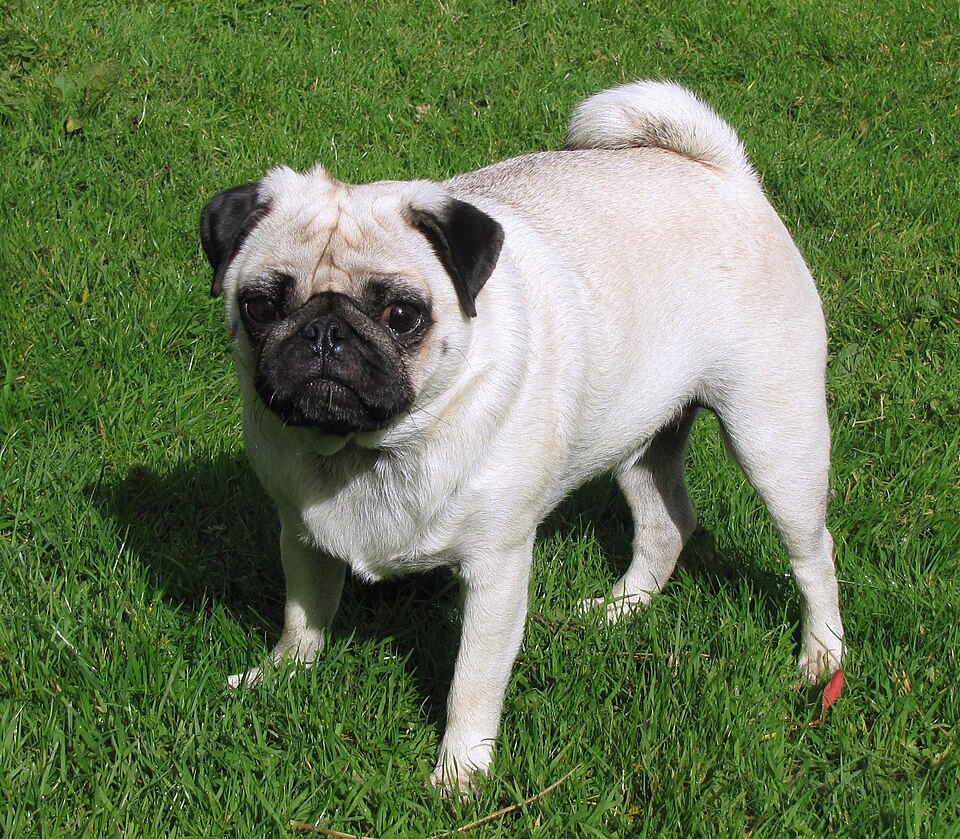
The Pug, with its wrinkled forehead, big dark eyes and curled tail, is instantly recognizable: a small dog bred for one job only, keeping people company. Its cheerful, affectionate nature has made it one of the world's best-loved breeds, but that same flat face brings serious breathing, eye and skin problems with it. On this page we've pulled together its temperament, care needs and health issues from breed registry standards, animal welfare resources and scientific studies. The goal isn't to scare you; it's to give you the honest facts you need to look after a Pug well.
- Temperament: Devoted to its people, cheerful and easygoing; doesn't like being left alone for long.
- Breathing: Its flat face makes it very prone to an airway obstruction called BOAS; snoring and snorting aren't "cute," they can be a symptom.
- Heat: Struggles to cool itself down; in a hot summer, heatstroke is a life-threatening danger.
- Eyes and skin: Its eyes injure easily, and the nose fold needs cleaning every day.
- Choosing a pup: Ask for both parents' breathing grades (RFGS), eye exams and Pug encephalitis DNA test results; parents with longer muzzles and open nostrils are the better choice.
- Lifespan: A large 2024 UK study found a median lifespan of 11.6 years.
What to know
 What is the Pug like?
According to the Royal Kennel Club, the Pug is an affectionate, sociable dog bred purely as a companion, not for work. It's usually friendly with strangers and tends to get along with other dogs and household pets. The breed standard describes it as even-tempered, happy and lively. In a 2022 UK study, Pugs were recorded with aggression markedly less often than other dogs.
It's clever but strong-willed, so training takes some patience. Pugs are sensitive to tone of voice and don't respond well to harsh handling. Because they bond so closely with their people, long stretches alone are hard on them and separation anxiety can develop. A bored Pug also turns to food more readily, which makes weight problems worse.
Every dog is an individual. Breed traits describe general tendencies; the parents' temperament, how a puppy was socialized and its health shape its personality as much as its breed.
 Who is it a good fit for?
The Pug suits households where someone is home a lot, that want a calm life with their dog and are prepared for vet bills.
| Situation | Good fit? |
|---|---|
| Apartment | Good, as long as the home can be kept cool in summer |
| Family with kids | Good, but supervise young children; its eyes are very delicate |
| Other dogs and cats | Usually gets along; rough play can injure its eyes |
| Long hours alone | Struggles; prone to separation anxiety |
| Hot climate, home that can't be cooled | Not suitable; high risk of heatstroke |
| Running, long hikes | Not suitable; short, easy walks are enough |
Teach children not to touch the dog's face and eyes, not to pick it up against its will, and to let it rest when it's tired. Our article on kids and dogs at home has more.
Where does it come from?
FCI records list China as the breed's country of origin, with the modern breed developed in Great Britain. The Royal Kennel Club writes that a long-standing Chinese fondness for small, short-faced dogs may have played a part in the Pug's beginnings. Dogs of this type are thought to have been taken to the Netherlands by Dutch East India Company traders in the 1500s, where they became favorites at court. When William of Orange took the English throne, his Pugs came with him, and the breed became fashionable among the English aristocracy.
The Royal Kennel Club calls the Pug the most substantial of the Toy breeds and sums it up with the Latin phrase "multum in parvo," a lot of dog in a small frame. According to a 2022 VetCompass paper, the name is thought to come from "pugnus," the Latin word for fist.
Appearance and colors
The Pug is square and cobby: compact, muscular and sturdy. The head is large and round, the muzzle short, the forehead wrinkled, and the tail curls tightly over the hip.
- Weight: The Royal Kennel Club standard gives an ideal weight of 14–18 lb (6.3–8.1 kg), and the AKC gives the same range.
- Height: According to the AKC, 10–13 inches (25–33 cm) at the shoulder.
- Coat: Fine, short, soft and glossy.
- Colors: The standard lists silver, apricot, fawn and black. In the lighter colors, the mask, ears and the line down the back should be as black as possible. The Royal Kennel Club won't register merle Pugs because the merle gene is linked to hearing and sight problems.
The standard asks for well-opened nostrils and calls pinched nostrils and a heavy wrinkle over the nose unacceptable. In other words, a flatter face isn't a "better" Pug. One striking detail: in the 2022 study, the median weight of Pugs in the UK was 8.95 kg (about 19.7 lb), above the standard's ideal range.
 Daily care
Coat care is easy, but the face and eyes need attention every day.
- Brushing: The Royal Kennel Club notes that, despite the short coat, Pugs shed considerably and benefit from a weekly groom.
- Wrinkles: A veterinary article published by the Royal Kennel Club recommends cleaning facial folds every day and keeping them dry after bathing and even after drinking. Show your vet any bad smell, redness or discharge.
- Eyes: Check daily for redness, watering, cloudiness or squinting.
- Teeth: Teeth are crowded in a short jaw; get your puppy used to tooth brushing early.
- Home: A cool room, shade and fresh water at all times are a must in summer.
Our dog grooming guide walks you through brushing and nail care step by step.
 Training and exercise
The Royal Kennel Club recommends up to an hour of exercise a day, split into shorter sessions, and stresses not overdoing it, especially in hot weather. Short, fun, reward-based training sessions work best.
- Harness: A veterinary article published by the Royal Kennel Club recommends a harness instead of a collar for dogs with BOAS, to avoid pressure on the airway.
- Brain games: Instead of running, sniffing games, hidden treats and simple tricks tire a Pug out without straining its breathing. Our sniffing games article has ideas.
- Teaching alone time: Because Pugs are prone to separation anxiety, start with short absences and build up slowly. Our article on separation anxiety explains how.
Flat-faced dogs can't shed enough heat through their noses. In summer, move walks to early morning and late evening, never go out in the midday heat, and never leave your dog in a car. According to the Royal Kennel Club's article, signs of overheating include very heavy panting, glazed eyes, vomiting, excessive drooling, a dark red tongue and staggering. If you see them, move your dog into the shade right away, soak it with water, offer small sips of water and call your vet at the same time. See our article on dogs in hot weather for details.
 Diet and weight
Pugs don't need a special food; a complete, balanced dog food that suits their age is enough. The real issue is weight. The 2022 VetCompass paper points out that earlier research found obesity to be the most commonly recorded problem in Pugs. According to the Royal Kennel Club's veterinary article, being overweight is a risk factor for BOAS and makes its signs worse, which is why flat-faced dogs should be kept lean.
- Measure food instead of eyeballing it; decide the daily amount with your vet based on your dog's ideal weight.
- Count treats as part of the daily food. Pugs love to eat; don't feed from the table.
- Being able to feel the ribs under a thin layer of fat and seeing a waist from above are good signs.
- Weigh your dog once a month; extra weight makes breathing problems worse.
Some human foods are toxic to dogs; see our list of foods dogs should never eat.
 Health issues to know about
A 2022 VetCompass study of UK veterinary records found that Pugs had about 1.9 times the odds of being diagnosed with at least one disorder compared with other dogs, and concluded that the Pug can no longer be considered a "typical dog" from a health perspective. The information below is for awareness only; ask your vet about diagnosis and treatment.
Airway obstruction (BOAS)
UFAW's animal welfare resource explains it this way: the facial bones have been shortened, but the soft tissues of the nose and throat haven't shrunk with them, so they're squeezed into a much smaller space. The nostrils are narrow, the soft palate long and thick, and over time the larynx can collapse. In the 2022 study, Pugs had about 54 times the odds of a BOAS diagnosis and about 51 times the odds of narrowed nostrils compared with other dogs. In work by the Cambridge group, only about 7% of Pugs showed no signs of BOAS at all.
According to the Royal Kennel Club, a dog with BOAS may snore, snort or wheeze even at rest, may need to stop and rest on walks, may briefly stop breathing in its sleep and may try to sleep with its head propped up; some also regurgitate or bring up foamy saliva. Snoring while awake isn't normal. Surgery makes life easier for many dogs, but a dog isn't "normal" afterward, and precautions still apply. UFAW also notes that dogs with BOAS face a higher risk under anesthesia.
Heatstroke
A study of UK veterinary data from 2016 found that Pugs had about 3 times the odds of heatstroke compared with Labradors, and flat-faced dogs overall had about 2 times the odds. In the same study, roughly one in seven dogs with heatstroke died.
Eye problems
Because the eye sockets are shallow, the eyes bulge, the eyelids may not close fully and hairs on the nose fold can rub the eye. In the 2022 study, Pugs had about 13 times the odds of corneal ulcers (sores on the clear surface of the eye) compared with other dogs. UFAW notes that even a minor knock can push the eye out of its socket, and that this is an emergency.
Skin-fold infections
The folds over the nose and around the tail trap moisture and dirt. Pugs had about 11 times the odds of skin-fold dermatitis compared with other dogs.
Spine (hemivertebrae)
According to UFAW, the wedge-shaped vertebrae that create the curly tail can also occur elsewhere in the spine and press on the spinal cord. If you notice wobbliness in the hind legs, pain, or trouble controlling urine or stool, see your vet.
Pug encephalitis (NME)
An inflammatory brain disease that can progress quickly and can be fatal. According to a 2024 European study, it usually starts at a young age; seizures, vision loss, behavior changes and circling are common signs. A genetic risk variant has been identified and testing before breeding is recommended, and the Royal Kennel Club lists this DNA test among the screenings it recommends for the breed.
- Struggling to breathe, bluish or gray tongue and gums, collapse
- Signs of overheating: very heavy panting, staggering, vomiting
- Sudden cloudiness, squinting or redness in an eye, or an eye that bulges out
- Seizures, a sudden change in behavior or acting as if it can't see
- Weakness or pain in the hind legs
How long does it live?
A 2024 study using data on about 585,000 dogs from 18 UK sources found a median lifespan of 11.6 years for Pugs; for mixed-breed dogs it was 12.0 years. The same study found that flat-faced breeds generally lived shorter lives.
Life tables built from VetCompass data in 2022 gave Pugs a life expectancy at birth of 7.65 years, and that study reports the Pug among the breeds with a much higher chance of dying before adulthood than dogs overall. The numbers vary with which dogs a study covers; the AKC gives 13–15 years for the breed. Weight control, a cool lifestyle and catching breathing and eye problems early are the most practical ways to extend a Pug's life.
 Before you get one
- Consider a shelter: Purebred dogs end up in shelters too. Our article on adopting a dog from a shelter covers the first steps.
- Breathing grade: In the Royal Kennel Club and University of Cambridge RFGS scheme, a trained vet listens to the dog's breathing before and after a brisk three-minute walk and gives it a grade from 0 to 3. The Royal Kennel Club advises buying only from parents that have both been through the scheme, and says grade 3 dogs shouldn't be bred from.
- Other screening: Ask for eye exam results and the Pug encephalitis DNA test.
- Look for yourself: According to the Royal Kennel Club, the parents' nostrils should be open and kidney-shaped; don't buy from parents that snore or wheeze while awake. Ask whether either parent has had breathing surgery.
- A longer muzzle: Experts at Utrecht University say choosing parents with milder (less flat) faces can lower the risks for puppies, and the Cambridge study shows BOAS is more common in dogs with shorter muzzles. The British Veterinary Association (BVA) also calls for healthier standards in flat-faced dogs and healthier future generations.
- Budget: Be ready for vet costs for eye, skin and breathing problems.
- Registration: Rules vary by country. In Türkiye, owned dogs must be microchipped and registered in the PETVET system.
As Utrecht University explains, the Netherlands enforces six criteria for breeding short-nosed dogs; the rules were tightened in 2023, and dogs that have had surgery on their nostrils or soft palate may no longer be bred. Rules vary from country to country.
Frequently asked questions
Is it normal for Pugs to snore?
Not necessarily. Snoring and snorting are often a sign of a narrowed airway. Talk to your vet, especially if you hear the noise while your dog is awake and resting, or if it tires quickly on walks.
Can a Pug go out in summer?
Yes, but only in the cool hours and for short periods. Midday walks, waiting in a car and hot pavement are serious dangers. Flat-faced dogs can't cool themselves well by panting.
Do Pugs shed?
Yes. The Royal Kennel Club notes that Pugs shed considerably despite their short coat; brushing once a week cuts down the hair around your home.
Can a Pug be left home alone?
Not for long. Pugs are very attached to their people and prone to separation anxiety, so they do best in homes where someone is around most of the day.
Is a Pug the same as a French Bulldog?
No. Both are small, flat-faced breeds with similar health problems, but the French Bulldog has bat ears, a heavier build and a different history. See our French Bulldog page for details.
Sources
- The Royal Kennel Club (UK) · Pug: breed profile and health screening
- The Royal Kennel Club · Pug breed standard
- The Royal Kennel Club · Breed Watch: Pug (category 3)
- The Royal Kennel Club and University of Cambridge · Respiratory Function Grading Scheme (RFGS)
- The Royal Kennel Club (author: Dr. Rowena Packer, RVC) · Brachycephalic obstructive airway syndrome (BOAS)
- The Royal Kennel Club (author: Dr. Rowena Packer, RVC) · Skin problems in brachycephalic dogs
- The Royal Kennel Club · Buying a flat-faced puppy
- OFA (Orthopedic Foundation for Animals) · Respiratory Function Grading Scheme
- AKC (American Kennel Club) · Pug breed profile
- FCI · Pug (253) breed nomenclature
- Science for Animal Welfare (UFAW) · Pug: Brachycephalic airway obstruction syndrome
- Science for Animal Welfare (UFAW) · Pug: Brachycephalic ocular syndrome
- Science for Animal Welfare (UFAW) · Pug: Hemivertebrae
- O'Neill et al. · Health of Pug dogs in the UK: disorder predispositions and protections, Canine Medicine and Genetics (2022)
- van Renen et al. · Allele frequency of a genetic risk variant for necrotizing meningoencephalitis in pug dogs from Europe and association with the clinical phenotype, Frontiers in Veterinary Science (2024)
- Hall et al. · Incidence and risk factors for heat-related illness (heatstroke) in UK dogs under primary veterinary care in 2016, Scientific Reports (2020)
- Tomlinson et al. · A cross-sectional study into the prevalence and conformational risk factors of BOAS across fourteen brachycephalic dog breeds, PLOS One (2026)
- McMillan et al. · Longevity of companion dog breeds: those at risk from early death, Scientific Reports (2024)
- Teng et al. · Life tables of annual life expectancy and mortality for companion dogs in the United Kingdom, Scientific Reports (2022)
- BVA (British Veterinary Association) · BVA position on brachycephalic dogs, executive summary
- Utrecht University, Faculty of Veterinary Medicine · Criteria for breeding healthy short-nosed dogs
- Resmî Gazete (Türkiye) · Regulation on the identification and registration of cats, dogs and ferrets (February 26, 2018)
By Tüylüm · Last checked: November 3, 2026. Compiled from the sources above and written in our own words. Spotted a mistake? Write to [email protected] and we'll fix it right away. Photo from Wikimedia Commons, used under the license shown below it.