 Tüylüm
Pembroke Welsh Corgi
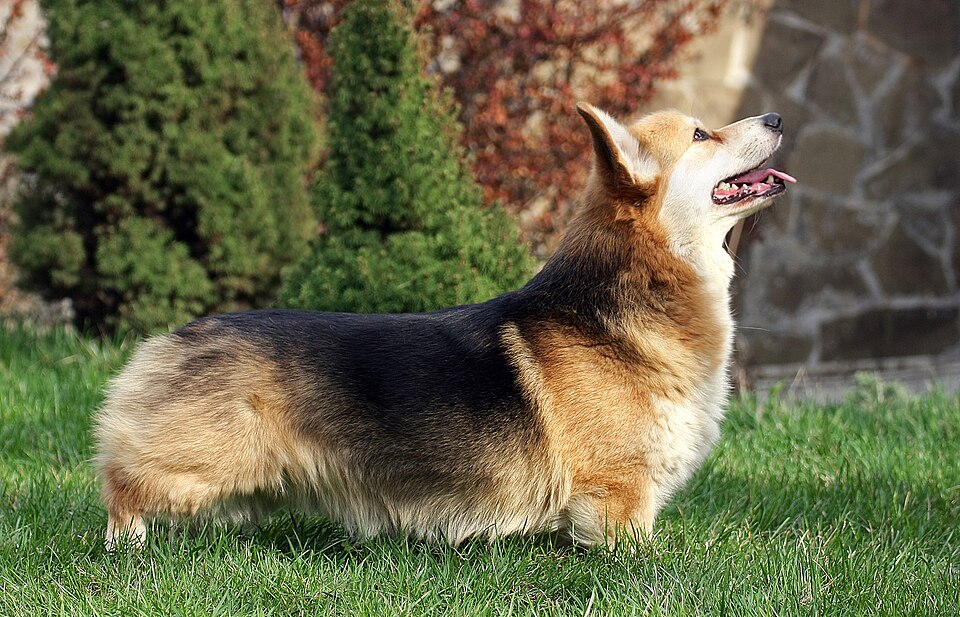
A cheerful cattle herder from Wales, known for its short legs, long body and fox-like head. It's small but a true working dog; because it's prone to spinal disc disease and carries a risk of a spinal cord disease in old age, a healthy weight and a DNA test matter a lot in this breed.

 Lifespan≈ 13.2 yearsmedian lifespan in the UK, 2024 study
 Weight20–26 lb (9–12 kg)males 22–26 lb, females 20–24 lb
 Shoulder height10–12 in (25–30 cm)short legs, medium-length body
 OriginWalesper the AKC, its roots go back to the 1100s
 SheddingHeavysheds daily, more in late spring
 ExerciseUp to 1 hour a dayloves long walks
 With kidsGood, with supervisionmay herd running children
 TrainingSmart, sometimes stubbornresponds well to reward-based training
The Pembroke Welsh Corgi is a small herding dog you'll recognize instantly by its short legs, long body, upright ears and fox-like head. Don't mistake it for a lap dog because of its size: it was bred to herd cattle in Wales and still has a working dog's energy, intelligence and determination. It's also known as the British royal family's dog. On this page we've pulled together its temperament, care needs and health issues from breed registry standards, the breed club's resources, animal welfare resources and scientific studies.
- Temperament: Cheerful, smart, sociable and confident; in the breed club's words, a bit "bossy."
- A herder: It may try to herd running children and other animals by nipping at their heels; early training matters.
- Long back, short legs: It's among the breeds at high risk of disc disease; a healthy weight and careful movement matter.
- Degenerative myelopathy: The risk gene for this spinal cord disease of old age is very common in the breed; there's a DNA test.
- Lifespan: In a large UK study the median lifespan was 13.2 years.
What to know
 What is the Pembroke Welsh Corgi like?
According to the Royal Kennel Club standard, the Pembroke Welsh Corgi is bold, workmanlike, outgoing and friendly, and never nervous or aggressive. The American breed club (PWCCA) describes the breed as "bright and bossy": if the owner doesn't take charge, it will. The AKC also writes that Pembrokes often have a mind of their own, but are energetic, willing and highly intelligent partners.
It's important to remember that this is a herding dog. According to the breed club, Pembrokes often herd children and other dogs, especially running children; the habit of nipping at heels is prevented when the family corrects it early and consistently. It's also a good watchdog that barks to signal anything unusual. On the AKC's breed chart it scores at the top for watchdog ability and above average for barking.
The AKC describes it as a sensitive breed and stresses that positive, reward-based training works best.
Every dog is an individual. Breed traits describe general tendencies; the puppy's parents, how much contact it had with people in its first weeks, its training and its health shape its personality as much as its breed.
 Who is it a good fit for?
The Corgi suits families who want a herding dog's intelligence and cheer in a smaller body and can make time for walks and play every day. It's also a reasonable choice for first-time owners who can train consistently.
| Situation | Good fit? |
|---|---|
| Apartment | Good; the Royal Kennel Club says a small house is enough, but watch the barking and the stairs |
| Family with kids | Good; the breed club says it gets along with children, but it may try to herd running kids |
| Other dogs | Usually gets along; above average on the AKC chart |
| Long hours alone | Not ideal; it likes being with its family and having a job |
| First-time dog owners | Good, but consistent, reward-based training is a must |
It's important to teach children to play calmly with the dog, not to hug and squeeze it and not to run around to draw it into herding games. Our article on kids and dogs can help.
Where does it come from?
According to the AKC, the breed's roots go back to 1107, when the king of England invited a community of Flemish weavers, considered the best in Europe, to live in Wales; the weavers brought along the dogs they used to herd cattle and sheep. These sturdy little herders became the foundation of today's Pembroke. According to the AKC, the Pembroke is the younger of the two Corgi breeds and is separate from the Cardigan Welsh Corgi.
The Royal Kennel Club writes that the Pembroke has always been the more popular Corgi, perhaps helped by the royal patronage that began under King George VI and continued with Queen Elizabeth II.
Appearance and colors
A low-set, strong and sturdily built dog. According to the Royal Kennel Club standard, the body is medium length with a level topline and short legs; the head is fox-like in shape, and the ears are pricked and medium-sized.
- Height: According to the Royal Kennel Club standard, about 10–12 in (25–30 cm) at the shoulder.
- Weight: According to the standard, 22–26 lb (10–12 kg) for males and 20–24 lb (9–11 kg) for females. The AKC gives an upper limit of 30 lb (13.6 kg) for males and 28 lb (12.7 kg) for females.
- Coat: A medium-length, straight outer coat with a dense undercoat; according to the standard it should never be soft, wavy or wiry.
- Colors: Red, sable, fawn, and black and tan, with or without white on the legs, chest and neck. Some white on the head and face is allowed.
- Tail: According to the Royal Kennel Club, Pembrokes used to be told apart from Cardigans by their docked tails; since the docking ban in the UK, that difference no longer exists. Today many Pembrokes in the UK have full tails, and some breeders produce natural bobtails.
The short legs come from an inherited bone-growth trait (chondrodysplasia). According to a 2017 study, this type of short-leggedness, also seen in the Pembroke, is linked to an extra copy of a gene called FGF4.
 Daily care
The Corgi is small but sheds a lot. According to the AKC, its thick, weatherproof double coat sheds a fair amount every day, and even more in late spring and early summer. The AKC says a quick daily once-over with a comb and slicker brush removes much of the shed hair before it ends up all over the house; an undercoat rake helps during shedding season. The breed club also recommends frequent brushing.
- Nails: The AKC recommends trimming them regularly.
- Ears: The AKC recommends checking them weekly; show your vet any redness or odor.
- Teeth: The AKC recommends brushing the teeth regularly.
- Baths: According to the AKC, baths during shedding season help loosen dead hair; the dog must be completely dry before you start brushing.
For more, see our article on dog grooming.
Training and exercise
According to the AKC, the Pembroke is a strong, athletic little dog developed to herd cattle and other livestock; it loves physical activity and is happiest with a job to do. It needs moderate daily exercise for both its physical and mental health. The Royal Kennel Club recommends up to 1 hour of exercise a day.
- Walks: According to the AKC, it does well on long walks or slow jogs, but its short legs can't keep up with a bike. Avoid extreme heat and cold, and give plenty of cool water after exercise.
- Dog sports: It does well at agility, herding, obedience and tracking.
- Early socialization: The AKC recommends gently introducing a puppy to many people, places and situations between 7 weeks and 4 months of age.
- The herding habit: Redirect chasing children or ankles into toy games early on.
- Stairs and jumping: According to the breed club, the idea that Corgis must be carried on stairs is a myth, because they're well-muscled; but puppies should be taught stairs gradually, and care is needed with open staircases because some try to jump.
- Brain games: Scent games tire out its mind.
 Diet and weight
Weight control is one of the most important parts of caring for this breed. The AKC reminds owners that some dogs are prone to weight gain and that too many training treats can lead to obesity. In a long-backed, short-legged dog prone to disc disease, we recommend keeping a close eye on weight. A 2020 UK study also found that dogs heavier than the average for their breed and sex had a higher risk of heatstroke; the researchers consider maintaining a healthy bodyweight a key welfare priority.
- Measure food instead of eyeballing it; decide the daily amount with your vet based on your dog's ideal weight.
- Count treats and table scraps as part of the daily food; in a small dog even a few treats add up.
- You should be able to feel the ribs under a thin layer of fat, and see a waist when you look from above.
- Needs can change after spaying or neutering; weighing your dog monthly shows changes early.
- Learn which foods are harmful to dogs.
 Health issues to know about
The AKC considers the Pembroke a generally healthy breed, and recommends that breeders screen for hip and elbow dysplasia, eye disorders, heart issues, degenerative myelopathy and von Willebrand's disease, a bleeding disorder. The information below is for awareness only; ask your vet about diagnosis and treatment.
Intervertebral disc disease (IVDD)
The cushions between the vertebrae (the discs) degenerate and slip or herniate. According to the Merck Veterinary Manual, in short-legged (chondrodystrophic) breeds the discs start to degenerate in the first months of life, and sudden disc extrusions can happen as early as 1–2 years of age. A 2017 PNAS study notes that research based on veterinary hospital records places the Pembroke Welsh Corgi, along with breeds such as the Dachshund and Beagle, among the breeds with a significantly higher risk of disc disease. The breed's long back and short legs are linked to an inherited bone-growth trait.
According to Merck, disc extrusions in the back can cause back pain, a hunched posture, reluctance to move, wobbliness and weakness in the hind legs, and in severe cases paralysis and loss of bladder or bowel control; extrusions in the neck cause neck pain and stiffness. If you see these signs, get to your vet without delay; in severe cases, early treatment matters.
Degenerative myelopathy (DM)
A slowly progressing, non-painful spinal cord disease with no cure. The Merck Veterinary Manual lists the Pembroke Welsh Corgi, along with the German Shepherd, among the most commonly affected breeds. According to UFAW, signs in Pembrokes usually start between 9 and 14 years of age, at 11 on average: first swaying in the hind legs, then weakness and eventually paralysis. The breed club also lists scuffing the hind toes and crossing the hind legs among early signs.
The SOD1 gene change linked to this disease is very common in the breed: according to data cited by the breed club, 52.7% of tested Pembrokes carry two copies and 35.1% carry one copy. But carrying two copies doesn't mean a dog will get sick; according to the club, only a small share of them develop the disease, and other genes are thought to play a role. The DNA test can show that dogs without two copies won't develop the disease, while a definitive diagnosis can only be made after death. UFAW notes that physiotherapy can help some dogs stay mobile for longer.
Other issues
- Hip dysplasia: The Royal Kennel Club recommends hip screening for breeders.
- Von Willebrand's disease: An inherited disorder that affects blood clotting; the AKC recommends screening. If you notice prolonged bleeding after something like teething or a spay/neuter surgery, tell your vet.
- Back or neck pain, a hunched posture or reluctance to move
- Sudden weakness or wobbliness in the hind legs, or inability to get up
- Loss of bladder or bowel control
- Bleeding that won't stop or unexplained bruising
How long does it live?
In the 2024 UK study by McMillan and colleagues covering about 585,000 dogs, the median lifespan of about 650 Pembroke Welsh Corgis was 13.2 years (confidence interval 12.7–13.6), compared with 12.0 years for mixed-breed dogs. The AKC gives 12–13 years, and the breed club notes that healthy dogs in their teens are not uncommon.
Because it's a long-lived breed, diseases of old age such as degenerative myelopathy can appear. A healthy weight, regular activity and regular vet checkups in old age are the most concrete ways to protect quality of life.
 Before you get one
- Consider a shelter: Purebred dogs and their mixes end up in shelters and rescues too, and the breed club runs a rescue program. Our article on adopting a shelter dog can help.
- If you buy from a breeder: Ask for the parents' hip and eye screening and their von Willebrand and DM DNA test results. Watch whether the parents move easily and have healthy backs.
- Red flags: Steer clear of sellers who won't show you the mother, can't provide paperwork, always have puppies available or market dogs as "extra short-legged" or "extra long-bodied."
- Registration: Rules vary by country; many places require or recommend microchipping. In Türkiye, owned dogs must be microchipped and registered.
- The first days: Our guide to bringing home a new puppy walks you through it step by step.
Frequently asked questions
What's the difference between a Pembroke and a Cardigan Corgi?
They're two separate breeds. According to the Royal Kennel Club, the Pembroke is slightly smaller, not quite as long in the body, with smaller ears and straighter front legs. According to the AKC, the Pembroke is the younger and the more popular of the two.
Can a Corgi use stairs?
According to the breed club, the idea that Corgis must be carried on stairs is a myth; they're well-muscled dogs. Still, teach a puppy stairs gradually, be careful with open staircases, and talk to your vet if you see signs of back pain.
Do Corgis shed a lot?
Yes. According to the AKC, they shed a fair amount every day, and even more in late spring and early summer. A quick daily brushing cuts down the hair around your home a lot.
Can a Corgi live in an apartment?
Usually, yes. The Royal Kennel Club says a small house and up to 1 hour of exercise a day are enough. Because it's prone to barking, early training makes apartment life easier.
Will a Corgi that tests "at risk" for DM get sick?
Not always. Only some dogs that carry two copies of this gene change get sick; other genes and factors are thought to play a role. Discuss the result with your vet and keep a close eye on hind-leg movement as your dog ages.
Sources
- Royal Kennel Club · Welsh Corgi (Pembroke) breed page and health screening
- Royal Kennel Club · Welsh Corgi (Pembroke) breed standard
- AKC (American Kennel Club) · Pembroke Welsh Corgi breed profile
- Pembroke Welsh Corgi Club of America · Degenerative myelopathy and genetic testing in PWCs
- Pembroke Welsh Corgi Club of America · PWC FAQs
- UFAW Genetic Welfare Problems · Pembroke Corgi: Degenerative myelopathy
- Merck Veterinary Manual · Degenerative diseases of the spinal column and cord in animals
- Brown et al. · FGF4 retrogene on CFA12 is responsible for chondrodystrophy and intervertebral disc disease in dogs, PNAS (2017)
- McMillan et al. · Longevity of companion dog breeds: those at risk from early death, Scientific Reports (2024)
- Hall et al. · Incidence and risk factors for heat-related illness (heatstroke) in UK dogs under primary veterinary care in 2016, Scientific Reports (2020)
- Resmî Gazete (Official Gazette of Türkiye) · Regulation on the identification and registration of cats, dogs and ferrets (February 26, 2018)
By Tüylüm · Last checked: November 3, 2026. Compiled from the sources above and written in our own words. Spotted a mistake? Write to [email protected] and we'll fix it right away. Photo from Wikimedia Commons, used under the license shown below it.