 Tüylüm
Whippet
A lightning-fast sighthound that looks like a small Greyhound, bred in England's mining towns for racing and hunting. Calm, gentle and quiet at home, with a strong urge to chase outdoors. Thin skin and low body fat mean it feels the cold and injures easily; run it off-leash only in secure areas.

 Lifespan≈ 13.4 yearsmedian, 2024 UK study
 Weight25–40 lb (11–18 kg)PDSA average; AKC gives the same range
 Height17–20 in (44–51 cm)FCI: males 47–51, females 44–47 cm
 OriginEnglandracing dog of the northern mining areas
 CoatShort and finelight shedding; thin, sensitive skin
 Exercise1+ hour a dayPDSA; runs in a secure area are a must
 With kidsGentlebetter with slightly older kids
 TrainingTakes patiencereward-based; off-leash only when fenced
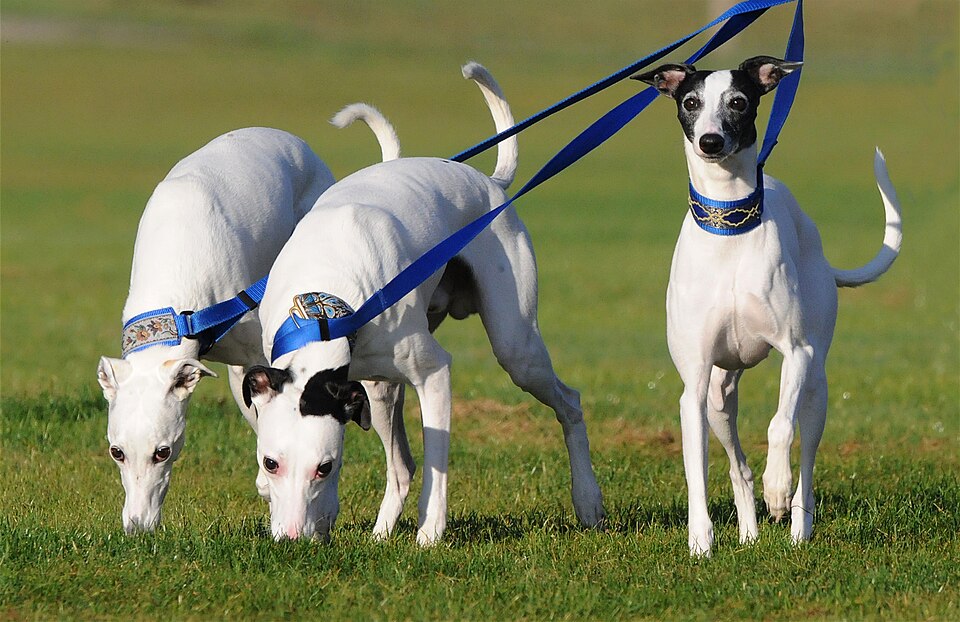
With its long, slender legs, deep chest and arched back, the Whippet is a medium-sized sighthound that looks like a small Greyhound. It belongs to the group of hounds that follow prey by sight and catch it with speed; in 19th-century England it was used to hunt small game and to race in the mining towns. Today it's a calm companion curled up on the sofa at home, and a runner that can hit top speed in an instant outdoors. On this page we've pulled together its temperament, care needs and health issues from breed registry standards, animal welfare charities' guides and scientific studies.
- Temperament: According to the FCI standard, gentle, affectionate, even-tempered and an ideal companion, highly adaptable at home and in sport.
- Chasing: Its prey drive is very strong; PDSA considers a secure yard a must, and the AKC recommends always keeping it on leash outside fenced areas.
- Delicate body: Its thin skin tears easily on thorns and branches, and with little body fat it gets cold in winter; it needs a coat and a thick, soft bed.
- Voice: A quiet breed; according to PDSA, it usually barks only when bored or unhappy.
- Lifespan: A 2024 UK study found a median lifespan of 13.4 years.
What to know
 What is the Whippet like?
The FCI breed standard describes the Whippet as an ideal companion: highly adaptable at home and in sporting surroundings, gentle, affectionate and even-tempered. The Royal Kennel Club also presents it as a gentle, affectionate family dog that enjoys the comforts of home life.
According to the AKC, the Whippet is calm in the house, saving its energy for explosive bursts of running in a large, secure area. But give it something to chase and it's all business. PDSA describes the same two sides: after a good run, it's happy to curl up on the sofa for the rest of the day.
According to PDSA, Whippets bond closely with their owners and want to be part of everything that goes on at home. They can be a little shy when meeting new people; without early socialization, a Whippet can grow into a nervous adult. It's a quiet breed: PDSA says Whippets are known as "silent hunters" and usually bark only when they're unhappy or bored, and in the AKC's breed traits its barking level gets the lowest score.
Every dog is an individual. Breed traits describe general tendencies; the parents' temperament, how a puppy is socialized and the training it gets shape its personality as much as its breed.
 Who is it a good fit for?
The Whippet suits families looking for a calm, quiet dog at home that can still run every day somewhere safe, and where someone is usually home during the day. PDSA notes that its medium size makes it popular with first-time owners, but training takes time.
| Situation | Good fit? |
|---|---|
| Apartment | Possible; calm indoors, but a daily run in a secure area and walks are a must |
| Family with kids | Good; calm and gentle, and PDSA considers it better with slightly older children |
| Other dogs | Usually gets along; limit rough play because of its thin skin |
| Cats, rabbits, rodents | Difficult; very high prey drive, and even a cat it grew up with needs supervision |
| Long hours alone | Struggles; PDSA says separation anxiety is common |
| First-time dog owners | Good, as long as you're patient and consistent |
PDSA says the Whippet is a little sensitive and recommends homes with slightly older children who understand when to give the dog space. For more, see our article on kids and dogs at home.
Where does it come from?
According to the Royal Kennel Club, Whippet-type dogs were common in the Middle Ages, and 21st-century genetic studies have shown that the breed descends from the Greyhound. By the 19th century the Whippet was a recognizable breed, used to hunt small game and control vermin, and the Victorians turned this into a gambling sport. Whippet racing became especially popular in the mining areas of northern England and Wales, as well as in London and the Midlands.
According to PDSA, at one time only the rich kept Greyhounds while working people kept Whippets, which earned the breed the nickname "poor man's Greyhound"; the AKC calls it the "Poor Man's Racehorse." The Royal Kennel Club notes that early standards for both the Whippet and the Italian Greyhound described "a Greyhound in miniature," but the three breeds have since developed along different paths. Whippet racing continues on a very small scale; today the breed is seen mostly in the show ring and in homes.
If you're curious about Anatolia's own sighthound, see our Turkish Greyhound page.
Appearance and colors
According to the FCI, the Whippet is a balanced combination of muscular power and elegance, built for speed and work. Its head is long and lean, and its oval eyes have a very alert expression. It has a deep chest, a gently arched back and long legs.
- Height: According to the FCI, 18.5–20 inches (47–51 cm) at the withers for males and 17.5–18.5 inches (44–47 cm) for females.
- Weight: PDSA gives an average of 25–40 pounds (11–18 kg), and the AKC gives a similar 25–40 pounds.
- Coat: Fine, short and close.
- Color: According to the FCI, any color or mix of colors; only merle (a marbled pattern) isn't accepted.
- Speed: According to PDSA, some Whippets have been known to reach about 35 mph (56 km/h).
The AKC points out that a Whippet at a healthy weight may look "skinny" to people used to heavier breeds: in an adult, two to four vertebrae may be visible along the back, but the ribs shouldn't stand out.
There's an interesting genetic detail too: a 2007 study found a myostatin gene change that, when a Whippet carries two copies, causes heavy muscling (the "bully" Whippet). Dogs with one copy were more muscular than average and faster in races.
Daily care
The Whippet's short coat needs very little care: according to PDSA and the AKC, a weekly brush and an occasional bath are enough. PDSA recommends a soft brush because the skin is sensitive. Shedding is light compared with other breeds and picks up a little in spring and fall.
- Cold: PDSA notes that because the Whippet is so lean with very little body fat, it may need a coat outdoors in winter; PDSA's hypothermia page also says Greyhounds, lurchers and Whippets particularly enjoy an extra layer in the cold. For more, see our article on dogs in cold weather.
- Bedding: According to PDSA, its elbows, shoulders and hips are prominent, so it prefers thick, soft, snug bedding to avoid sores.
- Skin checks: PDSA says Whippets can easily cut their skin on thorns, twigs and other sharp objects. Check its legs and body after a run.
- Ears and nails: The AKC recommends checking the ears regularly for signs of infection and trimming the nails often if they don't wear down naturally.
Training and exercise
PDSA recommends at least an hour of exercise a day for a Whippet: a shorter walk in the morning and a longer one later with plenty of sniffing, plus off-leash running in a secure area. Running hard is in its nature. According to the AKC, several vigorous fetch sessions a week with a ball or flying disc, regular walks and play with another dog in a fenced area can meet that need; lure coursing and agility are also good outlets.
- Leash: The AKC recommends keeping a Whippet on leash anywhere that isn't fenced, and PDSA reminds owners to keep a tight grip on the leash outside secure areas. You'll never outrun an escaped sighthound.
- Running ground: PDSA notes that running on uneven ground can damage its bones, so off-leash areas should be free of hazards.
- Reward-based training: According to PDSA, Whippets have a reputation for being a little slow to learn new things; training should start early and be reward-based and patient. Our recall training guide walks you through it, but never fully trust a sighthound's recall.
- Puppy safety: The AKC says young Whippets are smart, agile and mischievous and can jump and climb, so they need to be safely confined when unsupervised.
- Time alone: According to PDSA, Whippets can get very stressed when left alone, and a Whippet with separation anxiety may destroy things. Our separation anxiety guide explains how to teach time alone step by step.
 Diet and weight
Whippets don't need a special food; a complete, balanced dog food that suits their age and activity level is enough. PDSA recommends splitting the daily amount into two meals, keeping treats under 10% of daily calories and leaving a gap between eating and exercise.
The AKC's most important point is weight: the Whippet's slender frame isn't suited to carrying extra pounds. According to the AKC, keeping your Whippet at the right weight through lifelong portion control extends its life and helps prevent orthopedic problems that are both painful and expensive to fix. Young dogs may look ribby during their rapid growth phase; work out your adult dog's ideal weight with your vet.
Some human foods are toxic to dogs; check our list of foods you should never give your dog.
 Health issues to know about
The AKC considers the Whippet a generally healthy breed with a robust constitution, while PDSA points out that it's beautiful but quite delicate. The information below is for awareness only; ask your vet about diagnosis and treatment.
Injuries and fractures
With its thin skin and little body fat, the Whippet injures easily. PDSA notes that cuts from thorns, twigs and other sharp objects are common, that rough play with other dogs can cause bruises and cuts, and that running on uneven ground can damage its bones. If you notice limping, swelling or an open wound after a run, see your vet.
Sensitivity to cold
According to PDSA, small, lean and frail animals are more affected by the cold, and animals that stay wet and get cold can develop a dangerously low body temperature (hypothermia). Shivering, drowsiness and clumsiness are warning signs.
Anesthesia and sedation
Veterinarians have long known that Greyhounds and related sighthounds can recover more slowly than other breeds after certain injectable anesthetic drugs. A 2020 study showed this may be linked to a gene change affecting a liver enzyme that breaks down these drugs, and that change is found in the sighthound group that includes the Whippet and the Italian Greyhound. PDSA also points out that body temperature can drop during anesthesia. Before any surgery or sedation, it's a good habit to remind your vet that your dog is a sighthound.
Inherited conditions
PDSA lists progressive retinal atrophy (PRA, a loss of sight over months or years), mitral valve disease (a heart valve problem) and immune-mediated conditions in which the body attacks its own cells. The AKC notes that responsible breeders screen for heart disease, deafness and eye disorders, and the Royal Kennel Club lists protecting the breed's genetic diversity as a top priority.
- Sudden, severe limping after a run, or not putting any weight on a leg
- A deep, bleeding or gaping cut
- Shivering that won't stop in the cold, drowsiness or stumbling
- Labored breathing, fainting or sudden weakness
How long does it live?
A 2024 study using data on about 585,000 UK dogs found a median lifespan of 13.4 years for the Whippet, based on about 1,500 Whippets that had died. In the same study, crossbreed dogs had a median lifespan of 12.0 years and Greyhounds 11.5 years. The AKC gives 12–15 years for the Whippet, and PDSA and the Royal Kennel Club more than 12 years.
A healthy weight, a leash and safe running areas to prevent avoidable risks like escapes and road accidents, protection from the cold and yearly vet checkups are the most concrete ways to protect that lifespan.
 Before you get one
- Consider a shelter: PDSA points out the advantage of giving a home to an adult Whippet from a rescue center. Our guide to adopting a shelter dog covers the first steps.
- If you buy from a breeder: Ask to meet the parents and ask for eye, heart and hearing screening results. Make sure the puppies are raised at home, around people.
- Get your home ready: A tall fence with no gaps, a thick, soft bed and a winter coat. If no one is home during the day, think twice about this breed.
- Red flags: Steer clear of sellers who won't show you the mother, always have puppies available, can't provide paperwork or rush you to "buy now"; PDSA warns that unusually cheap puppies may come from puppy farms.
- Registration: Rules vary by country; many places require or recommend microchipping. In Türkiye, owned dogs must be microchipped and registered in the PETVET system.
Frequently asked questions
What's the difference between a Whippet and a Greyhound?
According to the Royal Kennel Club, the Whippet descends from the Greyhound and early standards described it as "a Greyhound in miniature," but the breeds have since developed along different paths. The Whippet is noticeably smaller: according to the FCI, 17.5–20 inches (44–51 cm) at the withers.
Can a Whippet go off-leash?
Only in a fenced, secure area. The AKC recommends a leash anywhere that isn't fenced; with a strong prey drive and that much speed, it may not hear you once it spots a cat or a rabbit.
Why do Whippets wear coats?
Because they have very little body fat and a very thin coat. PDSA notes they may need a coat to stay warm outdoors in winter.
Do Whippets bark a lot?
Usually not. PDSA describes Whippets as "silent hunters"; they usually bark only when bored or unhappy.
Can a Whippet live with a cat?
According to PDSA, it may get along with a cat it grew up with, but it always needs supervision; it isn't recommended for homes with small pets.
Sources
- FCI · Whippet breed standard No. 162
- The Royal Kennel Club · Whippet: breed profile and health screening
- AKC (American Kennel Club) · Whippet breed profile
- PDSA · Whippet
- PDSA · Hypothermia in pets
- Martinez et al. · Pharmacogenomics of poor drug metabolism in Greyhounds: cytochrome P450 (CYP) 2B11 genetic variation, breed distribution, and functional characterization, Scientific Reports (2020)
- Mosher et al. · A mutation in the myostatin gene increases muscle mass and enhances racing performance in heterozygote dogs, PLoS Genetics (2007)
- McMillan et al. · Longevity of companion dog breeds: those at risk from early death, Scientific Reports (2024)
- Resmî Gazete (Türkiye) · Regulation on the identification and registration of cats, dogs and ferrets (February 26, 2018)
By Tüylüm · Last checked: November 3, 2026. Compiled from the sources above and written in our own words. Spotted a mistake? Write to [email protected] and we'll fix it right away. Photo from Wikimedia Commons, used under the license shown below it.