 Tüylüm
Dalmatian
With black or liver spots on a white coat, one of the world's most recognizable dogs; once a tireless runner beside horse-drawn carriages. It needs at least two hours of activity a day. Congenital deafness (BAER hearing test) and a breed-wide tendency to form urate bladder stones are must-knows.

 Lifespan≈ 13.2 yearsmedian, 2024 UK study
 Weight40–60 lb (18–27 kg)PDSA average; AKC 45–70 lb
 Height21–24 in (54–62 cm)FCI: males 56–62, females 54–60 cm
 OriginCroatia (FCI)disputed; shaped in England
 SheddingHeavyyear-round; more in spring and fall
 Exercise2+ hours a dayPDSA and Royal Kennel Club guidance
 With kidsBest with older kidsstrong and bouncy; can knock over little ones
 TrainingSmart but sensitivegentle, reward-based methods only
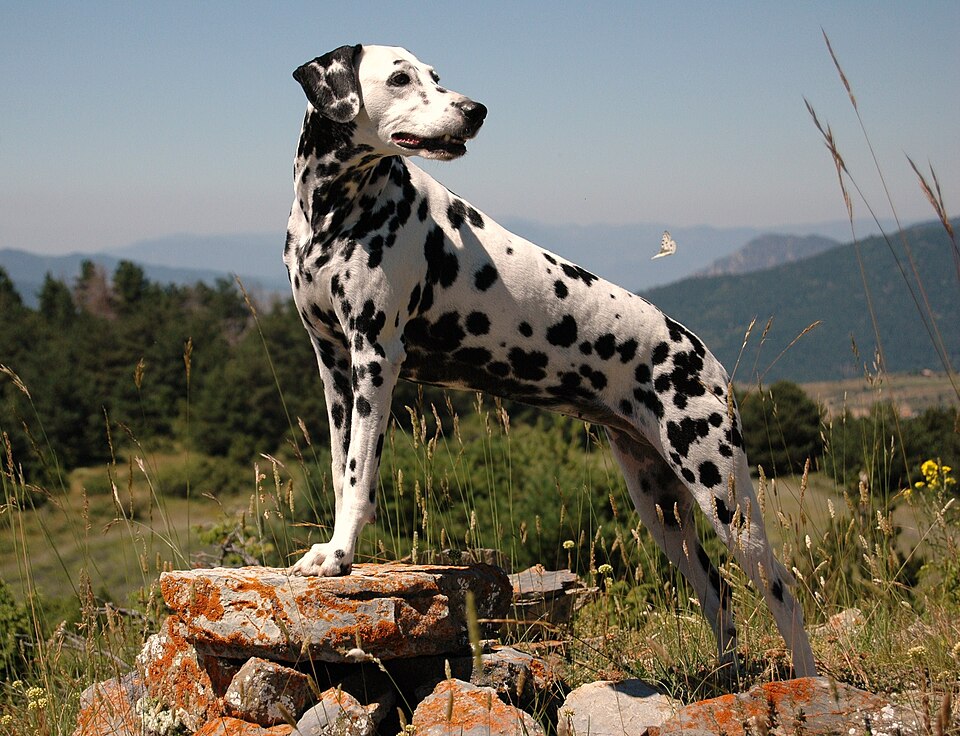
The Dalmatian is a long-legged, muscular, remarkably tireless dog you can recognize at a glance by the round spots on its white coat. In the past it was a "coach dog" that ran beside horse-drawn carriages, guarded the stables and ran ahead of horse-drawn fire engines to clear the way. Today it's a beloved family dog, but it still has that runner's build and energy. On this page we've pulled together its temperament, care needs and health issues from breed registries, animal welfare charities and scientific studies.
- Temperament: According to the FCI standard, friendly, lively, loyal, independent and easy to train.
- Activity: PDSA recommends at least two hours of exercise a day; a Dalmatian that doesn't get enough gets bored.
- Coat: Short, but it sheds a lot; if you want a dog that doesn't shed, this isn't the breed for you.
- Deafness: According to UK data, about one in five Dalmatians has hearing loss in one or both ears; always ask for the puppy's BAER hearing test result.
- Bladder stones: Nearly all Dalmatians carry an inherited change that makes uric acid build up in their urine; plenty of water and frequent bathroom breaks are a must.
What to know
 What is the Dalmatian like?
The FCI breed standard describes the Dalmatian as pleasant-tempered and friendly, free from nervousness and aggression; lively, loyal, independent and easy to train. According to the standard, it likes water and outdoor activities and has a marked hound instinct.
According to PDSA, Dalmatians love nothing more than spending time with their owners and burning off their extra energy, but like any dog they get bored easily. A Dalmatian that doesn't get enough physical and mental challenge and company may chew up furniture.
The AKC highlights another important trait: Dalmatians can be very sensitive, so positive, reward-based training is a must. PDSA notes that the breed isn't particularly vocal, but a bored or lonely Dalmatian may bark to let you know it's unhappy.
Every dog is an individual. Breed traits describe general tendencies; the parents' temperament, how a puppy is socialized and the training it gets shape its personality as much as its breed.
 Who is it a good fit for?
The Dalmatian suits active families who can make time every day for long walks, runs and play, usually have someone at home and don't mind dog hair.
| Situation | Good fit? |
|---|---|
| Apartment | Difficult; the Royal Kennel Club recommends a large house and a large yard, and it needs more than 2 hours of activity a day |
| Family with kids | Better with older children; its size and strength can knock small kids over by accident |
| Other dogs | Well-socialized dogs usually get along |
| Cats and small pets | Usually fine with pets it grew up with, but the urge to chase can still kick in |
| Long hours alone | Struggles; PDSA advises no more than four hours, and separation anxiety can occur |
| People with allergies | Not a good fit; PDSA stresses that the breed sheds heavily |
PDSA says Dalmatians shouldn't be left unsupervised with children, vulnerable adults or older people, because their stamina and muscular build may not suit every household. For more, see our article on kids and dogs at home.
Where does it come from?
The Dalmatian's origins are disputed. The FCI recognizes Croatia as its country of origin: according to the standard, these dogs appear in an altar painting from 1600–1630 in a church on the island of Lošinj and in a fresco in Dalmatia. Church records from 1719 and 1737 mention them by the Latin name "Canis Dalmaticus." The English naturalist Thomas Pennant gave the breed the name "Dalmatian" in 1771 and placed its origin in Dalmatia.
The Royal Kennel Club, on the other hand, says there's little evidence that the breed came from the Dalmatian coast of the Balkans. According to the club, in the late 18th century a white spotted type of dog in England accompanied horse-drawn carriages and guarded passengers and cargo; during the Regency period (1795–1837), spotted dogs trotting beside carriages became a status symbol, earning the name "Spotted Coach Dog." These dogs also guarded stables at night and ran ahead of horse-drawn fire engines to clear the way.
Appearance and colors
The Dalmatian is a medium-to-large, balanced, muscular and enduring dog. According to the FCI, its body is slightly longer than it is tall, its chest is deep and its tail is carried in a gentle saber curve.
- Height: According to the FCI, 22–24 inches (56–62 cm) at the withers for males and 21–23.5 inches (54–60 cm) for females.
- Weight: PDSA gives an average of 40–60 pounds (18–27 kg); the AKC gives 45–70 pounds (20–32 kg).
- Coat: Short, shiny, hard and dense.
- Color: Black or liver (brown) spots on a pure white background. According to the FCI, spots should be about an inch (2–3 cm) across, symmetrical and not run together; liver spots are slightly smaller.
- Eyes: The FCI standard doesn't accept blue eyes or eyes of different colors.
The spotting pattern has an interesting link to health. According to UFAW, deafness in Dalmatians is tied to the genetic change that makes the coat white: blue-eyed dogs are more likely to be deaf, while dogs born with a large dark patch are less likely to be. Unfortunately, a patch is considered a fault in the breed standard; in the FCI standard, patches, blue eyes and deafness are all disqualifying faults.
 Daily care
According to the AKC, it doesn't take much work to keep a Dalmatian's coat in good shape: a weekly going-over with a horsehair mitt or rubber curry comb to remove dead hair, plus an occasional bath, is enough. But as PDSA warns, this breed sheds a lot; shedding goes on year-round and increases in spring and fall.
- Skin: PDSA notes that skin allergies are common in Dalmatians and some products can make them worse; ask your vet before choosing a shampoo.
- Ears and nails: The AKC recommends checking the floppy ears regularly and trimming the nails at least monthly.
- Water and bathroom breaks: Because of the breed's tendency to form bladder stones, the AKC stresses that fresh water should always be available and the dog should get frequent chances to urinate.
For a step-by-step routine, see our guide to dog grooming.
Training and exercise
PDSA recommends at least two hours of exercise a day for a Dalmatian: at least two walks, ideally with a chance to run in a secure area, plus play, free time in a secure yard and training. According to the AKC, that exercise can be chasing a ball, running alongside a jogging or biking owner, or a long hike in the woods.
- Don't overdo it with puppies: The AKC points out that a puppy's bones and joints don't reach full strength until two years of age, so avoid strenuous exercise before then.
- Reward-based training: The AKC says only positive, reward-based training works for this sensitive breed. PDSA adds that it can be strong-willed but enjoys learning thanks to its intelligence; first-time owners should get help from a trainer.
- Early socialization: The AKC recommends introducing your puppy to as many new, pleasant situations as possible.
- Leash: PDSA recommends teaching this strong dog to walk nicely on a leash. Our loose-leash walking guide can help.
- Time alone: PDSA notes that Dalmatians can suffer from separation anxiety and need to learn to be alone in very short steps. Our separation anxiety guide walks you through it.
 Diet and weight
The main diet issue for Dalmatians is their tendency to form bladder stones. According to the AKC, unless a problem has shown up, a Dalmatian doesn't need a special diet; a complete, balanced dog food that suits its age is enough. But if your dog has a history of stones or your vet sees a risk, decide how to feed it together with your vet. Don't change foods or add supplements on your own.
- Water: Keep fresh water available at all times; UFAW lists low water intake among the factors that make stones more likely.
- Treats and weight: PDSA recommends splitting the daily amount into two meals and keeping treats under 10% of daily calories. The AKC advises giving table scraps sparingly, if at all, and especially avoiding cooked bones and fatty foods.
Some human foods are toxic to dogs; check our list of foods you should never give your dog.
 Health issues to know about
The Dalmatian's two most important health issues are tied directly to the breed's genetics: deafness and bladder stones. The information below is for awareness only; ask your vet about diagnosis and treatment.
Congenital deafness
According to UFAW, Dalmatian puppies are usually born hearing normally, but in affected puppies the hearing cells of the inner ear degenerate in the first few weeks. UK data found hearing loss in about 18% of Dalmatians (13% in one ear, 5% in both); in US studies the figure approaches 30%. It's more common in females and in blue-eyed dogs. Dogs deaf in one ear usually live a fairly normal life; dogs deaf in both ears are more vulnerable to traffic accidents and conflicts with other dogs, and their training needs a different approach.
Deafness is very hard to spot by watching a puppy, especially in one ear. The only reliable way to check is the BAER hearing test: small sensors on the scalp measure the brain's response to sound; sedation usually isn't needed, and puppies can be tested at about five weeks old. The Royal Kennel Club recommends a BAER scheme for breeders that includes testing whole litters, and the AKC notes that responsible breeders test entire litters.
Urate bladder stones (hyperuricosuria)
Most dogs convert uric acid, a waste product from the breakdown of substances called purines, into another substance that dissolves easily in water (allantoin). According to a 2008 study by Bannasch and colleagues, a change in a gene called SLC2A9 means Dalmatians can't transport uric acid efficiently in the liver and kidneys, so it builds up in their urine. All 247 Dalmatians tested in the study carried two copies of this change; in other words, the trait is fixed across the breed.
According to UFAW, the uric acid can crystallize in the urine and form stones in the bladder. Stones cause problems more often in males, which is thought to be due to differences in the anatomy of the urinary tract. Signs include frequently passing small amounts of bloody urine and straining. If a stone blocks the urinary tract, the dog tries again and again but can't pass urine; this is an emergency and, without treatment, can be fatal within 24–48 hours. UFAW notes that stones come back within a year in about 30% of treated dogs.
LUA Dalmatians: bringing back the healthy gene
Because every Dalmatian carries this gene change, the problem can't be fixed by breeding within the breed. So a backcross project was started in the US: Dalmatians were crossed once with a Pointer, and the offspring were then bred back to Dalmatians over many generations. According to Bannasch and colleagues, this brought the normal gene back into the breed while keeping the Dalmatian's look, and most of these "Low Uric Acid" (LUA) dogs have spots that meet the standard. The researchers believe the gene change probably became fixed in the breed through selection for more distinctive spots. In July 2011, after 55% of the Dalmatian Club of America's members voted in favor, the AKC Board voted to register these dogs; their registration numbers carry a letter indicator. The Royal Kennel Club also recommends a DNA test for hyperuricosuria to breeders today.
Others
PDSA lists atopy (allergic skin disease), epilepsy and hip dysplasia; the Royal Kennel Club recommends hip and elbow screening. UFAW also notes that Dalmatians are more prone to chronic liver inflammation (hepatitis) linked to copper buildup in the liver, which appears in middle-aged and older dogs; early signs are vague, such as weight loss, weakness, vomiting and diarrhea.
- Trying again and again to urinate without success, straining or restlessness (especially in males)
- Blood in the urine, or frequently passing small amounts of urine
- Belly pain along with vomiting and loss of appetite
- Yellowing of the eyes or gums, a swollen belly or unexplained weight loss
How long does it live?
A 2024 study using data on about 585,000 UK dogs found a median lifespan of 13.2 years for the Dalmatian, based on more than 1,400 Dalmatians that had died. In the same study, crossbreed dogs had a median lifespan of 12.0 years. The AKC gives 11–13 years, and PDSA and the Royal Kennel Club more than 12 years.
Plenty of water and frequent bathroom breaks, catching urinary signs early, a healthy weight and yearly checkups are the most concrete ways to protect that lifespan.
 Before you get one
- Don't choose based on movies: A 2014 study showed that movies starring dogs can boost a breed's popularity for up to ten years, and several versions of 101 Dalmatians were among them. Behind the spotted coat is a dog that needs two hours of activity a day and sheds heavily.
- Consider a shelter: Purebred dogs end up in shelters and rescues too, and PDSA points out the advantage of giving a home to an adult dog that needs one. Our guide to adopting a shelter dog covers the first steps.
- If you buy from a breeder: Ask for BAER hearing test results for the puppy and its parents, hip and elbow screening and the hyperuricosuria DNA test. UFAW recommends getting a written guarantee that an untested puppy can be returned if it fails the hearing test.
- Red flags: Steer clear of sellers who won't show you the mother, always have puppies available, can't provide paperwork or rush you to "buy now"; PDSA warns that unusually cheap puppies may come from puppy farms.
- Registration: Rules vary by country; many places require or recommend microchipping. In Türkiye, owned dogs must be microchipped and registered in the PETVET system.
Frequently asked questions
Does the Dalmatian really come from Dalmatia?
Sources disagree. The FCI recognizes the Dalmatia region of Croatia as its origin, based on 17th-century paintings and 18th-century church records. The Royal Kennel Club says there's little evidence for that origin and stresses that the breed took shape in England as a coach dog.
Do Dalmatians shed a lot?
Yes. The coat is short, but according to PDSA they shed heavily all year, and even more in spring and fall. Weekly brushing helps.
Why can Dalmatians be deaf?
According to UFAW, deafness is linked to the gene that makes the coat white. The hearing cells of the inner ear need pigment cells to work; without them, they degenerate in the puppy's first weeks. Blue-eyed dogs are at higher risk.
Can a completely deaf Dalmatian be a good family dog?
Dogs that hear in one ear usually live normal lives. A dog deaf in both ears is more vulnerable to traffic and needs a different approach to training; talk to your vet and an experienced trainer before adopting one.
Sources
- FCI · Dalmatian breed standard No. 153
- The Royal Kennel Club · Dalmatian: breed profile and health screening
- AKC (American Kennel Club) · Dalmatian breed profile
- PDSA · Dalmatian
- Science for Animal Welfare (UFAW) · Dalmatian: Deafness
- Science for Animal Welfare (UFAW) · Dalmatian: Hyperuricosuria (Huu)
- Science for Animal Welfare (UFAW) · Dalmatian: Copper-associated chronic hepatitis
- Bannasch et al. · Mutations in the SLC2A9 gene cause hyperuricosuria and hyperuricemia in the dog, PLoS Genetics (2008)
- AKC Board of Directors · July 2011 meeting minutes (registration of Low Uric Acid Dalmatians)
- Ghirlanda et al. · Dog movie stars and dog breed popularity: a case study in media influence on choice, PLoS ONE (2014)
- McMillan et al. · Longevity of companion dog breeds: those at risk from early death, Scientific Reports (2024)
- Resmî Gazete (Türkiye) · Regulation on the identification and registration of cats, dogs and ferrets (February 26, 2018)
By Tüylüm · Last checked: November 3, 2026. Compiled from the sources above and written in our own words. Spotted a mistake? Write to [email protected] and we'll fix it right away. Photo from Wikimedia Commons, used under the license shown below it.