 Tüylüm
Beagle
A cheerful, sociable little hound bred in England to follow the trail of hares in packs. Its nose comes first: off leash, it can easily lock onto a scent and take off. Weight gain and ear infections are common in the breed, and DNA tests exist for several inherited diseases.

 Lifespan≈ 12.5 yearsmedian, 2024 UK study
 Weight20–30 lb (9–14 kg)AKC; under 20 lb in the smaller class
 Height13–16 in (33–40 cm)Royal Kennel Club standard
 OriginEnglanda hare hound known since the 1400s
 CoatShort, densebrush once a week
 ExerciseUp to 1 hour a dayRKC guidance; sniffing games are a must
 With kidsUsually easygoinga pack dog; dislikes being alone
 TrainingNeeds patienceits nose distracts it easily
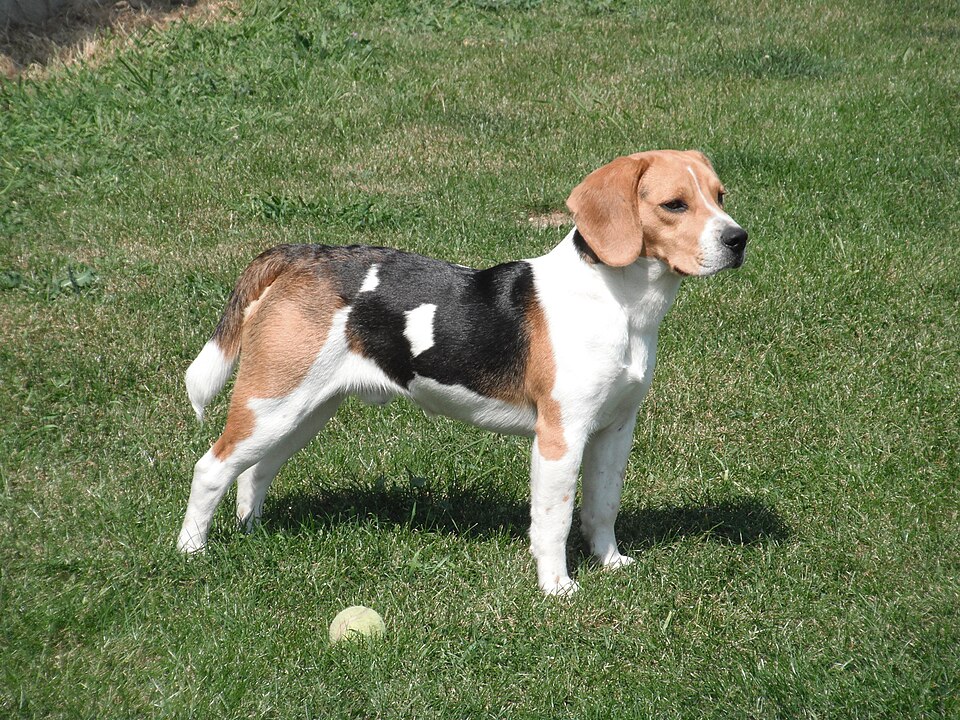
With its big brown eyes, long floppy ears and white-tipped tail, the Beagle is a small hound you recognize at a glance. Its original job was to put its nose to the ground and follow the trail of a hare, as part of a pack. That's why it is both very social and almost irresistibly curious about smells. On this page we've pulled together its temperament, care needs and health issues from breed registry standards, animal welfare resources and scientific studies.
- Temperament: Cheerful, friendly and sociable; according to the Royal Kennel Club it should be neither aggressive nor timid.
- The nose: Once it catches a scent it may not hear you; don't let it off leash in unfenced areas.
- Weight: In a UK study it had the second-highest risk of being overweight; measure its food.
- Health: Ear infections are common; DNA tests exist for inherited diseases such as Lafora disease and MLS.
- Lifespan: A large 2024 UK study found a median lifespan of 12.5 years.
What to know
 What is the Beagle like?
The Royal Kennel Club's breed standard describes the Beagle as a "merry hound": bold, very active, full of stamina and determination, and also alert, intelligent and even-tempered. It should be amiable and alert, with no aggression or timidity. The AKC describes it as both a fine hunting dog and a loyal, funny companion.
Two traits are the key to understanding a Beagle: its nose and its pack history. Because it was bred to work in a pack, it enjoys the company of people and other dogs; the AKC notes that this makes it generally easygoing and companionable. On the other hand, once it picks up a scent, that scent can become its whole world. This isn't stubbornness; it's the nature of a dog selected for exactly this job over centuries.
The Royal Kennel Club also highlights the breed's "musical voice." Besides barking, Beagles can produce long, baying howls. A Beagle that's bored or left alone for long stretches may use that voice a lot, so think about it ahead of time if you live in an apartment with close neighbors.
Every dog is an individual. Breed traits describe general tendencies; the temperament of the parents, how a puppy was socialized and the training it gets shape its personality as much as its breed.
 Who is it a good fit for?
The Beagle is a good companion for households that will get it outside every day, give its nose a job, and want a dog that spends time with the whole family. The Royal Kennel Club notes that its friendly nature and manageable size have made it a popular family dog, but that its keen nose means it does best in secure surroundings.
| Situation | Good fit? |
|---|---|
| Apartment | Possible, but a bored Beagle may bay at length; daily walks and sniffing games are essential |
| Family with children | Usually easygoing and playful; as with any dog, supervision is needed |
| Other dogs | As a pack hound, it gets along with most dogs |
| Cats and small pets | Be careful; it was bred to hunt hares, so introductions need to be early and careful |
| Long hours alone | Struggles; it's happiest with company |
| First-time owners | Possible, but recall and keeping food out of reach take patience |
If you have a yard, make sure the fence is solid. A Beagle on a scent will quickly find a gap under the fence or an open gate. If you have kids, our article on children and dogs at home can help.
Where does it come from?
According to the Royal Kennel Club, the Beagle is the smallest of the British pack hounds. It was bred to hunt small game, especially hares, and hunters followed it on foot rather than on horseback. That made it appealing to people who couldn't follow the larger scenthounds on a horse. The breed was established in England by the 15th century and was valued for its stamina, its voice and its scenting ability.
The club notes that Queen Elizabeth I kept a pack of miniature Beagles, reputedly small enough to carry in a saddlebag or even a pocket. That tiny type fell out of favor in Britain. In the US, the breed is shown today in two size classes: 13 inches (about 33 cm) and under, and over 13 up to 15 inches (33–38 cm).
In a 2021 online survey of 1,325 hunters in Türkiye, the most preferred dog for hare hunting was the native Kopay (Zağar), while only 0.2% chose the Beagle. If you're thinking of hunting with a Beagle in Türkiye, check the current hunting rules with the General Directorate of Nature Conservation and National Parks; rules vary by country.
Appearance and colors
The Beagle is a sturdy, compact, quality small hound without coarseness. Under the Royal Kennel Club standard its ears are long, reaching nearly to the tip of the nose when drawn forward. Its eyes are dark brown or hazel with a gentle expression. The tail is carried high and has a white tip.
- Height: 13–16 in (33–40 cm) at the shoulder under the Royal Kennel Club standard.
- Weight: According to the AKC, Beagles 13 inches and under weigh under 20 lb (9 kg), and those 13–15 inches weigh 20–30 lb (9–14 kg).
- Coat: Short, dense and weatherproof.
- Color: The best-known is tricolor (black, tan and white). The standard also accepts blue, white and tan; badger pied; hare pied; lemon; red and white; tan and white; black and white; and all white. Except for all white, these colors can also come in a mottled form.
Color tells you nothing about health or temperament. When choosing a puppy, look at the parents' health tests and temperament, not the color.
Daily care
A Beagle's short coat is easy to look after. The Royal Kennel Club suggests grooming once a week, but keep in mind that it does shed.
- Brushing: Once a week, remove loose hair with a soft brush or rubber grooming glove.
- Ears: The most important care point for this breed. Long, floppy ears don't get much air; check inside them weekly. If you see redness, a smell, brown discharge or frequent head shaking, take your dog to the vet.
- Bathing: As needed, with a dog shampoo. Dry the inside of the ears after the dog gets wet.
- Nails and teeth: Check the nails regularly, and get your puppy used to tooth brushing early.
- Paws: After walks, check between the toes for burrs and grass seeds.
Our dog grooming guide walks you through brushing and nail care step by step.
Training and exercise
The Royal Kennel Club recommends up to an hour of exercise a day for the Beagle. But what the dog does matters as much as how long: what this dog really needs is to sniff. A slow walk where it can use its nose can tire it out more than a fast run.
- Recall: This is where Beagle owners struggle most. Practice at home first, then in a fenced area on a long training line. Our article on dogs that won't come when called explains it step by step.
- Off-leash walks: A Beagle on a scent may not hear you and may dart into the road. Outside fully secure, fenced areas, keeping it on leash is the safest choice.
- Scent games: Hiding treats, trailing, snuffle mats: these are the best ways to tire out a Beagle's brain. Our sniffing games article has ideas.
- Reward-based training: Short, fun, rewarding sessions work best. Take treats out of its daily food allowance.
- Noise and digging: A bored Beagle may bark, howl or dig up the yard. Remember that this usually comes from not having enough to do; our article on why your dog is barking covers causes and punishment-free solutions.
- Time alone: As a pack dog, it needs to learn to be alone gradually; our article on separation anxiety can help.
 Diet and weight
A Beagle doesn't need special food; a complete and balanced dog food suited to its age and activity is enough. The real issue is quantity. A 2021 UK study of the veterinary records of more than 22,000 dogs found that, compared with mixed-breed dogs, the Beagle was one of the breeds most likely to be recorded as overweight: second only to the Pug, at about 2.7 times the odds.
- Measure its food, and take training treats out of the daily amount.
- Don't feed from the table. Some human foods are toxic to dogs; check our list of foods you should never give your dog.
- Keep the trash can, kitchen counters and bags closed off; a keen nose finds them easily.
- If you can feel its ribs under a thin layer of fat and see a waist when you look down from above, its weight is about right.
- Weighing it once a month shows changes early. Unexplained weight gain can also be a sign of disease; see the hypothyroidism section below.
 Health issues to know about
The Beagle is generally considered a sturdy dog, and it sits in the lowest category of the Royal Kennel Club's Breed Watch list, meaning no breed-specific points of concern have been flagged for judges. Still, some conditions are more common in this breed. The information below is for awareness; for diagnosis and treatment, talk to your veterinarian.
Ear infections
In a UK study based on 2016 veterinary records, 7.3% of dogs overall were diagnosed with outer ear infection (otitis externa) within a year, compared with 14.7% of Beagles. Compared with mixed breeds, the odds were about 2.5 times higher. The researchers note that floppy ears raise the risk. If you notice scratching, head shaking, a bad smell or discharge, have your vet take a look.
Excess weight
As described above, the Beagle is one of the breeds prone to weight gain. Extra weight strains the joints and reduces the urge to move; preventing it is far easier than slimming a dog down later.
Hypothyroidism
According to UFAW, an underactive thyroid gland (hypothyroidism) is a common condition in Beagles and is thought to be at least partly inherited. Typical signs are lethargy, reluctance to exercise, weight gain and skin problems; because it develops slowly, it can be mistaken for aging. It is usually picked up in middle age and needs lifelong monitoring.
Inherited diseases and DNA tests
The Royal Kennel Club recommends that Beagle breeders run these DNA tests before breeding:
- Lafora disease: A progressive form of epilepsy that affects the brain. In a 2021 study of 28 Beagles, signs started at an average age of 8.3 years, and in every dog the first sign was sudden muscle jerks; seizures, loss of coordination and vision problems can follow over time.
- Neonatal cerebellar cortical degeneration (NCCD): An inherited disease affecting balance and coordination in young puppies.
- Musladin-Lueke syndrome (MLS): An inherited connective tissue disorder that stiffens the skin and joints; the gene change behind it was found in 2010 and shown to be recessive (it has to come from both parents).
- Factor VII deficiency and Imerslund-Gräsbeck syndrome (IGS): Inherited problems affecting blood clotting and the absorption of vitamin B12.
These tests stop carriers from being bred to each other by accident. If you're buying a puppy, ask for the parents' results.
- Sudden muscle jerks, seizures or confusion
- Severe ear pain, a head tilt or loss of balance
- If you suspect it ate something toxic from the trash or the counter
- Sudden weakness, vomiting or complete loss of appetite
How long does it live?
A 2024 UK study using data on about 585,000 dogs from 18 different sources found a median lifespan of 12.5 years for the Beagle. In the same study, the median for mixed-breed dogs was 12.0 years. The AKC gives an expected lifespan of 10–15 years for the breed.
Numbers vary with the method. A 2022 UK study that built life tables from veterinary records calculated a life expectancy at birth of 9.85 years for the Beagle, but the authors point out that the sample for this breed was small (about 170 dogs) and should be read with caution. Keeping weight under control, treating ear problems early and regular checkups are the most practical ways to help a Beagle live a long, comfortable life.
 Before you get one
- Consider a shelter: Beagles end up in shelters and rescues too. Our article on adopting a dog from a shelter covers the first steps.
- If you buy from a breeder: Ask to meet the parents and ask for their DNA results for Lafora disease, NCCD and MLS. Make sure the puppies are raised with their mother in a home setting.
- Red flags: Avoid sellers who won't show you the mother, always have puppies available, can't provide paperwork or pressure you to "take one now."
- House rules: A solid fence, a closed trash can and food kept up high are the basics of a home with a Beagle.
- Registration: In Türkiye, owned dogs must be microchipped and registered in the PETVET system. Details are in our article on PETVET registration and microchipping; rules vary by country.
- The first days: Our article a new puppy at home: the first week covers the first night and the first week step by step.
Frequently asked questions
Can a Beagle be walked off leash?
Only in a fully fenced, secure area. A Beagle following a scent may not hear you, and the risk of running into traffic or getting lost is high. Work on recall patiently, using a long training line.
Do Beagles bark a lot?
It's a vocal breed. The Royal Kennel Club mentions its "musical voice"; besides barking, it can make long, baying howls. Enough exercise, scent games and getting used to being alone gradually reduce this a lot.
Can a Beagle live in an apartment?
Its size suits an apartment, and the Royal Kennel Club says a small home is enough. But if it doesn't get daily walks, sniffing work and company, its voice may bother the neighbors.
Why do Beagles gain weight so easily?
In a UK study, the Beagle had the second-highest risk of being overweight of any breed. That's why measured meals, few treats and keeping food out of reach matter so much. Sudden weight gain can also be a sign of illness, such as hypothyroidism; check with your vet.
What's the difference between a Beagle and a Basset Hound?
Both are scent hounds and pack dogs. The Basset has shorter legs, a longer body and more weight, and is usually calmer; its ears and skin are also much looser. See our Basset Hound page for details.
Sources
- The Royal Kennel Club · Beagle: breed profile, health tests and Breed Watch
- The Royal Kennel Club · Beagle breed standard
- AKC (American Kennel Club) · Beagle breed profile
- McMillan et al. · Longevity of companion dog breeds: those at risk from early death, Scientific Reports (2024)
- Teng et al. · Life tables of annual life expectancy and mortality for companion dogs in the United Kingdom, Scientific Reports (2022)
- O'Neill et al. · Frequency and predisposing factors for canine otitis externa in the UK, Canine Medicine and Genetics (2021)
- Pegram et al. · Frequency, breed predisposition and demographic risk factors for overweight status in dogs in the UK, Journal of Small Animal Practice (2021)
- Science for Animal Welfare (UFAW) · Beagle: Hypothyroidism
- Flegel et al. · A retrospective case series of clinical signs in 28 Beagles with Lafora disease, Journal of Veterinary Internal Medicine (2021)
- Bader et al. · An ADAMTSL2 founder mutation causes Musladin-Lueke Syndrome, PLOS ONE (2010)
- Özer · Hunting dog preferences of domestic hunters in Türkiye (in Turkish), Journal of Social and Humanities Sciences (2021)
- Official Gazette of Türkiye · Regulation on the identification and registration of cats, dogs and ferrets (February 26, 2018; in Turkish)
By Tüylüm · Last checked: November 3, 2026. Compiled from the sources above and written in our own words. Spotted a mistake? Write to [email protected] and we'll fix it right away. Photo from Wikimedia Commons, used under the license shown below it.