 Tüylüm
Bolognese
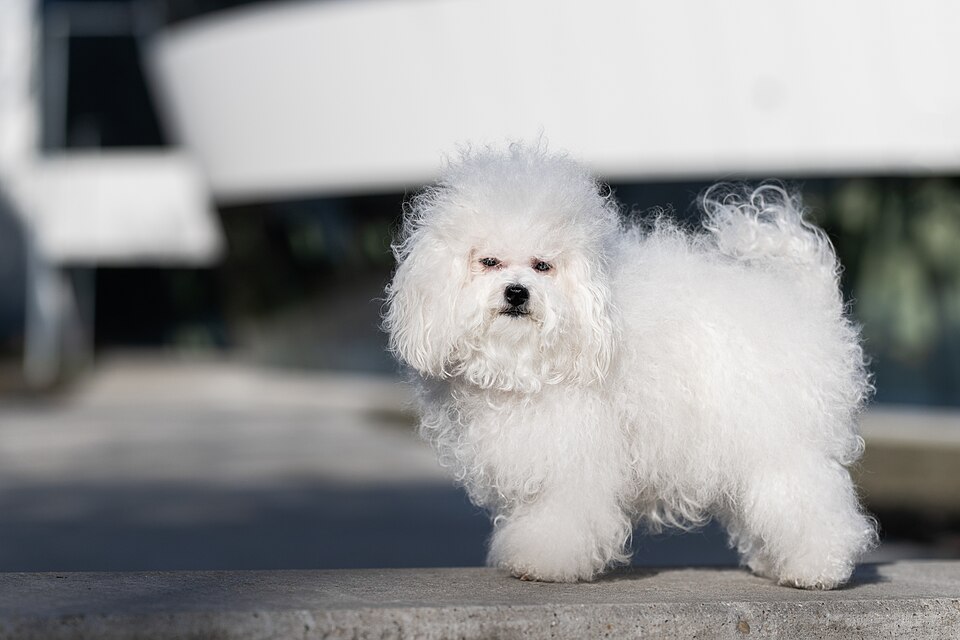
A calm, devoted companion dog of 5.5–8.8 lb (2.5–4 kg) named for the Italian city of Bologna, with a pure white, fluffy coat. According to the FCI it's serene and loyal to its owner; the coat needs regular care, and a breed-specific study points to cataracts as an eye issue to watch.

 Lifespan12+ yearsRoyal Kennel Club: "over 12 years"
 Weight5.5–8.8 lb (2.5–4 kg)FCI standard
 Height10–12 in (25–30 cm)males 27–30, females 25–28 cm
 OriginItalyBologna; history back to Roman times
 CoatWhite, fluffylong flocks all over the body
 ExerciseUp to 30 min a dayRoyal Kennel Club
 EnergyCalmFCI: "generally not very active"
 Eye healthNeeds monitoringcataracts most common in Italian study
The Bolognese is a small, pure white, fluffy companion dog named for the Italian city of Bologna. A member of the Bichon family, it is thought to share distant ancestors with the Maltese. Its calm, loyal temperament appeals to people who want a relaxed house dog. On this page we've pulled together its temperament, care and known health issues from kennel club standards and scientific sources.
- Size: According to the FCI standard, males are 27–30 cm (10½–12 in), females 25–28 cm; weight 2.5–4 kg (5.5–8.8 lb).
- Temperament: The FCI standard says very serene, generally not very active, and very faithful to its master and those around him.
- Coat: Long, fluffy, pure white flocks all over the body; the Royal Kennel Club says it doesn't shed, but grooming is daily.
- Activity: Up to 30 minutes of exercise a day is enough; it suits an apartment.
- Health: In an Italian study the most common inherited or presumed-inherited eye problem in the Bolognese was cataract; ask the breeder about eye exams.
What to know
 What is the Bolognese like?
The FCI standard describes the Bolognese as very serene, generally not very active, eventful but calm, and very faithful to its master and those around him. That makes it less a doorway sentry and more a companion who sits next to you. The standard doesn't describe a "playing machine"; so short walks, play and close contact matter more than wearing the dog out.
Loyal, calm dogs may struggle when left alone. We found no separation anxiety data specific to the Bolognese, but every dog needs to learn alone time gradually; see our article on separation anxiety in dogs.
Breed traits describe general tendencies. The parents' temperament, early socialization and training shape an individual dog's personality as much as its breed does.
 Who is it a good fit for?
The Bolognese suits people who want a calm companion at home and can spend a few minutes on coat care every day. The Royal Kennel Club considers the breed suitable for flats and for homes with a small or medium garden.
| Situation | A good fit? |
|---|---|
| Apartment | Yes; daily exercise is up to 30 minutes |
| Family with kids | A small and delicate dog; teach children to pet it on the floor and supervise play |
| Other dogs and cats | Can usually get along; early, calm introductions matter |
| Long hours alone | May struggle because it's a devoted type; teach alone time gradually |
| First-time dog owners | Possible; be ready for the care of a long white coat |
See our article on kids and dogs at home.
Where does it come from?
According to the history in the FCI standard, the origin of the Bolognese is intertwined with that of the Maltese: their distant ancestors are the same little dogs Aristotle (384–322 BC) mentioned in Latin as "canes melitenses". The standard says the Bolognese was already known in Roman times and was among the prized gifts that powerful people gave. Cosimo de Medici (1389–1464) took no fewer than eight to Brussels as gifts for Belgian noblemen. Philip II of Spain (1556–1598), after receiving two as a gift from the Duke d'Este, wrote back that these little dogs were the most royal gifts one could give an emperor. The standard also notes that the Bolognese appears in paintings by Titian, Pieter Bruegel the Elder and Goya.
The Royal Kennel Club also presents the breed as a member of the Bichon family, the small white breeds made popular in fashionable society in Mediterranean countries, and says it takes its name from the northern Italian city of Bologna. See our Maltese and Bichon Frise pages as well.
Appearance and colors
According to the FCI standard, the Bolognese is small, stocky and compact, covered with a pure white coat, long and fluffy. The body is square. The nose should be large and black; the eyes are a dark ochre and the eyelid rims black.
- Height and weight (FCI): Males 27–30 cm (10½–12 in), females 25–28 cm; weight 2.5–4 kg (5.5–8.8 lb).
- Coat: Long all over the body from head to tail; fluffy flocks that stand off rather than lie flat. It forms no fringes, and it's shorter on the face and muzzle.
- Color: Pure white; very slight shades of ivory aren't penalized, and any other color or patches fall outside the standard.
- Tail: Carried curved over the back.
The Royal Kennel Club notes that the Bolognese should be shown in a natural, untrimmed state; as an owner, you're free to have the coat trimmed however you like.
Daily care
The Royal Kennel Club rates grooming as "every day" and notes the breed doesn't shed. Hair that doesn't fall out can stay in the coat and form tangles, and a long white coat shows dirt and staining.
- Brushing: Catch tangles early in friction areas such as behind the ears, under the legs, on the inner thighs and the belly. Matted hair can irritate the skin.
- Bathing: Bathe when needed with a dog shampoo and dry the coat thoroughly. See our article on dog coat care for details.
- Clipping: Keeping the coat long increases the workload; many owners keep it short. Choose a groomer who is gentle with dogs.
- Eyes: Keep the hair around the eyes clean; show your vet any redness, watering or cloudiness (see the health section).
- Ears: Check once a week; show your vet any odor or redness.
- Teeth and nails: Brush teeth from puppyhood; check nails regularly.
 Training and exercise
The Royal Kennel Club recommends up to 30 minutes of exercise a day, and the FCI standard notes the breed is generally not very active. You can split it into two or three short walks plus play at home. Sniffing games tire the mind: sniffing games.
- Reward-based work: Short, rewarded and consistent training works best in small dogs, too. There's no need for harsh methods.
- Being alone: Because it's a loyal breed, teach alone time gradually from puppyhood.
- Socialization: Set up calm, positive encounters with different people, sounds and places while it's a puppy.
- Leash: You can choose a harness to avoid straining the neck; practice walking without pulling with our loose-leash training article.
 Diet and weight
The Bolognese doesn't need a special food; a complete and balanced small-breed food suited to its age and size is enough. In a calm, not very active dog, extra weight builds up quickly, so measuring portions matters.
- If you can feel the ribs under a thin layer of fat, the weight is good; under a long coat weight is invisible, so check by hand.
- Subtract treats from the daily amount.
- Regular weigh-ins show weight changes early.
Be careful with table scraps; check our list of foods dogs should never eat.
 Health issues to know about
According to the Royal Kennel Club, the breed has no specific Breed Watch point of concern (Category 1), and the recommended screening is the BVA/KC/ISDS eye exam. The detailed health data we could find for the Bolognese is limited; the most concrete source is a study of eye disease. The following is for information only; ask your veterinarian for diagnosis and treatment.
Eye disease
A study published in Veterinary Ophthalmology in 2018 in Italy looked at known or presumed inherited eye disease in three small Italian breeds: the Maltese, Bolognese and Italian Greyhound. Of 462 dogs that had a full eye exam between 1994 and 2015, 66.2% had at least one such problem. In both the Maltese (35.1%) and the Bolognese (24.2%), the most common problem was cataract (clouding of the lens of the eye). Because the study covered dogs brought in to have their eyes examined, it may not represent all Bolognese; still, it shows the breed needs particular attention to eye health. The authors recommend that breed standards be reconsidered and that breeding aim to limit these problems. If you notice a cloudy eye, squinting or constant watering, show your vet; when buying a puppy, ask for the parents' eye exam results.
Dental disease
Tartar and gum disease are common in small dogs. In a 2021 UK study, 12.5% of dogs were diagnosed with gum disease within a year, and risk rose as body weight got smaller. We found no separate figure for the Bolognese; brushing teeth from puppyhood and regular dental checks are a sufficient precaution.
Slipping kneecaps
Patellar luxation is a joint problem in which the kneecap slips out of place, which can cause limping or skipping on one back leg. In an English study it was diagnosed in 1.3% of dogs, and dogs weighing less than the average for their breed and sex had higher odds. We found no separate figure for the Bolognese; if you notice limping or your dog holding up a leg, show your vet.
The "hypoallergenic" myth
The Bolognese and Bichon-type dogs are often described as "allergy-friendly". In a 2012 study, hair samples from breeds marketed as "hypoallergenic" had higher levels of the main dog allergen, Can f 1, than other dogs; levels in homes weren't clearly different, and differences between breeds were smaller than differences within a breed. The researchers concluded that no breed can be called hypoallergenic.
- Sudden cloudiness, pain or redness in an eye
- Limping or holding up a leg
- Fast or labored breathing, a constant cough
- Refusing food, repeated vomiting or diarrhea
How long does it live?
The Royal Kennel Club lists the lifespan as "over 12 years". We couldn't find a separate life table for the Bolognese. A large UK study (McMillan et al., 2024) found that small dogs live longer than large ones, but that is a size result, not one for this breed.
Regular vet checks, a healthy weight, dental care and eye monitoring are the most concrete ways to help it live longer.
 Before you get one
- Consider a shelter too: Small-breed dogs and Bichon-type crosses also end up in shelters. Our article on adopting a dog from a shelter covers the first steps.
- If you buy from a breeder: See the parents with the puppies in a home environment. Ask for eye exam results and a pedigree. Stay away from sellers who rush you.
- Red flags: Avoid sellers who won't show the mother, offer no paperwork or demand an instant deposit. The RSPCA also treats the same phone number appearing in several adverts as a warning sign.
- Time and budget: Be ready for regular grooming, daily brushing and dental care.
- Legal registration: In Türkiye, owned dogs must be microchipped and registered in the PETVET system. See our article on PETVET registration and microchips.
- First days: Our article a new puppy at home: the first week helps.
Frequently asked questions
Is the Bolognese the same as the Bichon Frise?
No. Both are white, small and from the Bichon family, but they're separate breeds with their own standards. According to the FCI standard the Bolognese has fluffy flocks with no fringes and a square body, while the Bichon Frise's coat is curly. See our Bichon Frise page for details.
Does the Bolognese shed?
The Royal Kennel Club says the breed doesn't shed. But the coat can tangle and needs daily care; saying it "leaves no hair at all" or "won't cause allergies" wouldn't be accurate.
Does it bark a lot?
The standard describes the breed as serene and not very active; but every dog is an individual. For excessive barking you have to find the cause: why dogs bark.
Can it be left alone?
Because it's a loyal breed, long hours alone can be hard on it. Teach alone time gradually.
How heavy does it get?
In the FCI standard, 2.5–4 kg (5.5–8.8 lb).
Sources
- The Royal Kennel Club (UK) · Bolognese: breed profile and health screening
- FCI · Bolognese breed standard No. 196
- Guandalini et al. · Epidemiology of ocular disorders presumed to be inherited in three small Italian dog breeds in Italy, Veterinary Ophthalmology (2018)
- O'Neill et al. · Epidemiology of periodontal disease in dogs in the UK primary-care veterinary setting, Journal of Small Animal Practice (2021)
- O'Neill et al. · The epidemiology of patellar luxation in dogs attending primary-care veterinary practices in England, Canine Genetics and Epidemiology (2016)
- Vredegoor et al. · Can f 1 levels in hair and homes of different dog breeds: lack of evidence to describe any dog breed as hypoallergenic, Journal of Allergy and Clinical Immunology (2012)
- McMillan et al. · Longevity of companion dog breeds: those at risk from early death, Scientific Reports (2024)
- RSPCA · Buying a puppy: puppy sales
- Resmî Gazete (Türkiye) · Regulation on the identification and registration of cats, dogs and ferrets (February 26, 2018)
By Tüylüm · Last checked: November 10, 2026. Compiled from the sources above and written in our own words. Spotted a mistake? Write to [email protected] and we'll fix it right away. Photo from Wikimedia Commons, used under the license shown below it.