 Tüylüm
Bullmastiff
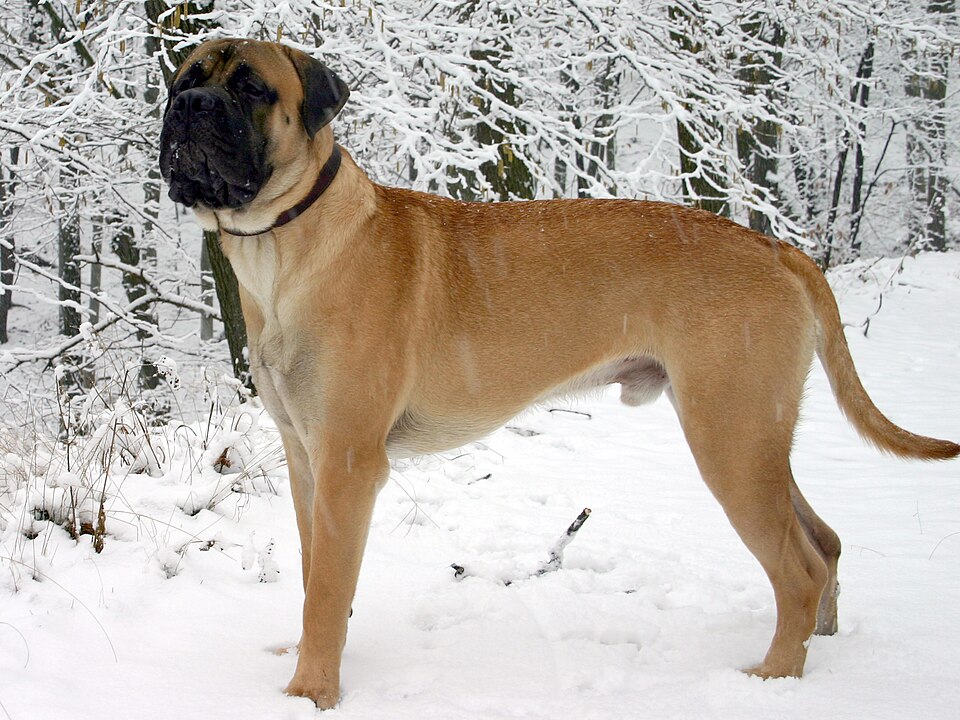
A big, strong, short-coated guardian developed in England as the gamekeeper's night dog. Gentle and loyal with its family, but it can be willful; it needs early training, socialization and a solid fence. Lifespan is around 8–9 years, and cancer (especially lymphoma) and joint disease stand out.

 Lifespan≈ 8–9 yearsAustralia median 8.5; UK dogs that died: 9.1
 Weight90–130 lb (41–59 kg)FCI: males 110–130 lb, females 90–110 lb
 Height at shoulder24–27 in (61–69 cm)FCI: males 25–27, females 24–26 in
 OriginEnglandthe gamekeeper's night dog; bulldog + mastiff cross
 SheddingSeasonalshort coat; regular brushing cuts shedding
 ExerciseModerateAKC: a good walking partner, not a running one
 With kidsAlways supervisegentle with family but very big
 TrainingStart earlyAKC: biddable but can be strong-willed
The Bullmastiff was developed in mid-19th-century England to help gamekeepers: a "night dog" that pins a poacher to the ground and holds him until the keeper arrives, without biting. Today it's mostly a family dog, gentle with its people, loyal and calm in the house. But it's a strong, protective dog weighing more than 90 lb (41 kg), and that calls for thoughtful handling. We built this page from the FCI standard, the AKC, lifespan and mortality studies from Australia and the UK, and Turkish legislation.
- Temperament: According to the FCI, powerful, enduring, active and reliable; high-spirited, alert and faithful. The AKC says it's biddable and reliable but can be strong-willed too.
- Size: Males weigh 110–130 lb (50–59 kg) and females 90–110 lb (41–50 kg) (FCI); shoulder height is 24–27 in (61–69 cm).
- Lifespan: An Australian study of 2,771 dogs found a median of 8.5 years; the AKC says 7–9 years.
- Health: Cancer (especially lymphoma), joint disease, heart problems and bloat stand out.
- Owner: Early training and socialization are a must; it needs a solid fence, a leash and supervision.
What to know
 What is the Bullmastiff like?
The FCI standard describes the Bullmastiff's behavior as powerful, enduring, active and reliable, and its temperament as high-spirited, alert and faithful. Its use is as a watchdog. Aggressive or overly shy dogs are disqualified.
The AKC calls the breed biddable and reliable, but as with any large guardian dog, it says training and socialization must start while the puppy is still small enough to control. According to the AKC, the breed can be quite strong-willed, and both dog and owner benefit from a training routine set up in puppyhood. The same source describes the breed's history of knocking a poacher down and holding him without biting: the protective streak is built in, but measured.
Every dog is an individual. Breed describes what a dog was bred for; it can't tell you how a particular dog will turn out. The parents' temperament, early experiences and training matter at least as much as breed.
 Who is it a good fit for?
The Bullmastiff suits calm, consistent people who have experience with large dogs, can devote time to early training and socialization, and have a solid yard or a safe place to live. The dog should live indoors with its family.
| Situation | Good fit? |
|---|---|
| Apartment | Hard; big and heavy, though calm indoors; think about elevators, stairs and summers |
| House with a yard | Good; the AKC says a solid fence is a must so strangers and unfamiliar animals don't enter the dog's territory |
| Family with kids | Gentle with family but very big and strong; always supervise |
| Other dogs | Careful introductions and early socialization are needed |
| Home with frequent guests | Take care; the dog needs a quiet space of its own |
| First-time dog owners | Not recommended; needs experience and consistent handling |
Where does it come from?
According to the FCI, the Bullmastiff comes from Great Britain, and its use is as a watchdog. The AKC says the breed came out of Bulldog and Mastiff crosses in England around 1860. Developed for estate owners who needed protection from poachers, the dog was known as the "Gamekeeper's Night Dog." It was meant to knock a poacher down and hold him without biting until the keeper arrived; because a captured poacher could face severe punishment, keepers were at real risk. Rivalry among keepers over who had the best dog grew into exhibitions, and the breed was admitted to the Kennel Club in England in 1924.
Its close relative the Mastiff is bigger and heavier; the Dogue de Bordeaux and the Neapolitan Mastiff come from the same mastiff family but from other countries.
Appearance and colors
According to the FCI, the Bullmastiff's skull is broad and square, its muzzle short and broad, and its stop (the step between forehead and muzzle) pronounced. The ears are V-shaped, folded forward, set wide and high. The neck is arched and very muscular, the back short and straight, the chest wide and deep. The tail is set high, thick at the root and reaching the hocks.
- Height: 25–27 in (64–69 cm) for males and 24–26 in (61–66 cm) for females (FCI).
- Weight: 110–130 lb (50–59 kg) for males and 90–110 lb (41–50 kg) for females (FCI). The AKC gives an average of 120 lb (54 kg) for adult males. In Australia, adult males averaged 103 lb (46.6 kg) and females 89 lb (40.5 kg).
- Coat: Short, hard, weather-resistant and lying flat to the body.
- Color: Any shade of brindle, fawn or red; the color should be pure and clear. A slight white marking on the chest is allowed; a black muzzle is essential.
- Ears and tail: Natural. The FCI standard describes V-shaped ears folded forward and a high-set tail that reaches the hocks.
In Türkiye, article 8 of Animal Protection Law no. 5199 bans cutting a pet's tail or ears to change its appearance or for any other non-therapeutic reason; if there's a medical reason, the decision belongs to a veterinarian. Rules vary by country.
 Daily care
The AKC says seasonal shedding is to be expected, and that unusual hair loss is a possible sign of a problem. Frequent brushing helps manage the shedding; bathe as needed. A balanced diet and a healthy environment matter most for coat health. See our dog grooming guide for general methods.
- Face and wrinkles: Clean the folds on the head and around the mouth regularly and keep them dry; drool and moisture can irritate the skin.
- Ears: Check the ears regularly for signs of infection.
- Teeth: Brush often with a toothpaste made for dogs.
- Nails: Long nails throw off the gait of a heavy dog; trim them regularly.
- Hot weather: A short-nosed giant breed struggles easily in the heat. Shade, plenty of water and exercise during cool hours are a must; our article on dogs in hot weather covers the warning signs.
Training and exercise
The AKC calls early training and socialization critical for Bullmastiff puppies. It writes that the breed can be quite strong-willed and that training routines begun in puppyhood benefit both dog and owner. It says many breeders encourage new owners to enroll in local puppy classes, so puppies meet other dogs and owners get training help. The breed can also do well in agility, obedience, rally, scent work and tracking.
On exercise, the AKC says some dogs are more sedentary while others are very active by nature, but moderate exercise should be encouraged. Don't overexercise a puppy during growth. The Bullmastiff isn't a running partner but a great walking companion. The AKC also says fencing is critical so that strangers and unfamiliar animals don't intrude on the dog's territory.
- Early socialization: As a puppy, give it short, positive meetings with different people, children, sounds, vehicles and calm dogs, and keep this up for the first two years. A puppy class is a good start.
- Basic cues: Come, wait, drop it and walking without pulling are the foundation of safe life with a dog that can top 110 lb (50 kg). Our guide to loose-leash walking explains it step by step.
- A solid fence and leash: Don't leave it unsupervised in the yard; gates should be locked and the fence tall.
- A routine for visitors: Use rewards to teach it to go to a calm spot when the doorbell rings; never leave guests alone with the dog.
- Vet prep: Use rewards early on to get it comfortable with being handled and having its mouth and paws checked.
Steer clear of puppies marketed as "tough," "man-stopping" or "protection-trained," and of anyone who suggests "toughening up" a dog by provoking it. Even the Bullmastiff's job in the past was to hold without biting; what it needs today is calm and trust.
 Diet and weight
The Bullmastiff doesn't need a special food. The AKC writes that many breeders advise adult dog food or large-breed puppy food for puppies, aiming at slow and steady growth. Several small meals for puppies and two meals a day for adults is a good routine; exercise right before and after eating is discouraged because of the bloat risk. The AKC also says Bullmastiffs should be kept lean, especially as puppies, because they grow so fast that it can tax their systems.
- Controlled growth in puppyhood: Make a growth plan with your vet covering the type of food, the amount and weight checks.
- Lower the risk of bloat: Small, frequent meals and rest before and after eating.
- Ideal weight: If you can feel the ribs under a thin layer of fat and see a waist from above, the weight is about right.
Also check our list of foods that are dangerous for dogs.
 Health issues to know about
According to the AKC, responsible breeders screen their stock for heart problems, hip and elbow dysplasia, hypothyroidism (an underactive thyroid) and eye problems. The introduction to the Australian study describes the Bullmastiff as a short-lived giant breed prone to cancer and joint disease. The information below is for awareness only; ask your vet about diagnosis and treatment.
Cancer
In the Australian study (Carney et al., 2024), the most common cause of death among Bullmastiffs that died was mass lesions (tumors), at 28.2%; lymphoma was the most frequent among them (17.2%). The study also points to earlier insurance and patient data reporting an increased lymphoma risk in the breed. In a survey of owners (Bell and Hesketh, 2021), the most common cause of death in mastiff-type dogs was cancer (47%). If you find a new lump, a swollen lymph node, loss of appetite or weight loss, show your vet.
Joint disease
In the Australian study, musculoskeletal disease accounted for 9.9% of deaths; the most frequent problem was arthritis at multiple sites. The AKC mentions hip and elbow dysplasia. Limping, trouble getting up, and avoiding stairs or jumping can be signs. When choosing a puppy, ask for the parents' hip and elbow X-ray results.
Heart
The AKC recommends screening breeding dogs for heart problems. If you notice coughing, tiring quickly or trouble breathing, show your vet.
Bloat
The stomach can fill with gas and fluid and twist on itself (gastric dilatation-volvulus, or GDV). The AKC wants Bullmastiff owners to learn the signs and know what to do. The Merck Veterinary Manual describes it as an acute, life-threatening emergency that affects large and giant breeds, needing immediate care, with a mortality rate around 20% even in treated animals.
- Retching without bringing anything up, a swollen belly, heavy drooling, restlessness
- Pale gums, weakness or collapse
- Fast, labored breathing or stumbling in the heat
- A lump that's growing quickly or a swollen lymph node
- Coughing, tiring quickly or trouble breathing
- Limping or obvious trouble getting up
How long does it live?
A study of 2,771 Bullmastiffs that attended veterinary practices in Australia between 2008 and 2017 (Carney et al., 2024) found a median lifespan of 8.5 years; mass lesions (28.2%), old age and musculoskeletal disease (9.9% each) were the leading causes of death. In the giant-breed study using UK data from 2019 (O'Neill et al., 2026), the median age of 85 Bullmastiffs that died was 9.09 years. A survey-based study of mastiff-type dogs found a median age at death of 8 years (Bell and Hesketh, 2021). The AKC gives 7–9 years.
That means the Bullmastiff lives several years less than the average mixed-breed dog. A puppy from screened parents, a healthy weight, regular checkups and knowing the signs of bloat are the most concrete steps.
 Before you get one
- Consider a shelter: Purebred and large dogs end up in shelters and rescues too. With a dog this size, being able to see an adult's temperament up front is a big advantage. Our guide to adopting a dog from a shelter walks you through it.
- If you buy from a breeder: Meet the parents in person and make sure they're calm and steady. Ask for hip and elbow X-ray results and heart and eye exams, and ask about cancer in the family.
- Red flags: Dogs sold as "tough," "guard" or "fighting" dogs; sellers who won't show you the mother or can't provide paperwork; promises of extra-large "giant size."
- Time and budget: Be ready for daily exercise, a puppy class and the vet bills that come with a big dog.
- Registration: Rules vary by country. In Türkiye, owned dogs must be microchipped and registered in the PETVET system. Details are in our article on PETVET registration and microchips.
Frequently asked questions
Is the Bullmastiff banned in Türkiye?
No. Law no. 5199 bans breeding and owning animals the Ministry has designated as "posing a danger" (article 14/l), and the Bullmastiff isn't on the list in the Ministry's 2021 circular. Rules can change, so check the current situation with your provincial or district agriculture directorate. Rules vary by country.
Are the Bullmastiff and the Mastiff the same?
No. The AKC writes that the Bullmastiff is a little smaller than its close cousin the Mastiff; they're separate breeds. See the Mastiff page.
Is it a good family dog?
The AKC describes it as biddable, reliable, protective and affectionate with its family. But it's very big and strong; children and dogs should never be left unsupervised together. Our article on kids and dogs at home covers the ground rules.
Will it be a running partner?
The AKC says the breed isn't ideal for people who want a canine running partner, but that these dogs are great walking companions.
Should its ears be cropped?
No. In Türkiye, cutting the ears or tail for looks is against the law.
Sources
- FCI · Bullmastiff breed standard (No. 157)
- AKC (American Kennel Club) · Bullmastiff breed profile
- Carney et al. · The demography, longevity and mortality of Bullmastiffs attending veterinary practices in Australia, Animals (2024)
- O'Neill et al. · Giant dog breeds under primary veterinary care in the UK: demography, common disorders and mortality, Companion Animal Health and Genetics (2026)
- Bell and Hesketh · Mastiff breed mortality: a study of owner experience, dog age and longevity, Veterinary and Animal Science (2021)
- Merck Veterinary Manual · Gastric dilation and volvulus in small animals
- Türkiye legislation database · Animal Protection Law no. 5199, current text (in Turkish)
- Türkiye Ministry of Agriculture and Forestry · Circular on animals posing a danger (2021/48, in Turkish)
- Resmî Gazete (Türkiye) · Regulation on the identification and registration of cats, dogs and ferrets (February 26, 2018)
By Tüylüm · Last checked: November 10, 2026. Compiled from the sources above and written in our own words. Spotted a mistake? Write to [email protected] and we'll fix it right away. Photo from Wikimedia Commons, used under the license shown below it.