 Tüylüm
Old English Sheepdog
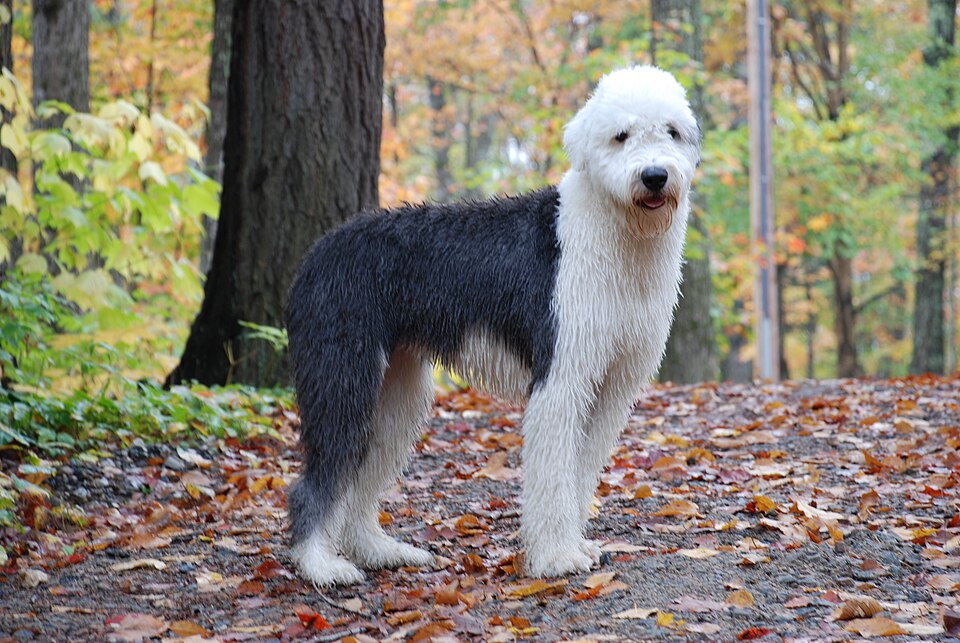
A sturdily built British herding dog known for its abundant, harsh, shaggy coat. An agreeable, faithful companion; but the coat needs daily care, it needs more than two hours of exercise a day, and the breed has gene tests for eye disease and a respiratory cilia disorder.

 Lifespan≈ 10+ yearsRKC: over 10 years; no breed-specific study found
 Height at shoulder22 in+ (56 cm+)FCI: males 24+, females 22+ in; no upper limit
 OriginEnglandEuropean shepherd dogs × British sheepdogs
 CoatVery full, harshFCI: shaggy but not curly; waterproof undercoat
 SheddingShedsRKC: sheds; needs daily grooming
 ExerciseA lotRKC: more than 2 hours a day
 VoiceLoud, resonant barkFCI: a distinctive, toned bark
 Eye healthScreening a mustRKC: eye exam + new DNA test (MOD)
The Old English Sheepdog, known by its nickname "Bobtail," is a breed recognized by its abundant coat and rolling gait. The FCI standard describes it as strong, compact and profusely coated, basically a country dog, intelligent and friendly, with a particularly resonant bark sufficient to frighten off any intruder. For its temperament, the standard says biddable, even-tempered, bold, faithful and trustworthy. This page covers the grooming load that comes with the coat, the health screening and why the name "Bobtail" is no longer quite right; we built it from the FCI standard, the Royal Kennel Club and a published study of an eye disease in the breed.
- Temperament: According to the FCI, biddable, even-tempered, bold, faithful and trustworthy, with no suggestion of nervousness or unprovoked aggression.
- Size: Males 24 in (61 cm) and up, females 22 in (56 cm) and up (FCI); there's no upper limit.
- Coat: Very abundant, harsh and shaggy; the Royal Kennel Club says it needs grooming every day and sheds.
- Health: Screening and gene tests exist for eye disease (multiocular defect, MOD, and hereditary cataract), hips and elbows, and a respiratory cilia disorder (PCD).
- Lifespan: The Royal Kennel Club says over 10 years; we couldn't find a solid breed-specific lifespan study.
What to know
 What is the Old English Sheepdog like?
The FCI standard describes the Old English Sheepdog as biddable, even-tempered, bold, faithful and trustworthy, with no suggestion of nervousness or unprovoked aggression. The breed's resonant, distinctive bark is also named in the standard. The Royal Kennel Club says it needs a large house, a large garden, more than two hours of exercise a day and daily grooming.
In other words, this is a herding dog that's calm indoors but needs to burn energy outside and loves being with its people. It's a big, strong, hairy body, and in play it can knock over household objects, children or small dogs. If it tends to bark a lot, finding the cause and starting training early matter: see why dogs bark.
Every dog is an individual. Breed describes what a dog was bred for; it can't tell you how a particular dog will turn out. The parents' temperament, early experiences and training matter at least as much as breed.
 Who is it a good fit for?
The Old English Sheepdog suits people who have a large home and yard, can set aside time both for exercise and for long daily grooming, and spend lots of time with their dog.
| Situation | Good fit? |
|---|---|
| Apartment | Hard; large size, a lot of coat and more than two hours of exercise a day |
| House with a yard | Good; a solid fence and shade |
| Family with kids | Described as even-tempered and faithful; but it's big and strong, so supervise |
| Home with other dogs | Careful introductions and early socialization are needed |
| First-time dog owners | Possible, but there's a serious care load; be ready for the coat |
| People who are away for long hours | Hard; it wants to be with its people |
| Hot climates | Hard; a very abundant, dense coat |
Where does it come from?
According to the FCI, although the breed's registry origin is Britain, its actual ancestry is thought to be European shepherd dogs of Owtcharka and Bergamasco types bred to the sheepdogs of Britain; today it's regarded as a native British breed. The Royal Kennel Club says the traditional theory is that the Scottish Collie or Bearded Collie played some part, with some historians adding the sheepdogs of Europe, including the Ovtcharka, and that both the breed's name and origins are debated. It also calls the Old English the most substantial of sheepdogs, and says that underneath the glamour of a blue and white coat there should still be a dog fit for working with flocks.
The name "Bobtail" rests on the tail: the breed was traditionally docked, or born with a naturally stumpy tail. The Royal Kennel Club passes on two theories for the docking: one hygiene, the other tax exemption for drovers' dogs. It adds that since docking is no longer allowed in the UK, the nickname isn't really appropriate anymore. Puppies born with a naturally bobbed tail are noted as "bobtail" on registration certificates. In Türkiye, docking for appearance is also banned (see below).
Appearance and colors
According to the FCI, it's a strong, square-looking dog of great symmetry, profusely coated all over, thick-set and muscular, with a most intelligent expression. Seen from above, the body is pear-shaped, the topline rises gently and the gait has a typical roll. The standard says the natural outline shouldn't be artificially changed by scissoring or clipping.
- Height: Males 24 in (61 cm) and up, females 22 in (56 cm) and up (FCI). The standard gives no weight or maximum height; "type and symmetry of greatest importance, and on no account to be sacrificed to size alone."
- Coat: Profuse, of good harsh texture, not straight but shaggy and free from curl, with a waterproof undercoat. Quality and texture are considered above length and profusion.
- Color: Any shade of grey, grizzle (grey-brown mix) or blue; body and hindquarters solid in color (with or without white socks), head, neck, forequarters and underbelly white. Any shade of brown is undesirable.
- Tail: Traditionally docked or naturally stumpy. An undocked tail is carried naturally and is well covered with hard-textured coat.
In Türkiye, article 8 of Animal Protection Law no. 5199 bans cutting a pet's tail or ears to change its appearance or for any other non-therapeutic reason; where a veterinarian has a medical reason, that's treated separately. The FCI standard also accepts an undocked tail. Rules vary by country.
Daily care
The Royal Kennel Club says the breed has a long coat, sheds and needs grooming every day. In an abundant, shaggy, very dense coat tangles form fast; comb daily, especially behind the ears, in the armpits and on the backs of the legs. Bathing and drying take a long time; make sure the coat dries completely. Talk with a groomer and your vet before deciding to shave or shorten it. See our dog grooming guide for general methods.
- Eyes and face: Long facial hair can cover the eyes; keep the area around the eyes clean, and show your vet if you notice redness, watering or squinting.
- Nails: Trim them regularly.
- Ears: Hairy ears can trap dirt and moisture; check them.
- Hot weather: A dog with a very abundant coat needs shade, plenty of water and exercise during cool hours in summer. Our article on dogs in hot weather covers the warning signs.
 Training and exercise
The Royal Kennel Club says more than two hours of exercise a day. As a herding dog, add sniffing, short cue games and mental work on top of walks. Avoid long runs and strenuous movement in a growing puppy; talk to your vet about exercise that suits its age.
- Early socialization: As a puppy, give it short, positive meetings with different people, children, sounds, vehicles and calm dogs, and keep this up through the first year.
- Basic cues: Come, wait, drop it and walking without pulling; the foundation of safety with a big dog.
- Barking: It's a breed with a resonant voice; see our article on why dogs bark to understand the cause.
- Get used to grooming: Teach brushing and drying with rewards while it's small; daily care gets much easier in adulthood.
- Vet prep: Use rewards early on to get it comfortable with being handled and having its mouth, ears and paws checked.
 Diet and weight
We have no source saying the Old English Sheepdog needs a special food; a balanced dog food suited to its age is the basis. Talk with your vet about the type of food and the amount.
- Watch the weight: Weight hides easily under a thick coat; if you can feel the ribs under a thin layer of fat and see a waist from above, the weight is about right.
- Controlled growth in puppyhood: Large-breed puppies grow fast; extra weight and unnecessary supplements strain the joints. Make a growth plan with your vet.
- Lower the risk of bloat: The Merck Veterinary Manual says bloat mainly affects large and giant breeds. Splitting the daily food into several meals and keeping things calm after eating are commonly advised; talk through the details with your vet.
Also check our list of foods that are dangerous for dogs.
 Health issues to know about
The Royal Kennel Club lists hip, elbow and eye screening as priorities for breeders. The information below is for awareness only; ask your vet about diagnosis and treatment.
Eye disease (MOD and cataract)
Multiocular defect (MOD) is an inherited eye disease reported in the Old English Sheepdog. A 2023 study (Stanbury et al.) reports that affected dogs can have multiple abnormalities inside the eye: for example, a dog that began with hereditary cataracts at five years old and went on to develop degeneration of the vitreous, an enlarged eye and a change in lens shape, progressing cataracts, retinal detachment, uveitis and secondary glaucoma. The study reports that a gene change (COL11A1) is inherited with MOD as a dominant trait and was also found in eight of nine dogs with hereditary cataracts. The Royal Kennel Club lists eye screening (the BVA/KC/ISDS eye scheme) as good practice; and a new DNA test for MOD was recognized in August 2026 and will be added to the health standard from January 2027. If you notice cloudiness, squinting, watering or trouble seeing in the eye, show your vet without waiting. When choosing a puppy, ask for the parents' eye exam and test results.
Respiratory cilia disorder (PCD)
The Royal Kennel Club lists a DNA test for primary ciliary dyskinesia (PCD) in the breed. In general, PCD is a movement disorder of the hair-like structures lining the airways; it can show up as a recurring cough or respiratory infections. Only a veterinarian can evaluate it.
Hips and elbows
The Royal Kennel Club lists hip and elbow dysplasia screening as good practice. Limping, trouble getting up and avoiding stairs can be signs.
Bloat
The stomach can fill with gas and fluid and twist on itself (gastric dilatation-volvulus, or GDV). The Merck Veterinary Manual describes it as an emergency needing immediate care, with a mortality rate around 20% even in treated animals.
- Retching without bringing anything up, a swollen belly, heavy drooling, restlessness
- Cloudiness, redness, squinting or sudden vision trouble in the eye
- A constant cough, recurring respiratory infections or labored breathing
- Sudden limping or an obvious change in gait
- Fast, labored breathing or stumbling in the heat
- Pale gums, weakness or collapse
How long does it live?
The Royal Kennel Club says "over 10 years" for the Old English Sheepdog. That's a broad range, and we couldn't find a solid breed-specific lifespan study, so we're not giving a single number. The Royal Kennel Club also counts the breed among the UK's "vulnerable native breeds," meaning registrations are low; that makes paying attention to the diversity of the bloodline more important.
The honest summary: a puppy from screened parents, a healthy weight, regular checkups and attention to eye health are the most concrete steps.
 Before you get one
- Consider a shelter: Purebred and large dogs end up in shelters and rescues too. Our guide to adopting a dog from a shelter walks you through it.
- If you buy from a breeder: Meet the parents in person and make sure they're calm and steady. Ask for the eye exam, the MOD and PCD DNA test results, and hip and elbow screening. Ask for the inbreeding coefficient and bloodline diversity too.
- Red flags: Sellers who show no health records or test results; promises of a "rare color"; sellers who won't show you the mother.
- Time and budget: Coat care, a groomer, food and vet costs are serious; this is a commitment of years.
- Registration: Rules vary by country. In Türkiye, owned dogs must be microchipped and registered; for puppies, a declaration is made within three months of birth. Details are in our article on PETVET registration and microchips.
Frequently asked questions
Is the Old English Sheepdog banned in Türkiye?
No. Law no. 5199 bans breeding and owning animals the Ministry has designated as "posing a danger" (article 14/l), and this breed isn't among the six breeds named in the Ministry's 2021 circular. Rules can change, so check the current situation with your provincial or district agriculture directorate. Rules vary by country.
Why is it called "Bobtail"?
Because the tail was traditionally docked, and some dogs were born with a naturally stumpy tail. The Royal Kennel Club says the nickname is no longer appropriate since docking is now banned in the UK.
Does the coat have to be cut short?
The FCI standard asks that the natural outline of show dogs not be changed by scissoring or clipping. For a dog living at home, shaving or shortening is a decision to talk through with a groomer and a vet, given care and hot weather.
Does it shed a lot?
The Royal Kennel Club says it sheds and needs grooming every day.
Is it good in a home with children?
The FCI says biddable, even-tempered and trustworthy; but it's a big, strong dog, and children and dogs should never be left unsupervised together. Our article on kids and dogs at home covers the ground rules.
Sources
- FCI · Old English Sheepdog breed standard (No. 16)
- The Royal Kennel Club · Old English Sheepdog breed page (history, care, health screening)
- Stanbury et al. · Multiocular defect in the Old English Sheepdog: A canine form of Stickler syndrome type II associated with a missense variant in the collagen-type gene COL11A1, PLoS ONE (2023)
- Merck Veterinary Manual · Gastric dilation and volvulus in small animals
- Türkiye legislation database · Animal Protection Law no. 5199, current text (article 8, in Turkish)
- Türkiye Ministry of Agriculture and Forestry · Circular on animals posing a danger (2021/48, in Turkish)
- Resmî Gazete (Türkiye) · Regulation on the identification and registration of cats, dogs and ferrets (February 26, 2018)
By Tüylüm · Last checked: November 10, 2026. Compiled from the sources above and written in our own words. Spotted a mistake? Write to [email protected] and we'll fix it right away. Photo from Wikimedia Commons, used under the license shown below it.