 Tüylüm
Russian Toy
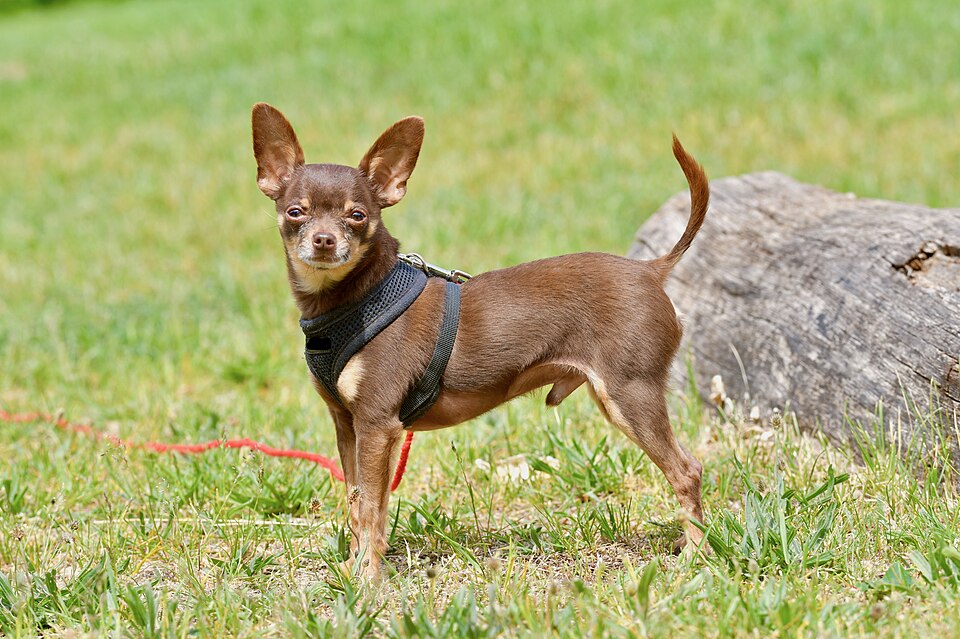
A very small, fine-boned and lively dog, 8.7–10.6 in (22–27 cm) tall and up to 6.6 lb (3 kg), in a smooth-haired or long-haired coat. Being tiny is both its charm and its responsibility: fragile bones, teeth and blood sugar all need watching.

 Lifespan12+ yearsRoyal Kennel Club: "over 12 years"
 WeightUp to 6.6 lb (3 kg)FCI: ideal 5 lb (2.3 kg)
 Height8.7–10.6 in (22–27 cm)FCI: ideal 10 in (25 cm)
 OriginRussiarevived in the 1950s
 CoatSmooth or longtwo varieties; no undercoat in smooth
 ExerciseUp to 1 hour a dayRoyal Kennel Club
 With kidsNeeds carefine bones; protect from falls
 TrainingEager to learnresponds to reward-based work
The Russian Toy is one of the smallest dog breeds in the world. It has upright ears, long legs and an elegant build, and it comes in two coat varieties, smooth-haired and long-haired. It was revived in Russia in the 1950s and is now seen at dog shows across Europe. On this page we've pulled together its temperament, care and the health issues that are talked about most in very small dogs, using breed standards and scientific sources.
- Size: According to the FCI standard it stands 22–27 cm (8.7–10.6 in) at the withers and weighs up to 3 kg (6.6 lb); the ideal is 25 cm and 2.3 kg.
- Temperament: Cheerful, curious and strongly attached to its owner; the Royal Kennel Club calls it eager to please.
- Activity: Up to an hour of exercise a day is enough; it suits small homes, but it is not a couch-potato dog.
- Fragile build: Fine-boned; a fall from your arms or a couch can break a front leg.
- Health: Watch for dental disease, slipping kneecaps and, in very small puppies, low blood sugar.
What to know
 What is the Russian Toy like?
The FCI standard describes the Russian Toy as active, very cheerful, neither cowardly nor aggressive, curious about the outside world and strongly devoted to its owner. The Royal Kennel Club adds that it is loyal and eager to please, which makes it suitable for agility and obedience work. It was originally bred as a watchdog and ratter, so don't be surprised by a "I'm in charge here" attitude in a tiny body.
There's a common trap with dogs this small: they're so tiny that it's easy to raise them without rules. But a Russian Toy needs limits, a regular day and socialization like any other dog. Introducing a puppy to different people, sounds and places makes excessive barking or timidity less likely later on.
Breed traits describe general tendencies. The parents' temperament, early socialization and training shape an individual dog's personality as much as its breed does.
 Who is it a good fit for?
The Russian Toy suits people who want a dog that takes up little space but still wants play and walks. The Royal Kennel Club considers the breed suitable for flats and for homes with a small or medium garden.
| Situation | A good fit? |
|---|---|
| Apartment | Yes; up to an hour of exercise a day is enough |
| Family with small kids | Needs care; its bones are fine, so it must not be dropped, and kids shouldn't carry it unsupervised |
| Other dogs and cats | Play with big animals should be supervised because of its tiny size |
| Long hours alone | May struggle because it is so attached to its people; teach alone time gradually |
| First-time dog owners | Possible, but be ready for its fragile build and dental care |
For how your dog behaves when left alone, see our article on separation anxiety in dogs.
Where does it come from?
According to the history in the FCI standard, the English Toy Terrier was one of the most popular toy dogs in Russia at the start of the 20th century. Between 1920 and 1950 the breeding of pure toy terriers almost stopped and numbers fell to a critical level. Russian breeders only began reviving the breed in the mid-1950s. Almost all the dogs used had no pedigrees, and many were not purebred. Over time the breed went its own way, separate from the English Toy Terrier.
On October 12, 1958, two smooth-haired dogs produced a male puppy with striking fringes on its ears and legs, and it was decided to keep that feature. That is how the long-haired variety appeared; for a time it was called the Moscow Long-haired Toy Terrier. Today both varieties are recognized as one breed.
Appearance and colors
The FCI standard describes the Russian Toy as a small, elegant, long-legged dog with fine bone and lean muscle. The head is small and wedge-shaped, the ears are large, thin and upright, and the eyes are big and dark.
- Height and weight: 22–27 cm (8.7–10.6 in) at the withers and up to 3 kg (6.6 lb); the ideal is 25 cm and 2.3 kg.
- Smooth-haired variety: Short, close-lying, shiny coat with no undercoat.
- Long-haired variety: Moderately long (3–5 cm, about 1.2–2 in), straight or slightly wavy hair on the body; thick fringes on the ears and feathering on the backs of the legs and the tail.
- Color: The standard lists shades such as black and tan, brown and tan, blue and tan, red, fawn and cream.
- Skin: Thin and tight-fitting.
It's easy to mistake the smooth-haired variety for a Chihuahua. A pedigree from a registered breeder confirms the breed; be careful with listings where the breed isn't clear.
Daily care
The Royal Kennel Club rates grooming as "every day"; for the long-haired variety that means a real daily brush, and for the smooth-haired a quick brush and a general check.
- Brushing: For the long-haired variety, brush the ear fringes and the backs of the legs before tangles form. For the smooth-haired, a soft brush a few times a week is enough.
- Dental care: Tartar builds up fast in small mouths; get your dog used to tooth brushing as a puppy.
- Nails: Check them regularly and handle the fine paws gently.
- Cold weather: A short-coated, thin-skinned dog gets cold quickly. Dogs Trust notes that short-haired breeds and puppies may need a coat when it turns chilly. See our article on dogs in cold weather.
- ID: Its tiny size makes it easy to slip away or get lost; keep an ID tag on the collar.
Our article on dog coat care walks through grooming step by step.
Training and exercise
The Royal Kennel Club recommends up to an hour of exercise a day. You can split it into two or three short walks plus play. Even for a small dog, daily sniffing games, hide-and-seek at home or short training sessions tire the mind; see our article on sniffing games for ideas.
- Reward-based work: The breed is eager to please; short, rewarded and consistent lessons work well. There's no need for harsh methods.
- Jumping from heights: According to UFAW, the most common cause of front-leg fractures in toy breeds is jumping or falling from a height or from someone's arms. Don't let jumping off the sofa or bed become a habit; provide a ramp or steps.
- Carrying safely: Don't let kids pick the dog up and carry it standing; teach them to pet it while sitting on the floor.
- Leash: It may pull; choose a harness to avoid straining the neck.
 Diet and weight
The Russian Toy doesn't need a special food; a complete and balanced dog food suited to its age and size is enough. Two things matter in very small dogs: meal routine and weight.
- Small meals: In puppies and very small dogs, going too long without food can drop blood sugar (see the health section below). Plan the number and size of meals with your vet.
- Measure it: A few extra grams is a big percentage gain for a dog this size. Weigh the food and subtract treats from the daily amount.
- Weight: If you can feel the ribs under a thin layer of fat, the weight is good.
Some human foods are dangerous for dogs; check our list of foods dogs should never eat.
 Health issues to know about
According to the Royal Kennel Club, the breed has no specific Breed Watch point of concern, and the recommended screening is an eye examination. Still, very small dogs share some common problems. The following is for information only; ask your veterinarian for diagnosis and treatment.
Front-leg fractures
Science for Animal Welfare (UFAW) writes that fractures of the lower part of the forearm (radius and ulna) are more common in toy and miniature breeds than in larger dogs and can happen with only minor trauma. The most common cause is jumping or falling from a height or from someone's arms. These fractures can be slow to heal; according to UFAW, casts and splints often aren't enough and surgery is usually needed. We found no breed-specific figure for the Russian Toy, but at under 3 kg the same risk applies. The best prevention is avoiding falls.
Dental disease
In a 2021 UK study, 12.5% of dogs were diagnosed with periodontal (gum) disease within a year. Dogs with a smaller body weight had higher odds, and the risk fell as weight rose. One of the highest-risk breeds was the Toy Poodle; the Russian Toy falls into the same size group. Brushing and regular dental checks are the key steps; if you notice bad breath, red gums or reluctance to eat, show your vet.
Slipping kneecaps
Patellar luxation is a joint problem in which the kneecap slips out of place, which can cause limping or skipping on one back leg. In a 2016 study of English veterinary records it was found in 1.3% of dogs; the risk was much higher in toy breeds such as the Pomeranian, Chihuahua and Yorkshire Terrier, and dogs weighing less than the average for their breed and sex also had higher odds. We found no separate figure for the Russian Toy, but it's worth keeping in mind in dogs of similar size. If your dog skips or holds up a back leg while walking, show your vet.
Low blood sugar
Hypoglycemia means the blood sugar (glucose) has dropped too low. According to a 2018 review by Idowu and Heading, it is a relatively common problem in veterinary practice, ranging from subtle signs to a life-threatening emergency. FirstVet notes that puppies under three months old haven't fully developed the ability to regulate blood sugar and that toy and miniature breeds are especially susceptible; fasting, stomach and bowel upset, a drop in body temperature and intestinal parasites can trigger it. Signs include weakness, being very sleepy, a wobbly gait, trembling, seizures and loss of consciousness. If you see any of these, go to your vet or the nearest clinic right away. Regular meals and keeping the puppy warm are the preventive advice.
The "teacup" myth
The Royal Kennel Club does not recognize any "teacup" breeds. It says such dogs are often bred from the runts of litters, may live shorter lives and can have breathing problems, fragile bones, joint, heart and stomach problems. The standard already sets the ideal size (22–27 cm, up to 3 kg); a breeder aiming below that is putting health second. Stay away from puppies sold as "mini" or "teacup".
- Sudden limping, swelling or an unusable front leg
- In a puppy: weakness, trembling, wobbling, a seizure or loss of consciousness
- Refusing food, repeated vomiting or diarrhea
- Trouble breathing or a constant cough
How long does it live?
The Royal Kennel Club says the breed is expected to live "over 12 years". We couldn't find a detailed life table for the Russian Toy. General data show that small, long-nosed dogs live longer than large or flat-faced ones: in the 2024 UK study by McMillan and colleagues, the median lifespan of small, long-nosed breeds was 13.3 years.
Regular vet checks, dental care, a healthy weight and protection from falls are the most concrete ways to help this dog live longer.
 Before you get one
- Consider a shelter too: Toy breeds and their mixes also end up in shelters. Our article on adopting a dog from a shelter covers the first steps.
- If you buy from a breeder: See the parents with the puppies in a home environment. Ask for an eye exam and a pedigree. Avoid anyone promising a "teacup" or "mini"; the RSPCA also says those words can be a sign puppy dealers use to attract attention.
- Home safety: High furniture, door gaps and a child's arms are hazards for this dog; plan for them from the start.
- Time and budget: Be ready for dental care, short but regular walks and the possible cost of a fracture or kneecap surgery.
- Legal registration: In Türkiye, owned dogs must be microchipped and registered in the PETVET system. See our article on PETVET registration and microchips.
Frequently asked questions
Is the Russian Toy the same as a Chihuahua?
No, they are two separate breeds. A smooth-haired Russian Toy can look like a Chihuahua at first glance, but the Russian Toy has longer legs, a slimmer body and large, upright ears. The FCI and the Royal Kennel Club register them as separate breeds. See our Chihuahua page for details.
Is it OK with kids?
With care. Because it weighs up to 3 kg, rough play or a fall from someone's arms can cause serious injury. If you teach children to pet the dog on the floor and you supervise play, the risk drops.
Does it bark a lot?
Because it was bred as a watchdog, it may bark at unfamiliar sounds. Early socialization and rewarding calm behavior help; see our article on why dogs bark.
Does it need a coat in winter?
The smooth-haired variety and the tiny body get cold quickly. Dogs Trust notes that short-haired breeds may need a coat when it turns cold. Trembling and refusing to walk are signs your dog is cold.
Long-haired or smooth-haired?
They're the same breed with the same temperament. The difference is grooming: the long-haired variety needs its ear fringes and leg feathering brushed regularly, while the smooth-haired is easier to care for.
Sources
- The Royal Kennel Club (UK) · Russian Toy: breed profile and health screening
- FCI · Russkiy Toy breed standard No. 352
- The Royal Kennel Club · Buying a teacup dog
- Science for Animal Welfare (UFAW) · Distal fractures of the radius and ulna in toy breeds
- O'Neill et al. · The epidemiology of patellar luxation in dogs attending primary-care veterinary practices in England, Canine Genetics and Epidemiology (2016)
- O'Neill et al. · Epidemiology of periodontal disease in dogs in the UK primary-care veterinary setting, Journal of Small Animal Practice (2021)
- Idowu and Heading · Hypoglycemia in dogs: Causes, management, and diagnosis, Canadian Veterinary Journal (2018)
- FirstVet · Hypoglycemia in Small Breed Puppies
- McMillan et al. · Longevity of companion dog breeds: those at risk from early death, Scientific Reports (2024)
- RSPCA · Buying a puppy: puppy sales
- Dogs Trust · How to keep your dog safe and warm in cold weather
- Resmî Gazete (Türkiye) · Regulation on the identification and registration of cats, dogs and ferrets (February 26, 2018)
By Tüylüm · Last checked: November 10, 2026. Compiled from the sources above and written in our own words. Spotted a mistake? Write to [email protected] and we'll fix it right away. Photo from Wikimedia Commons, used under the license shown below it.