 Tüylüm
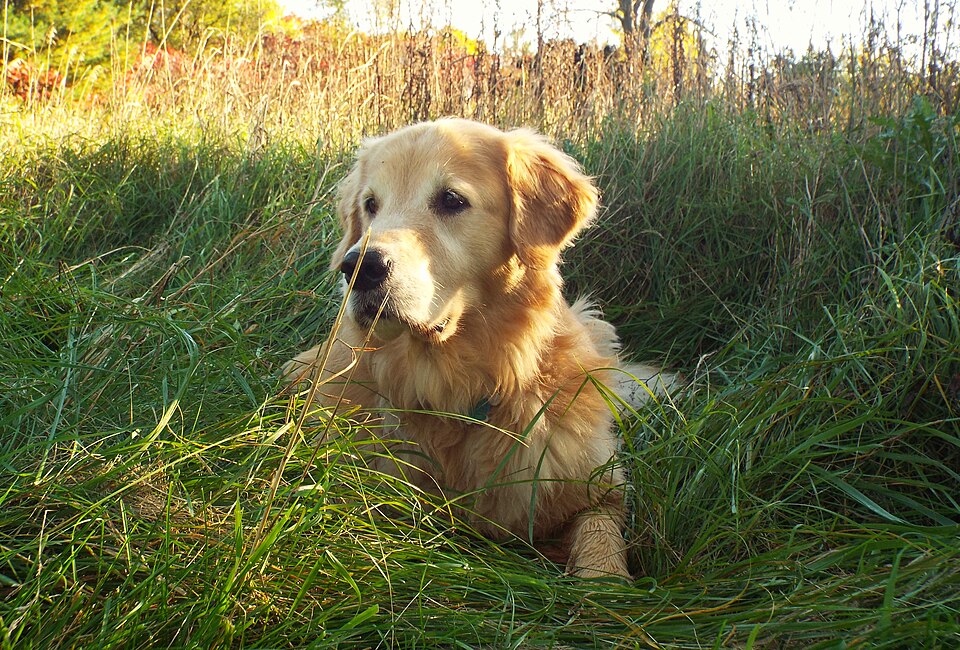
Golden Retriever
Developed in Scotland to bring back shot game birds, the Golden is a people-loving family dog that's eager to learn. Before you get one, know that it needs up to two hours of activity a day, sheds a lot and is prone to cancer and to hip and elbow problems.

 Lifespan≈ 13 yearsmedian, 2024 UK study
 Weight55–75 lb (25–34 kg)AKC: males 65–75 lb, females 55–65 lb
 Height20–24 in (51–61 cm)males 22–24 in, females 20–22 in
 OriginScotlandLord Tweedmouth's gundogs
 SheddingHeavydense undercoat; brush often
 Exercise2+ hours a dayRoyal Kennel Club guidance
 With kidsAffectionatebig and bouncy; supervise
 TrainingQuick learnerloves reward-based work
With its soft expression and golden coat, the Golden Retriever is one of the best-loved dogs in the world. It was developed to find a bird the hunter had shot and carry it back without damaging it; today it's known as a guide dog, a search-and-rescue dog and, above all, a family dog. On this page we've pulled together its temperament, care needs and health issues from breed registry standards, animal welfare resources and scientific studies.
- Temperament: People-loving, gentle and eager to learn; it would much rather be with its family than on its own.
- Activity: The Royal Kennel Club recommends more than two hours of exercise a day; walks, fetch and sniffing games are a must.
- Coat: It has a dense, water-resistant undercoat, sheds noticeably and should be brushed several times a week.
- Health: Cancer is an important cause of death in this breed, and it is prone to hip and elbow dysplasia. Ask about the parents' hip, elbow and eye screening.
- Lifespan: A 2024 UK study found a median lifespan of 13.2 years.
What to know
 What is the Golden Retriever like?
The Golden Retriever's most striking trait is its interest in people. The Royal Kennel Club's breed standard describes it as kindly, friendly and confident; according to the standard, it is biddable, intelligent and has natural working ability. It is usually friendly with strangers too, so don't think of it as a guard dog.
Because it was bred to work, it likes having a job. Picking things up, carrying them, fetching and following something with its nose come naturally. A young Golden that doesn't get enough exercise and stimulation may channel that energy into chewing, digging or constant attention-seeking. Puppyhood and adolescence are lively; patience and a regular daily routine help a lot during this stage.
Every dog is an individual. Breed traits describe general tendencies; the parents' temperament, how a puppy was socialized and the training it gets shape its personality as much as its breed.
 Who is it a good fit for?
The Golden is a good choice for households that want to spend part of their time outdoors with their dog, won't mind dog hair around the house and will treat the dog as part of the family.
| Situation | Good fit? |
|---|---|
| Apartment | Possible, but long daily walks and play are a must; it's a big, active dog |
| Family with kids | Usually a great match; it's big and bouncy, so supervise young children |
| Other dogs and cats | Most get along; early, calm introductions matter |
| Long hours alone | Struggles; it's very attached to its people and shouldn't be left alone all day |
| First-time dog owners | Good; easy to train, as long as you make time for exercise and grooming |
The Royal Kennel Club's description of the gundog group says the same thing: their temperament makes these breeds good family companions. Even so, every household should teach children not to touch a dog's food, bed or sleep, and give the dog a corner where it can retreat and rest. See our article on kids and dogs at home for details.
Where does it come from?
According to the Royal Kennel Club, the breed's founder was the first Lord Tweedmouth, owner of the Guisachan estate in Scotland. A yellow dog born to black Wavy-Coated Retrievers was mated with a Tweed Water Spaniel, and four yellow puppies came from that mating. Bloodhound and Irish Setter were added to the lines later, and these yellow retrievers became popular in the Border Counties between England and Scotland.
The Kennel Club recognized the breed in 1913 as the "yellow or golden retriever"; when the Golden Retriever Club was founded in 1920, the official name became Golden Retriever. Breed fans still revere the Guisachan estate as the home of the Golden. The water-resistant undercoat the standard calls for is a reminder of the breed's history around water.
Appearance and colors
The Golden is a balanced, powerful, large dog. The skull is broad, the nose preferably black, and the eyes dark brown with a kindly expression. The tail is carried level with the back.
- Height: Per the Royal Kennel Club standard, height at the shoulder is 22–24 in (56–61 cm) for males and 20–22 in (51–56 cm) for females.
- Weight: According to the AKC, males weigh 65–75 lb (29–34 kg) and females 55–65 lb (25–29 kg).
- Coat: A flat or wavy outer coat, long feathering on the legs, chest and tail, and a dense, water-resistant undercoat.
- Color: Any shade of gold or cream is accepted; red or mahogany falls outside the standard. A few white hairs on the chest are allowed.
You'll see both pale cream and deep gold dogs within the breed. Coat shade says nothing about health or temperament; when choosing a puppy, look at the parents' health screening and temperament, not the color.
 Daily care
The Golden's coat looks beautiful but takes work. The Royal Kennel Club recommends grooming more than once a week; because of the dense undercoat, shedding is noticeable and increases during seasonal coat changes.
- Brushing: Brush and comb several times a week, especially behind the ears and on the chest and leg feathering, before mats form.
- Bathing: As needed, with a dog shampoo. After swimming or a bath, dry the undercoat thoroughly.
- Ears: Check weekly; show your vet any redness, odor or discharge.
- Nails and teeth: Check nails regularly; get your puppy used to toothbrushing early.
- Paws: After walks, check between the toes for thorns and seeds.
Our dog grooming guide walks you through how often to brush and bathe.
Training and exercise
Training a Golden is usually a pleasure: it wants to please its person and responds well to food and play rewards. The AKC notes that besides hunting and field work, the breed also works as a guide dog and a search-and-rescue dog and competes in obedience. There's no need for harsh methods; short, repeated sessions with rewards work best.
- Early socialization: Give your puppy calm, positive experiences with different people, sounds and places.
- Leash manners: It will grow into a big, strong dog, so teach loose-leash walking while it's small. Our loose-leash training article can help.
- Recall: The retrieving instinct is strong, and it may take off after something interesting at the park. Practice coming when called regularly.
- Fetch games: Retrieving a ball or toy is one of this breed's favorite things; take short breaks while you play.
- Nose work: Hiding treats and scent games tire the mind as well. Our sniffing games article has ideas.
- Water: For a Golden that enjoys water, swimming is great exercise; pick a safe spot without currents, then dry its ears and coat. If it doesn't like water, don't force it.
In hot weather, move long runs and fetch sessions to the cooler hours. Our article on dogs in hot weather covers the signs of heatstroke.
 Diet and weight
Goldens don't need a special food; a complete, balanced dog food that suits their age and activity level is enough. The real issue is how much. UFAW's hip dysplasia resource notes that body weight is one of the environmental factors that affect how the disease develops, and that controlling energy intake during growth reduced hip dysplasia (in a study with Labradors).
- Prevent fast, excessive weight gain in puppyhood; ask your vet about a large-breed puppy food and a feeding plan.
- Measure food instead of eyeballing it, and count training treats as part of the daily amount.
- If you can feel the ribs under a thin layer of fat and see a waist when you look from above, the weight is about right.
- Weighing your dog once a month shows changes early.
Some human foods are toxic to dogs; take a look at our list of foods you should never give a dog.
 Health issues to know about
The Golden is generally considered a sturdy dog, but some problems are more common in this breed. The information below is for awareness only; ask your vet about diagnosis and treatment.
Cancer
Cancer is an important cause of death in Goldens. At a US university veterinary hospital, 65% of 652 Goldens that had a necropsy between 1989 and 2016 were found to have died of cancer; the most common types were hemangiosarcoma, which develops from blood vessels, and cancers of the lymphatic system. These numbers come from dogs referred to a hospital, so they may not represent all Goldens, but they show how serious the issue is. That's why 3,044 young Goldens in the US joined a large lifelong study (the Golden Retriever Lifetime Study) between 2012 and 2015 that tracks cancer risk factors. Regular vet checkups and promptly showing your vet any new lump are the most practical steps.
Hip and elbow dysplasia
According to UFAW, the Golden has a known predisposition to hip dysplasia: the hip joint develops loosely during growth, and painful arthritis (osteoarthritis) follows over time. Signs can include limping, trouble getting up and avoiding stairs and jumps. Humeral condylar osteochondrosis (HCO), a form of elbow dysplasia, is also common in this breed according to UFAW, often showing signs at 4 to 10 months of age. The Royal Kennel Club recommends that breeders have hip and elbow X-ray screening done before breeding.
Eye disease
The Golden is among the breeds Cornell lists as at risk for an inherited retinal disease, progressive retinal atrophy (PRA). It is painless, usually begins with weaker night vision and slowly progresses to blindness. The Royal Kennel Club recommends two PRA DNA tests, an eye exam and an assessment of the drainage angle inside the eye (gonioscopy) for this breed.
Others
UFAW's list also includes atopic dermatitis (an allergic skin disease) and an underactive thyroid gland (hypothyroidism). The Royal Kennel Club also recommends a DNA test for an inherited skin disorder called ichthyosis. Tell your vet if you notice itching, frequent ear infections, unexplained weight gain or lethargy.
- Sudden weakness, collapse or pale gums
- A rapidly swelling belly, or retching without bringing anything up
- A lump that is growing quickly
- Limping, or obvious trouble getting up or walking
How long does it live?
A 2024 study using data on about 585,000 dogs from 18 different UK sources found a median lifespan of 13.2 years for the Golden Retriever. In the same study, the median lifespan was 12.0 years for crossbreeds and 12.7 years for purebreds overall. The AKC gives a life expectancy of 10 to 12 years for the breed.
The numbers vary depending on which dogs a study covers. In the university hospital study above, for example, the median age at death of the Goldens that had a necropsy was 9.15 years; but these were sick dogs seen at a referral hospital, so they don't represent all Goldens. Regular checkups, a healthy weight and catching new lumps early are the most practical ways to help a Golden live longer.
 Before you get one
- Consider a shelter: Purebred dogs end up in shelters and rescues too. Our guide to adopting a shelter dog covers the first steps.
- If you buy from a breeder: Ask to meet the parents, and ask for hip and elbow X-ray results, an eye exam and PRA DNA test results. Make sure the puppies are raised with their mother in a home environment.
- Red flags: Steer clear of sellers who won't show you the mother, always have puppies available, can't provide paperwork or rush you to "buy now."
- Time and budget: Be ready for up to two hours of activity a day, regular grooming and the vet costs of a large dog.
- Registration: Rules vary by country; many places require or recommend microchipping. In Türkiye, owned dogs must be microchipped and registered in the PETVET system.
- The first days: Our guide to the first week with a new puppy walks you through the first night and first week step by step.
Frequently asked questions
Do Golden Retrievers shed a lot?
Yes. They have a dense undercoat, so they shed noticeably, and shedding increases during seasonal coat changes. Brushing several times a week cuts down the hair around your home, but won't stop it entirely.
Can a Golden live in an apartment?
It can, but only if it gets long walks, play and mental work every day. The Royal Kennel Club recommends more than two hours of exercise a day; even if your home is small, the time spent outside needs to be enough.
What's the difference between a Golden and a Labrador?
Both are retrievers, and their temperaments are similar. The most visible difference is the coat: the Golden's is longer and feathered, the Labrador's short and dense. Labradors come in black, yellow and chocolate; Goldens come only in shades of gold and cream. See our Labrador Retriever page for details.
Can a Golden be left home alone?
It's very attached to its people, so long hours alone are hard on it. Being alone has to be taught gradually; our article on separation anxiety walks you through it step by step.
Why is cancer talked about so much in Goldens?
Because studies show it's an important cause of death in this breed, and the reasons are still being researched. That doesn't mean every Golden will get cancer, but it makes regular vet checkups and showing your vet a new lump early even more important.
Sources
- The Royal Kennel Club (UK) · Retriever (Golden): breed profile and health screening
- The Royal Kennel Club · Retriever (Golden) breed standard
- AKC (American Kennel Club) · Golden Retriever breed profile
- Science for Animal Welfare (UFAW) · Golden Retriever: Hip dysplasia
- Science for Animal Welfare (UFAW) · Golden Retriever: Elbow dysplasia (HCO)
- Kent et al. · Association of cancer-related mortality, age and gonadectomy in golden retriever dogs at a veterinary academic center (1989–2016), PLOS ONE (2018)
- Labadie et al. · Cohort profile: The Golden Retriever Lifetime Study (GRLS), PLOS ONE (2022)
- McMillan et al. · Longevity of companion dog breeds: those at risk from early death, Scientific Reports (2024)
- Cornell Riney Canine Health Center · Progressive retinal atrophy
- Resmî Gazete (Türkiye) · Regulation on the identification and registration of cats, dogs and ferrets (February 26, 2018)
By Tüylüm · Last checked: November 3, 2026. Compiled from the sources above and written in our own words. Spotted a mistake? Write to [email protected] and we'll fix it right away. Photo from Wikimedia Commons, used under the license shown below it.