 Tüylüm
Vizsla
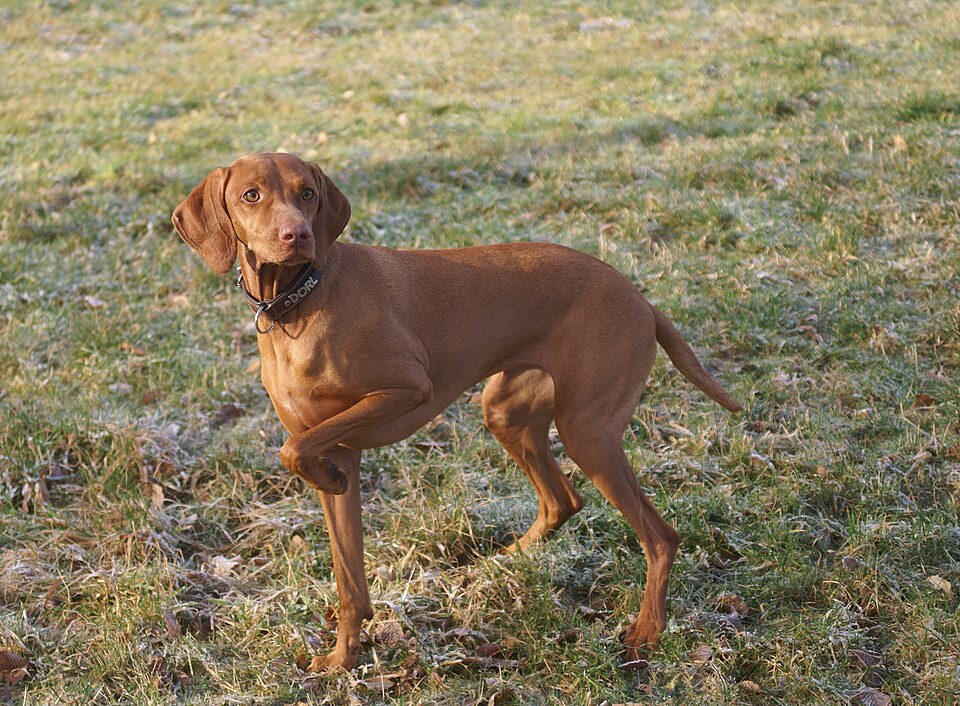
An elegant, russet-gold gundog used for centuries on the plains of Hungary, known for showing its affection openly. It's sensitive and learns easily, but needs more than two hours of activity a day and plenty of closeness with its people. Epilepsy, muscle inflammation and some skin problems have been studied in the breed.

 Lifespan≈ 13.5 yearsmedian, 2024 UK study
 Weight44–66 lb (20–30 kg)Royal Kennel Club standard
 Height21–25 in (53–64 cm)males 22.5–25 in, females 21–23.5 in
 OriginHungarytraced back to the 1300s
 CoatShort, denseslightly greasy feel; weekly grooming
 Exercise2+ hours a dayRoyal Kennel Club guidance
 With kidsVery affectionatebig and active; supervise with little ones
 TrainingLearns easilysensitive; needs gentle methods
The Vizsla is a gundog that catches the eye right away with its short, russet-gold coat and elegant build. It searches for game, points it out and retrieves from both land and water. The Royal Kennel Club standard describes it as lively, intelligent, obedient, sensitive, very affectionate and easily trained. That affection and energy make it a delightful companion for an active family, but being alone and inactive doesn't suit it at all. On this page we've pulled together its temperament, care needs and health issues from breed registry standards and scientific studies.
- Temperament: Lively, gentle-mannered, demonstratively affectionate, fearless and with a well-developed protective instinct, according to the Royal Kennel Club standard.
- Activity: The Royal Kennel Club recommends more than two hours of exercise a day; the AKC describes it as a gundog "built for long days in the field."
- Sensitivity: It learns easily but is sensitive; it needs patient, reward-based training rather than harsh methods.
- Health: Hip, elbow and eye (gonioscopy) screening are recommended; epilepsy, muscle inflammation and sebaceous adenitis have been reported in the breed.
- Lifespan: A large UK study found a median lifespan of 13.5 years.
What to know
 What is the Vizsla like?
The Royal Kennel Club's breed standard describes the Vizsla as lively, intelligent, obedient, sensitive, very affectionate and easily trained, and notes that it was bred for hunting fur and feather, pointing, and retrieving from land and water. For temperament, the standard's words are lively, gentle-mannered, demonstratively affectionate, fearless and with a well-developed protective instinct.
That description captures the Vizsla well: a dog that loves being close to its person and doesn't hide its affection. It's also sensitive, so it learns much better with patient, consistent, reward-based training than with harsh methods.
In the AKC's words, the Vizsla is built for long days in the field. That energy carries over into home life; a young Vizsla that doesn't get enough exercise and activity can become restless and show its frustration through unwanted behavior.
Every dog is an individual. Breed traits describe general tendencies; the temperament of the parents, how a puppy was socialized and the training it gets shape its personality as much as its breed.
 Who is it a good fit for?
The Vizsla suits active people and families who can spend hours outdoors every day, enjoy running, hiking or dog sports, and will put their dog at the center of their life. The Royal Kennel Club recommends a large home and a large yard for this breed.
| Situation | Good fit? |
|---|---|
| Apartment | Hard; it's a large, very active dog. More than two hours of activity every day is a must |
| Family with children | Very affectionate, but big and bouncy, so supervision is needed with young children |
| Other dogs | Usually fine with early socialization |
| Cats, birds and small pets | Be careful; it was bred to hunt fur and feather |
| Long hours alone | Not suitable; it wants to be close to its people |
| First-time owners | Possible; the standard calls it easily trained, as long as its exercise needs are met |
The Royal Kennel Club's description of the gundog group says these breeds can make good family dogs thanks to their temperament. With a Vizsla, the condition is genuinely making room for its energy and its need for closeness.
Where does it come from?
According to the Royal Kennel Club, there's evidence that the russet-gold Vizsla was used in falconry on the central plains of Hungary as far back as the 14th century. Its fine, slightly greasy coat suits work in the high temperatures of the plains.
In the late 19th century, some of the dwindling population were bred to other pointing dogs. During the world wars, many Vizslas were lost, but refugees fleeing Hungary took their dogs with them, and according to the club the breed was revived from that stock. The AKC also notes that the Vizsla has been the pride of Hungarian sportsmen for centuries.
The Vizsla isn't very common among hunters in Türkiye: in a 2021 online survey of 1,325 hunters, only 0.3% preferred the Vizsla for partridge or hare. If you're thinking of hunting with a Vizsla in Türkiye, check the current hunting rules with the General Directorate of Nature Conservation and National Parks; rules vary by country.
The breed on this page is the smooth-coated Hungarian Vizsla. There's also a wirehaired Hungarian Vizsla, recognized as a separate breed.
Appearance and colors
The Vizsla is an elegant, moderately boned, balanced and athletic dog. Under the Royal Kennel Club standard, it has a noble look in its head and bearing. Its eyes are a shade darker than its coat, and its ears are thin-skinned, fairly long and hang close to the cheeks.
- Height: Under the Royal Kennel Club standard, 22.5–25 in (57–64 cm) at the shoulder for males and 21–23.5 in (53–60 cm) for females.
- Weight: 44–66 lb (20–30 kg) under the standard. The AKC gives 55–60 lb (25–27 kg) for males and 44–55 lb (20–25 kg) for females.
- Coat: Short, straight, dense, smooth and shiny; under the standard, it feels slightly greasy to the touch.
- Color: One color: russet gold. Small white marks on the chest and feet are allowed.
Daily care
The Vizsla's short coat is very easy to look after; the Royal Kennel Club suggests grooming once a week.
- Brushing: Once a week, remove loose hair with a soft brush or rubber grooming glove.
- Bathing: Its coat is naturally slightly greasy, so frequent baths aren't needed. Wash it with a dog shampoo when it gets dirty.
- Skin: Check its skin weekly; if you notice scaling, ring-shaped hair loss or crusting, see your vet (see the sebaceous adenitis section below).
- Ears: Look inside weekly, and dry them after swimming.
- Cold weather: It has a short, fine coat; don't leave it standing around for long in cold, wet weather. Our article on dogs in cold weather can help.
- Nails and teeth: Check the nails regularly, and get your puppy used to tooth brushing early.
Training and exercise
The Royal Kennel Club recommends more than two hours of exercise a day for the Vizsla. A good day for this breed is made of running, searching, play and time spent with its person.
- Running and searching: Off-leash running in safe, fenced areas, fetch and swimming suit the Vizsla well.
- Scent games: It's a hunting dog with a strong nose; treat hunts and search games tire out its brain. Our sniffing games article has ideas.
- Recall: When it catches the scent of a bird or a hare, it may take off. Before letting it off leash, make recall reliable using a long training line; our article on dogs that won't come when called explains it step by step.
- Gentle training: The standard describes it as sensitive and easily trained. Short, rewarding, positive sessions work best; avoid yelling and punishment.
- Time alone: A dog this close to its people needs to learn to be alone gradually; our article on separation anxiety explains it step by step.
In hot weather, move long runs to cooler hours and carry water; our article on dogs in hot weather covers the signs of heatstroke.
 Diet
A Vizsla doesn't need special food; a complete and balanced dog food suited to its age and activity is enough. A dog that runs a lot needs more energy than a less active one; adjust the amount to how active your dog really is.
- Measure its food, and take treats out of the daily amount.
- You should be able to feel its ribs under a thin layer of fat and see a waist when you look down from above.
- If you notice trouble swallowing, drooling or bringing food back up while eating, see your vet (see the muscle inflammation section below).
- Don't feed from the table; check our list of foods that are harmful to dogs.
 Health issues to know about
The Vizsla sits in the lowest category of the Royal Kennel Club's Breed Watch list, meaning no breed-specific points of concern have been flagged for show judges. Still, some health issues have been studied in this breed. The information below is for awareness; for diagnosis and treatment, talk to your veterinarian.
Hip, elbow and eye screening
The Royal Kennel Club lists hip and elbow dysplasia screening and an eye exam, together with an exam of the eye's drainage angle (gonioscopy), among the tests Vizsla breeders should do at a minimum before breeding.
An inborn abnormality of the drainage angle inside the eye (pectinate ligament dysplasia) is linked in some breeds to glaucoma, a rise in pressure inside the eye. In a 2017 UK study of 112 Vizslas, 14.3% of the dogs had a moderate or severe form of this abnormality, and it increased with age. According to the Merck Veterinary Manual, in sudden glaucoma the white of the eye turns red, the cornea gets cloudy and the eye is painful; a dog with these signs should see a vet immediately.
Epilepsy
A 2003 study of 29 Vizslas with epilepsy and their families found that epilepsy with no identifiable cause (idiopathic epilepsy) runs in families in this breed. In 79% of the dogs, seizures began in one part of the body: trembling in a leg, staring, dilated pupils or drooling, usually without loss of consciousness. In other words, not every seizure looks like collapsing and convulsing. The researchers say the condition is inherited, though more than one gene may be involved. If you notice something like this, record a video and show it to your vet.
Muscle inflammation (inflammatory polymyopathy)
This disease, in which the immune system attacks the muscles, has been studied in the Vizsla. In a 2015 study of 77 Vizslas, signs started at an average age of 2.4 years. The most common were trouble swallowing, drooling, wasting of the chewing muscles (hollowing at the sides of the head) and bringing food back up. The study notes that the dogs had a high average inbreeding coefficient (16.3%), which may raise the risk of the disease. Treatment aims to keep the disease under control, but it can come back; catching it early matters.
Sebaceous adenitis
The Merck Veterinary Manual lists the Vizsla among the breeds predisposed to this disease, in which the oil glands in the skin become inflamed, and suggests genetics plays a role. In short-coated dogs it starts as ring-shaped patches of scaling and hair loss that can merge over time into larger bald areas.
- A seizure, especially a long one or several in a row
- Inability to swallow, bringing food back up, or a cough with trouble breathing
- Sudden redness, cloudiness or pain in an eye, or squinting
- Sudden limping or obvious trouble walking
How long does it live?
A 2024 UK study using data on about 585,000 dogs from 18 different sources found a median lifespan of 13.5 years for the Vizsla; the median for mixed-breed dogs was 12.0 years. According to the study's supplementary table, the wirehaired Hungarian Vizsla was included in this group. The AKC gives an expected lifespan of 12–14 years, and the Royal Kennel Club says "over 12 years."
Enough exercise every day, a healthy weight and catching new signs early are the most practical ways to help a Vizsla live a long, healthy life.
 Before you get one
- Consider a shelter: Purebred dogs end up in shelters and rescues too. Our article on adopting a dog from a shelter covers the first steps.
- If you buy from a breeder: Ask to meet the parents and ask for their hip and elbow X-ray results, eye exams and gonioscopy results. Find out whether epilepsy, muscle inflammation or skin disease has occurred in the family.
- Inbreeding: A high inbreeding coefficient stood out in the muscle inflammation study; try to make sure closely related dogs weren't bred together.
- Time: Can you meet its need for more than two hours of activity and lots of closeness every day? With this breed, that's the most important question.
- Registration: In Türkiye, owned dogs must be microchipped and registered in the PETVET system. Details are in our article on PETVET registration and microchipping; rules vary by country.
- The first days: Our article a new puppy at home: the first week covers the first week step by step.
Frequently asked questions
Can a Vizsla be left alone?
Long hours alone don't suit it. Its standard describes it as demonstratively affectionate, and it wants to be close to its people. You may need to teach it to be alone gradually and find someone to walk it during the day.
What's the difference between a Vizsla and a Weimaraner?
Both are short-coated, energetic hunting dogs. The Vizsla is russet gold and a bit smaller; the Weimaraner is gray and larger. See our Weimaraner page for details.
Is a Vizsla a good first dog?
The Royal Kennel Club standard describes it as easily trained, which is an advantage. But because of its need for more than two hours of activity a day and its sensitive nature, an active lifestyle and patient, reward-based training are essential.
Does a Vizsla shed?
Its short coat is easy to care for, but it does shed. Brushing once a week reduces the hair around the house.
What does a seizure look like in a Vizsla?
In a 2003 study, most Vizslas with epilepsy had seizures that began with signs such as trembling in a leg, staring or drooling, without loss of consciousness. If you notice something like this, record a video and show it to your vet.
Sources
- The Royal Kennel Club · Hungarian Vizsla: breed profile and health screening
- The Royal Kennel Club · Hungarian Vizsla breed standard
- AKC (American Kennel Club) · Vizsla breed profile
- McMillan et al. · Longevity of companion dog breeds: those at risk from early death, Scientific Reports (2024)
- Patterson et al. · Clinical characteristics and inheritance of idiopathic epilepsy in Vizslas, Journal of Veterinary Internal Medicine (2003)
- Tauro et al. · Clinical features of idiopathic inflammatory polymyopathy in the Hungarian Vizsla, BMC Veterinary Research (2015)
- Oliver et al. · Pectinate ligament dysplasia in the Border Collie, Hungarian Vizsla and Golden Retriever, Veterinary Record (2017)
- Merck Veterinary Manual · Sebaceous adenitis in dogs and cats
- Merck Veterinary Manual · Glaucoma in dogs (pet owner version)
- Özer · Hunting dog preferences of domestic hunters in Türkiye (in Turkish), Journal of Social and Humanities Sciences (2021)
- Official Gazette of Türkiye · Regulation on the identification and registration of cats, dogs and ferrets (February 26, 2018; in Turkish)
By Tüylüm · Last checked: November 3, 2026. Compiled from the sources above and written in our own words. Spotted a mistake? Write to [email protected] and we'll fix it right away. Photo from Wikimedia Commons, used under the license shown below it.