 Tüylüm
Afghan Hound
An elegant sighthound from the mountains of Afghanistan, known for its long silky coat. It needs daily grooming, lots of exercise and a secure fence, and because it chases by instinct, off-leash settings carry real risk.

 Lifespan10+ yearsRoyal Kennel Club: "over 10 years"
 Height25–29 inFCI: females 25–27 in, males 27–29 in (63–74 cm)
 OriginAfghanistanFCI: Afghanistan; patronage Great Britain
 CoatLong, silkydaily grooming (Royal Kennel Club)
 SheddingShedsRoyal Kennel Club: sheds
 ExerciseLotsKC: more than 2 hours a day
 With kidsSupervisedchase instinct, reserved nature
 TrainingNeeds patienceFCI: will chase if given the chance
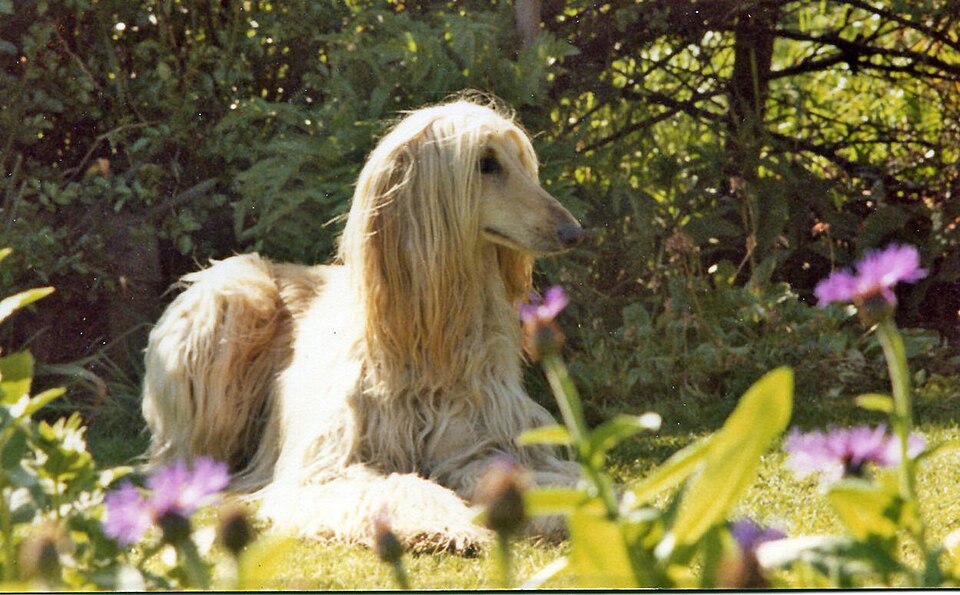
With its long, silky coat and Eastern gaze, the Afghan Hound is one of the most recognizable dog breeds. Underneath that glamorous look is a fast hunter bred to chase deer and hares in the mountains. Living with an Afghan Hound means committing to daily coat care and taking its chase instinct seriously. This page covers the breed standard, grooming needs, health topics and what to think about before you bring one home.
- A fast hunter: The FCI standard states plainly that the breed will chase if given the chance; off-leash and unfenced places are the biggest risk.
- Grooming: The Royal Kennel Club marks coat care as "every day"; the coat develops naturally and isn't meant to be clipped.
- Exercise: The Royal Kennel Club recommends more than 2 hours a day and describes a large house with a large garden as suitable.
- Temperament: Dignified, aloof and independent; like all sighthounds it is trained with rewards and patience, not commands.
- Health: Sighthounds can differ from other breeds in blood values and in how they respond to drugs; always tell your vet your dog is a sighthound.
What to know
 What is the Afghan Hound like?
The FCI standard describes the Afghan Hound's temperament as dignified and aloof, with a certain keen fierceness, and treats the Eastern expression as a hallmark of the breed: the dog looks at you, and seems to look through you. This is not a description of a lap dog that constantly demands attention; it is an aloof, independent character.
The standard also defines the breed as a typical sighthound that will chase when given an opportunity. So around cats, rabbits, birds and other small, fast-moving animals, supervision is essential, and how far a dog's instinct can be managed with training varies from individual to individual.
For a chasing sighthound, no amount of recall practice comes with a guarantee once a fast target appears. Outside a closed, secure space, the leash is a matter of safety with this breed.
 Who is it a good fit for?
The Afghan Hound can suit people who are ready to spend time on coat care, long walks and running, and who have room in the home and garden. The Royal Kennel Club associates the breed with a large house, a large garden and country settings.
| Situation | A good fit? |
|---|---|
| Apartment | Difficult; a large body and heavy exercise needs call for space and a safe place to run |
| Family with children | With care; a large, fast dog can knock a child over by accident, so keep play supervised |
| Other dogs | Introduce calmly and under supervision; chasing games shouldn't go unchecked |
| Cats and small pets | Risky; because of the chase instinct, supervision and separate spaces are a must |
| First-time dog owners | Usually difficult; coat care, safety and an independent temperament call for experience |
| Long stretches alone | May get bored and destructive; teach alone time gradually |
For help with being alone, see our post on separation anxiety in dogs.
Where does it come from?
The FCI lists Afghanistan as the breed's origin, with the standard written under British patronage. According to the Royal Kennel Club, the Afghan Hound is thought to have been developed from Salukis brought to Afghanistan from neighboring Persia, and the long coat is thought to have developed as protection against the cold of the mountains. The breed was used to chase deer, gazelle and smaller game such as hare and fox across desert plains and mountains; the FCI counts it among the typical sighthounds of the world.
The first Afghan Hounds reached Britain in the early 20th century; the FCI standard notes that a dog named Zardin won in spectacular style at the 1907 Crystal Palace show in London. One alternative name for the breed is "Tazi," from its resemblance to a Russian breed of that name. If you're curious about Türkiye's own native sighthound, our Turkish Greyhound page covers a separate breed.
Appearance and colors
The FCI standard describes the Afghan Hound as giving an impression of strength and dignity, combining speed and power, with the head held proudly.
- Height: 27–29 in (68–74 cm) for males, 25–27 in (63–69 cm) for females. The standard doesn't give a weight range.
- Head and expression: A long, fine muzzle and a distinct silky "top-knot" on the head; eyes dark or golden, slanting slightly upward.
- Coat: Long and very fine on the ribs, forequarters, hindquarters and flanks; in mature dogs it is short and close from the shoulders back along the saddle. The foreface is short-haired. The standard says the coat must develop naturally and that any sign of clipping or scissoring should be penalized.
- Color: All colors are accepted except merle; white markings on the head or collar are highly undesirable. The Royal Kennel Club lists many colors including black, cream, gold, red, silver, blue and brindle.
- Tail: Set low, with a ring at the end, sparsely feathered.
Daily care
The Royal Kennel Club marks the Afghan Hound's grooming as "every day," describes the coat as long, and notes that the breed sheds. Because the standard asks for a naturally developed coat, a short clip changes the breed's typical look; that's a choice, but think through the effort before you commit.
- Brushing: Behind the ears, under the armpits and on the insides of the legs are where tangles form fastest. Brushing in layers after the coat is fully dry catches mats early.
- Bathing: Oily or dirty hair tangles quickly; ask your groomer or vet how often to wash.
- Ears: Check the long, feathered, drooping ears weekly; if you notice odor or redness, show your vet.
- Teeth and nails: Get your dog used to tooth brushing from puppyhood; overly long nails make the feet uncomfortable.
- Cold and heat: A long coat doesn't cover every kind of weather; thinly coated areas need protection from the cold. See our posts on dogs in cold weather and dogs in hot weather.
Our dog grooming post gives a general overview.
Training and exercise
The Royal Kennel Club recommends more than 2 hours of exercise a day for the Afghan Hound. That means daily walks plus free running in a secure, enclosed area. The standard's "speed and power" description also speaks to the breed's need to run.
- Secure fencing: The area where an Afghan Hound runs freely should be surrounded by a tall, sturdy fence. Letting one off leash in open country is very risky because of the chase instinct.
- Reward-based training: Short, rewarding, fun sessions are a good start. The FCI's "dignified and aloof" description means you shouldn't expect a dog that does what you say right away.
- Recall: The steps in our post on teaching recall help, but with this breed, recall practice does not mean it's safe to take the leash off.
- Walking: Our post on leash and walking training is a starting point for teaching loose-leash walking.
- Neck: A harness or a sighthound collar may be worth considering so you don't strain the long, slender neck.
 Diet and weight
The Afghan Hound doesn't need a special food; a complete, balanced large-breed diet that suits its age and activity level is enough. Sighthounds are naturally lean; the ribs and hip bones can be somewhat visible, and the FCI standard itself says the hipbones are "rather prominent and wide apart." But to judge the ideal weight and whether your dog is thin or normal, look at body condition together with your vet.
- Meal plan: Ask your vet how many meals a day and what amounts suit your dog.
- Harmful foods: Take a look at our post on foods dogs shouldn't eat.
 Health issues to know about
We couldn't find reliable, large-scale breed-specific health frequency data for the Afghan Hound, so we stick to what our sources say. What follows is for information only; for diagnosis and treatment, talk to your veterinarian.
Hip screening
The Royal Kennel Club recommends hip evaluation (the BVA/KC hip dysplasia scheme) before breeding Afghan Hounds, and doesn't offer a breed-specific DNA test package. When buying a puppy or young dog, it makes sense to ask for the parents' hip results.
Sighthounds are different: blood values
A review of Greyhounds and other sighthounds found that racing greyhounds differ from other breeds in several blood values, and that most of those differences have also been described in other sighthounds: red blood cell mass and some values such as creatinine can be higher, while white blood cell and platelet counts can be lower. This means a healthy Afghan Hound's lab results may fall outside the "average dog" range. Telling a new vet your dog's breed and sharing earlier results can prevent unnecessary worry.
Heart X-ray measurements are breed-specific too
A 2026 study found that Afghan Hounds, Basenjis, Salukis, Borzois and Rhodesian Ridgebacks each have their own reference ranges for heart size on chest X-rays (vertebral heart size). So "normal" limits written for other breeds may not fit these dogs exactly. If your dog needs a heart check, you can remind your vet of this.
Reactions to drugs and sedation
In Greyhounds, some substances were shown to be processed more slowly in the body than in other breeds; the researchers link this to differences in an enzyme system. The study doesn't give a result specific to the Afghan Hound, but it points to a shared sighthound heritage. Before a surgery or procedure, telling your vet that your dog is a sighthound helps them plan properly.
Eyes and other screening
On the Royal Kennel Club's breed page we didn't see another required screening for the Afghan Hound besides hips; you can still ask the breeder about the parents' eye and general health exams. The standard says only functionally and clinically healthy dogs should be used for breeding.
- A swollen belly, unproductive retching, restlessness, or repeatedly lying down and getting up
- Trouble breathing, blue-tinged gums or fainting
- A leg your dog won't put weight on, or sudden limping
- Refusing food and water, repeated vomiting or diarrhea
- Redness, a tightly shut eye or cloudiness in the eye
How long does it live?
The Royal Kennel Club lists the Afghan Hound's lifespan as "over 10 years." That's the club's own classification; in a large UK study (McMillan et al. 2024) we couldn't find a separate median lifespan for the Afghan Hound, so we don't give a precise number. Regular vet checkups, an ideal weight and plenty of exercise are the most concrete support for a dog this size.
 Before you get one
- Consider a shelter: Sighthounds also end up in shelters and rehoming groups. Our post on adopting a dog from a shelter explains the first steps.
- If buying from a breeder: Ask to see the mother and father, ask about hip results, and see that the puppies are raised in a home. The Royal Kennel Club health standard is a useful yardstick for breeders.
- Time: Do you realistically have time for daily grooming, daily running and training?
- Space: A tall, sturdy fence, an enclosed running area and a large living space.
- Budget: Regular grooming, a vet familiar with sighthounds, and the costs of a large dog.
- Legal registration: In Türkiye, owned dogs must be microchipped and registered in the PETVET system; rules vary by country. Details are in our post on PETVET registration and microchips.
- First days: Our post on bringing a puppy home: the first week can help.
Frequently asked questions
Do Afghan Hounds shed?
The Royal Kennel Club notes that the breed sheds. Because long hair can catch shed strands and turn them into tangles, daily brushing reduces both shedding mess and mats.
Can I clip an Afghan Hound's coat short?
It can be done, but the FCI standard counts a clipped or scissored coat as a fault for the show ring; the breed's typical look comes from the naturally developed coat. For a dog living as a family pet, a short clip is a grooming choice; talk with your groomer and vet.
Can an Afghan Hound be walked off leash?
Only inside tall, sturdy fenced areas. The FCI notes that the breed will chase if given the chance; even a well-trained dog can take off after a fast target in open space.
Is an Afghan Hound good with kids?
With care. A large, fast dog can knock a child down in play; teach your child how to approach dogs and supervise play. See our post on kids and dogs.
Are the Afghan Hound and the Turkish Greyhound the same?
No. The Afghan Hound is a long-coated breed from Afghanistan. The Turkish Greyhound is Anatolia's native sighthound; both are sighthounds, but they're separate breeds.
Sources
- FCI · Afghan Hound breed standard No. 228
- The Royal Kennel Club (UK) · Afghan Hound: breed profile and health screening
- Veterinary Clinical Pathology (2011) · Clinical pathology of Greyhounds and other sighthounds
- American Journal of Veterinary Research (2026) · Rhodesian Ridgebacks, Borzois, Afghan Hounds, Salukis, and Basenjis have breed-specific reference ranges for vertebral heart size and vertebral left atrial size
- PLOS ONE (2024) · Pharmacogenomics of poor drug metabolism in greyhounds: Canine P450 oxidoreductase genetic variation, breed heterogeneity, and functional characterization
- McMillan et al. · Longevity of companion dog breeds: those at risk from early death, Scientific Reports (2024)
- Resmî Gazete (Türkiye) · Regulation on the identification and registration of cats, dogs and ferrets (February 26, 2018)
By Tüylüm · Last checked: November 10, 2026. Compiled from the sources above and written in our own words. Spotted a mistake? Write to [email protected] and we'll fix it right away. Photo from Wikimedia Commons, used under the license shown below it.